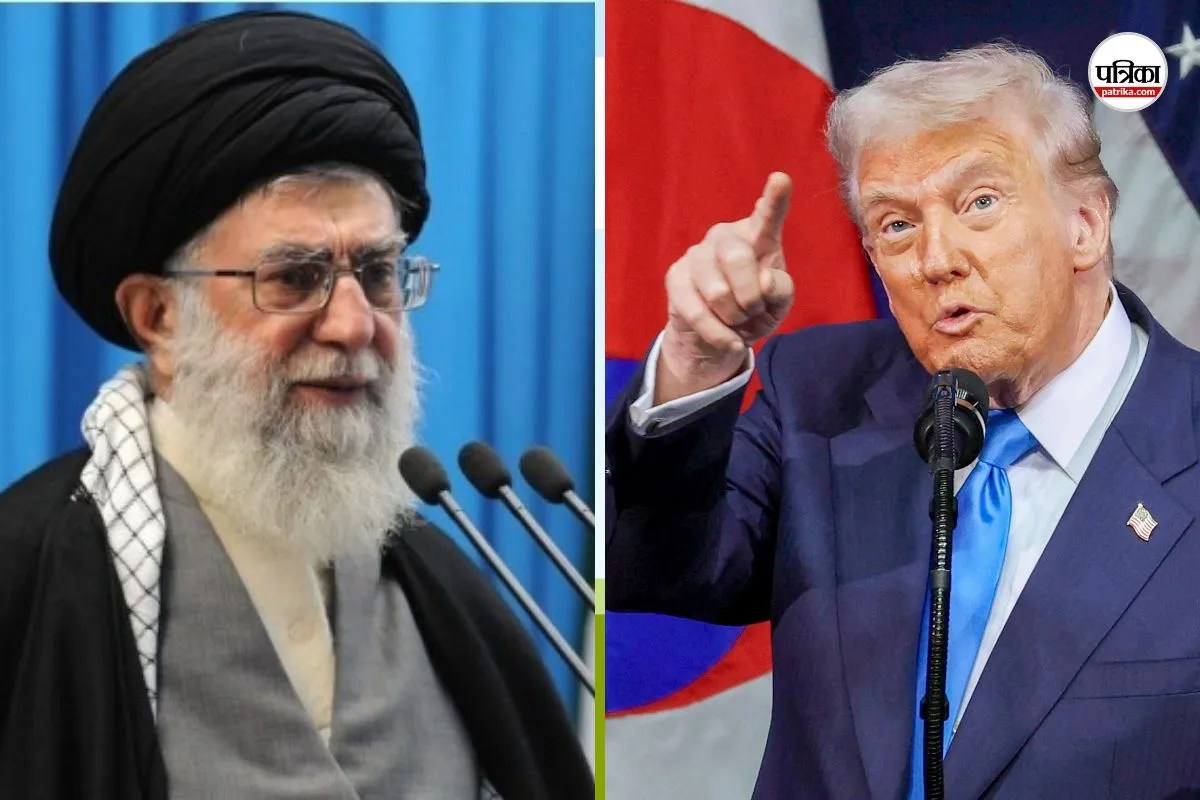
The Middle East has crossed a threshold from which there is no return. In the early hours of March 1, 2026, the geopolitical architecture of the last half-century collapsed. What began as a series of surgical strikes has mutated into a decapitation of the Iranian state, leaving a nuclear-armed region teetering on the edge of a void. The killing of Supreme Leader Ayatollah Ali Khamenei in a coordinated U.S.-Israeli operation codenamed "Epic Fury" and "Operation Genesis" is not just another chapter in a long-standing rivalry; it is the definitive end of the Islamic Republic as we have known it.
Tehran’s first official response, issued through the Islamic Revolutionary Guard Corps (IRGC) and President Masoud Pezeshkian, was framed in the language of cosmic finality. "The end of this war is no longer in your hands," the regime warned, a chilling admission that the conflict has shifted from controlled escalation to a raw struggle for survival. By targeting the Pasteur district—the heart of Iranian power—Israel and the United States have signaled that they are no longer interested in containment. They are pursuing the total dismantling of the clerical leadership. For a deeper dive into similar topics, we suggest: this related article.
The Decapitation of the Deep State
For decades, the theory of "decapitation strikes" remained a boardroom exercise for Pentagon planners. On Saturday, it became a brutal reality. The strike on Khamenei’s compound did more than remove an 86-year-old cleric; it wiped out the functional command of the Iranian security apparatus. Alongside Khamenei, reports confirm the deaths of Ali Shamkhani, a chief architect of regional strategy, and Mohammad Pakpour, the IRGC’s commander-in-chief.
This was a masterpiece of intelligence and a failure of Iranian counter-espionage. To reach the Supreme Leader in his most secure bunker requires more than just satellite imagery. It requires high-level penetration. The internal paranoia currently ripping through the remnants of the Iranian intelligence services will likely be as destructive as the bombs themselves. When a regime cannot trust its own shadow, it ceases to function as a state. For further information on this development, comprehensive analysis is available on NBC News.
While the IRGC has already named Ahmad Vahidi as the new commander-in-chief and Ayatollah Alireza Arafi to an interim leadership council, these appointments feel like rearranging deck chairs on a sinking ship. The legitimacy of the succession is already being challenged on the streets and in exile. Reza Pahlavi’s declaration that the regime is headed for the "dustbin of history" is finding resonance among a population that has spent the last several years protesting against economic ruin and social repression.
A Regional Firestorm without Borders
The Iranian retaliation was not the singular, massive "Doomsday" strike many predicted. Instead, it is a multi-front, chaotic lashing out. In the last 24 hours, the IRGC has launched waves of drones and ballistic missiles targeting 27 U.S. bases across Iraq, Jordan, Kuwait, Bahrain, Qatar, and the UAE.
The geography of the war has expanded with terrifying speed.
- The UAE and Qatar: These nations, long-time hosts of American assets like Al Dhafra and Al Udeid, are now active combat zones. Iranian missiles have struck civilian infrastructure in Dubai, including the Jumeirah area, signaling that no target is off-limits.
- The Maritime Front: President Donald Trump confirmed the sinking of nine Iranian naval vessels. The Persian Gulf is becoming a graveyard of steel, threatening the 20% of the world’s oil that passes through the Strait of Hormuz.
- The Levant: While Hezbollah and Hamas were significantly degraded in the 2024 and 2025 conflicts, they remain capable of nuisance strikes. However, the real story is the silence of some proxies. Many are looking at the smoking ruins of Tehran and deciding that the "Axis of Resistance" is a suicide pact they no longer wish to sign.
Israel’s home front, despite its sophisticated Shield of David and Iron Dome systems, is feeling the weight of the saturation. Six people were killed in a missile strike on Beit Shemesh, a reminder that even the most advanced defense is a game of percentages. In a war of this scale, some missiles will always get through.
The Trump Doctrine and the Mirage of Regime Change
The involvement of the United States in this 2026 campaign marks a total reversal of the "no more endless wars" rhetoric. President Trump has justified the strikes as a "preemptive" necessity to stop a resurgent nuclear program. His claim that these strikes make future negotiations "much easier" is a gamble of historic proportions.
History is a cruel teacher when it comes to airpower and regime change. From Libya to Iraq, the assumption that destroying a central authority leads to a pro-Western democracy has been proven wrong time and again. Iran is a nation of 90 million people with deep-seated nationalist pride. While many may loathe the clerics, a foreign-imposed collapse often breeds a more radical, decentralized chaos.
The "Epic Fury" operation may have succeeded in its tactical goals—destroying missile sites and eliminating commanders—but it has created a massive political vacuum. If the Islamic Republic falls, who takes the keys? A divided opposition? A military junta of surviving IRGC colonels? The risk of "Somalization" on the doorstep of the world’s energy supply is the ghost that should be haunting Washington and Jerusalem.
The Economic and Human Toll
Behind the satellite photos of explosions is a mounting humanitarian crisis. The Iranian Red Crescent reports hundreds killed and thousands wounded in the first 48 hours. In Tehran, the infrastructure is failing. Internet blackouts, intended to stop the spread of protests, have also crippled the ability of civilians to find food, water, and medical care.
The global economy is already reacting. Oil prices are volatile, and international aviation has effectively abandoned Middle Eastern airspace. This is no longer a localized "latest update" in a news cycle. It is a fundamental shift in the global order.
We are seeing the birth of a new kind of war—one where cyber-attacks calling for revolution are launched simultaneously with B-2 stealth bomber strikes. Israel’s use of Task Force Scorpion Strike’s low-cost attack drones alongside $100 million fighter jets shows the evolution of modern combat. It is high-tech, it is relentless, and it is indifferent to the civilian cost.
No Way Back
The Iranian leadership’s statement that the "end is not in your hands" is likely the most honest thing they have said in years. Once a decapitation of this magnitude occurs, the traditional levers of diplomacy—ceasefires, back-channel talks, and de-escalation zones—become useless. There is no one left in Tehran with the authority to sign a peace treaty, and there is no one in Washington or Jerusalem willing to stop until the job is done.
The immediate concern is the safety of the Iranian nuclear sites. If the regime feels its final hour has arrived, the "Sampson Option"—a desperate attempt to use or sabotage nuclear materials—becomes a terrifying possibility. The United States and Israel are currently striking these facilities to prevent that exact scenario, but the margin for error is non-existent.
The coming days will determine if this is a short, sharp shock that leads to a new Iranian government, or if we have just witnessed the start of a decade-long sectarian war that will consume the entire region. The pieces are on the board, but the players have lost control of the game.
The next step is to watch the internal dynamics of the Iranian military. If the regular army and the IRGC begin to clash over the remains of the state, the real bloodshed has only just begun.


