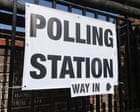
The British government is moving to strip itself of the power to direct the UK’s elections watchdog, a significant reversal of a 2022 policy that critics argued put the thumb of the executive on the scales of democracy. By removing the "Strategy and Policy Statement" over the Electoral Commission, the Labour administration aims to restore the body’s full independence. This is not just a technical change in administrative law. It is a fundamental shift in how the mechanics of voting are protected from the shifting winds of party politics.
When the previous government introduced the Elections Act 2022, it included a provision that allowed the Secretary of State to set out "guidance" for the Electoral Commission. On paper, it was framed as a way to make an unelected body more accountable to Parliament. In practice, it meant a Cabinet minister could influence the priorities of the very organization responsible for policing their own party's campaign spending and conduct. The watchdog was, effectively, put on a leash.
The Mechanism of Influence
To understand why this matters, one has to look at how the Electoral Commission functions. It isn't just about counting ballots. It oversees party finance, registers political parties, and ensures that the rules of engagement are fair. When a government grants itself the power to issue a Strategy and Policy Statement, it gains the ability to define what "success" looks like for the regulator.
If a minister decides that the Commission should focus less on investigating dark money and more on the logistics of voter ID, the Commission is legally bound to "have regard" to that preference. This created a profound conflict of interest. A political actor was defining the scope of their own referee. The repeal of this power is designed to ensure that the Commission answers to a cross-party committee in Parliament—the Speaker’s Committee—rather than the Home Office or the Cabinet Office.
The Voter ID Complication
One cannot discuss the independence of the Electoral Commission without addressing the elephant in the polling station: Voter ID. The 2022 Act didn't just introduce ministerial oversight; it mandated that every voter present a physical photo ID. Data from recent local and national elections showed that thousands of voters were turned away. While the government claims this prevents fraud, the Electoral Commission’s own reporting suggested that personation fraud—the crime Voter ID is meant to stop—was already statistically microscopic in the UK.
The independence of the Commission is vital here because the watchdog is the only body capable of providing an objective post-mortem on these policies. If the Commission is beholden to a ministerial statement, its ability to criticize the impact of Voter ID is compromised. By stepping back, the government is allowing the Commission to speak uncomfortable truths about how voting barriers affect different demographics without the fear of budgetary or structural retaliation.
Dark Money and Digital Frontiers
The battle for election integrity has moved far beyond the physical ballot box. We are now in an era of coordinated social media blitzes and opaque funding streams that bypass traditional reporting. The Electoral Commission has long complained that its fines—capped at £20,000 per offense—are seen by wealthy donors as a mere "cost of doing business."
A truly independent Commission needs more than just freedom from ministerial guidance; it needs teeth. The current regulatory framework was built for an era of paper leaflets and town hall meetings. It struggles to track "non-party campaigners" who spend millions on targeted digital ads. By removing the threat of government interference, the path is cleared for a more aggressive regulator that can lobby for higher fine caps and better transparency tools without being accused of defying its political masters.
The Global Context of Democratic Backsliding
Britain’s move to insulate its election watchdog is a rare counter-trend in a global environment where executive overreach is becoming the norm. From the capture of judicial systems to the sidelining of independent auditors, the "strongman" style of governance usually begins by weakening the institutions that provide oversight.
Critics of the repeal argue that it leaves the Electoral Commission as a "headless fourth branch of government," accountable to no one. They claim that because the Commission's decisions affect the lifeblood of politics, elected officials must have a say in its direction. This argument, however, ignores the inherent bias of any incumbent government. Accountability should come through transparent, cross-party parliamentary scrutiny, not the private directives of a Secretary of State.
The Digital Threat to Neutrality
As we look at the upcoming electoral cycles, the role of technology becomes the primary concern. Deepfakes, AI-generated disinformation, and automated bot farms are capable of shifting public sentiment in hours. An independent regulator must be able to move at the speed of the internet. If the Commission has to check its actions against a government-issued policy statement every time it wants to investigate a new form of digital interference, it will always be two steps behind the bad actors.
The removal of the ministerial veto is a necessary first step, but it is not a total solution. The Commission still relies on the government for its budget. It still operates under laws written by the people it is supposed to regulate. To truly protect the vote, the watchdog requires a permanent, non-discretionary funding model that cannot be used as a bargaining chip during budget negotiations.
Restoring Public Trust
Public confidence in the fairness of elections is a fragile commodity. Once voters believe the system is rigged—either through suppression or through a biased referee—the social contract begins to fray. The 2022 power grab was a blow to that confidence, creating the perception that the governing party wanted to choose its own umpire.
The reversal of this policy is an admission that the optics of the 2022 Act were toxic. It signals a return to a "constitutional convention" where the rules of the game are not changed by one side without broad consensus. But the work is far from over. The Electoral Commission must now prove that it can use this restored independence to tackle the systemic issues of campaign finance and digital transparency that have been allowed to fester for a decade.
The next time a major campaign finance scandal breaks, the public needs to know that the investigators are following the evidence, not a memo from a Cabinet minister. Anything less is a managed democracy, not a free one. The government must now ensure that the Speaker’s Committee has the resources to provide the robust, non-partisan oversight that the Commission requires to function.
Would you like me to analyze the specific changes to the Speaker’s Committee’s oversight powers or investigate the current fine structures for election law violations?