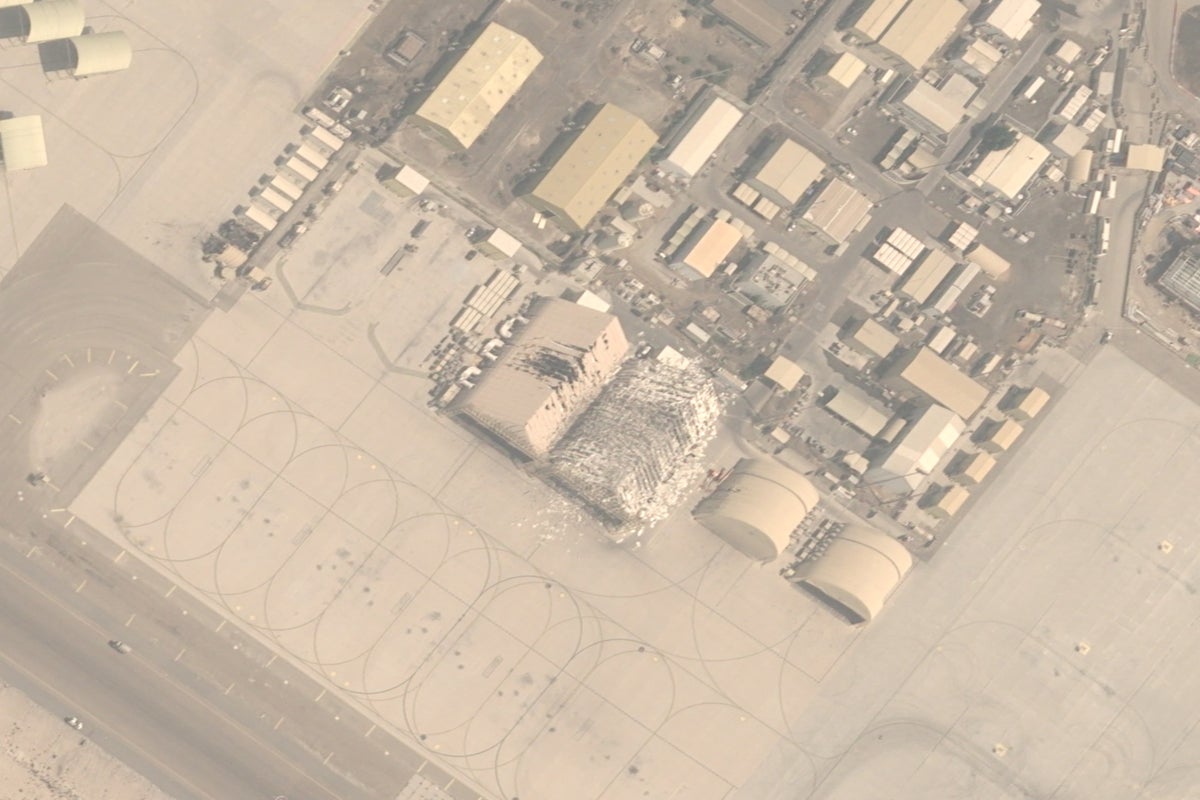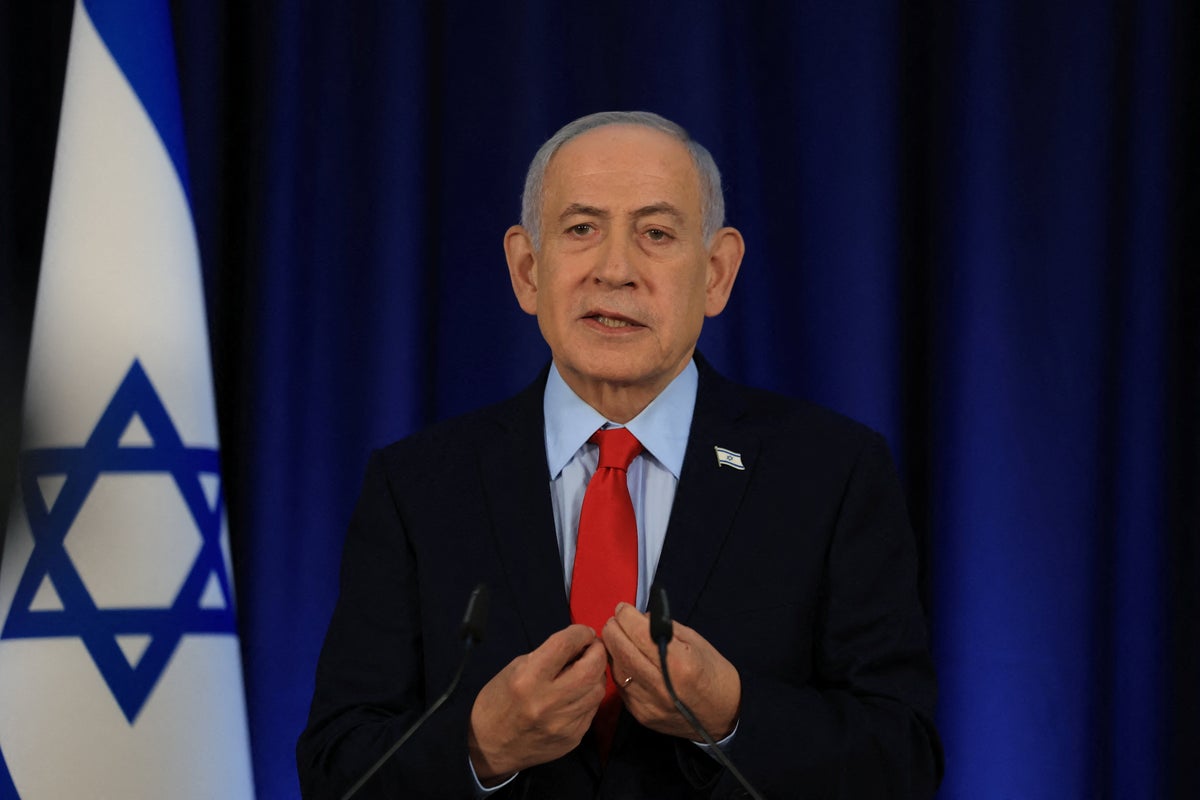
The shadow war between Israel and Iran has finally stepped into the light, but the tactical restraint currently on display is not born of sudden diplomacy. It is a product of cold, hard math. While Israel continues to launch targeted strikes against Iranian military infrastructure, the absence of smoke over Iran’s oil terminals in Kharg Island tells the real story. This caution is the direct result of a rare moment of alignment between the current Biden administration and the incoming Trump team. Both sides of the American political aisle have signaled to Prime Minister Benjamin Netanyahu that any move to collapse the global energy market will carry a price higher than the Israeli government is prepared to pay.
Israel’s recent operations have focused on degrading air defense systems and missile production facilities. These are surgical efforts designed to restore deterrence without triggering a total regional collapse. However, the internal pressure within the Likud party and the Israeli security establishment to "finish the job" by hitting the Islamic Republic’s economic jugular remains intense. Tehran’s economy breathes through its oil exports, primarily to China. Cutting that off would be a death blow to the regime's ability to fund its proxies, yet it would also ignite a global inflationary firestorm that Washington is desperate to avoid.
The Trump Doctrine on Iranian Crude
The narrative that a return of Donald Trump to the White House would grant Israel a blank check for total war is an oversimplification of his "America First" energy policy. Trump has built much of his political identity on the promise of low gas prices and domestic economic stability. During recent private communications, the message sent to Netanyahu was clear. Do not break the oil market before the inauguration.
Trump’s strategy relies on "maximum pressure" through sanctions, not through the physical destruction of infrastructure. If Israel destroys Iranian refineries or export terminals, the sudden removal of roughly 1.5 million barrels of oil per day from the global supply would cause a price spike that would haunt the first hundred days of any new administration. For Trump, the goal is to bankrupt the regime by making their oil impossible to sell, not by making it impossible to produce. The distinction is subtle but vital for global market stability.
Why Israel is Pulling Punches
The Israeli Air Force possesses the capability to reach Iran’s critical energy hubs. They have practiced the long-range refueling missions and the electronic warfare suppression required to bypass what remains of Iran’s S-300 batteries. Yet, they haven't pulled the trigger. The reason is a mixture of ammunition logistics and diplomatic isolation.
Israel is currently fighting a multi-front war in Gaza and Lebanon. It relies heavily on American-made interceptors for the Iron Dome and David’s Sling systems. If Israel ignores the White House’s red line regarding energy targets, they risk a slowdown in the "Gravel" shipments—the constant flow of munitions required to keep their skies clear. Netanyahu is a survivor. He knows that a tactical victory against an Iranian oil refinery is not worth the strategic failure of running out of interceptor missiles while Hezbollah still has thousands of rockets pointed at Tel Aviv.
The Invisible Hand of the Gulf States
Saudi Arabia and the United Arab Emirates are the silent players in this triangle. In previous decades, the Gulf monarchies might have cheered for an Israeli strike on their primary rival. That has changed. Riyadh is currently engaged in a delicate detente with Tehran, brokered by China. They fear that if Israel hits Iran’s oil, Iran’s retaliation will not be directed at Tel Aviv, but at the desalination plants and oil fields of the Arabian Peninsula.
The message from the Gulf to Washington has been blunt. If you cannot restrain Israel, do not expect us to flood the market to stabilize prices after the fallout. This creates a bottleneck for Israeli military planners. Without a guarantee that the "oil gap" will be filled by OPEC+, the global economic consequences of a strike become a certainty rather than a risk.
The Vulnerability of the Kharg Island Terminal
To understand the stakes, one must look at the geography of Iranian power. More than 90% of Iran’s oil exports pass through a single point. Kharg Island. This small outcrop in the Persian Gulf is the ultimate "off switch" for the Iranian state.
If Israel were to strike this facility, the environmental and economic damage would be felt from Shanghai to London. Iran’s response would likely involve the mining of the Strait of Hormuz. This is the ultimate nightmare scenario for the Pentagon. A closed Strait of Hormuz means 20% of the world’s liquefied natural gas and oil supply is trapped. The price of crude would not just rise; it would double overnight.
Washington’s nightmare is a $150 barrel of oil.
The Intelligence Gap and the Proxy Problem
The current exchange of fire ignores a fundamental reality of the Middle East. You cannot kill an ideology with a bunker-buster. Even if Israel manages to temporarily disable Iran’s missile production, the "Axis of Resistance" remains embedded in the failing states surrounding Israel.
The focus on state-on-state strikes serves as a distraction from the deteriorating situation in the West Bank and the long-term insurgency potential in Southern Lebanon. Israeli intelligence officials are privately concerned that by focusing so heavily on the "head of the snake" in Tehran, they are stretching their domestic security forces to a breaking point. The military is tired. The reservists have been away from their jobs and families for over a year. There is a human limit to how long a society can remain on a total war footing.
The Nuclear Question Remains Unanswered
While the world watches the oil prices, the centrifuges in Natanz and Fordow continue to spin. The current round of strikes has intentionally avoided Iran’s nuclear sites. This is the most dangerous "gray zone" of all.
Israel views a nuclear-armed Iran as an existential threat that outweighs any economic concern. If the International Atomic Energy Agency (IAEA) reports that Iran has reached the 90% enrichment threshold, all the warnings from Trump and Biden about oil prices will likely fall on deaf ears. For the Israeli cabinet, a global recession is preferable to a nuclear-tipped missile launched from Isfahan.
The current "restraint" is therefore a temporary truce, not a permanent peace. We are watching a high-stakes poker game where the players are running out of chips and the house is threatening to close the casino.
The Tactical Shift in Israeli Air Operations
Recent sorties have demonstrated a new doctrine of "permanent degradation." Instead of one massive, headline-grabbing strike, Israel is opting for a series of smaller, high-frequency attacks that force Iran to constantly move its assets. This drains Iranian resources and keeps their military in a state of perpetual high alert, which leads to exhaustion and human error.
We saw this during the 1980s "Tanker War." It wasn't one single battle that ended the conflict, but the steady, grinding pressure on logistics and export capability. Israel is applying a 21st-century version of this strategy, using cyber-warfare to compliment its kinetic strikes. By disabling the software that runs the pipelines rather than blowing up the pipes themselves, they achieve the same result with less political blowback.
The Reality of Sanctions Bypass
A factor often ignored in Western analysis is the "Dark Fleet." This is the network of aging tankers that move Iranian oil under false flags to avoid detection. Even with the most sophisticated satellite tracking, a significant portion of Iranian crude still reaches its destination.
Any Israeli plan to "starve" the Iranian regime must account for this shadow economy. Sanctions only work if the buyer is willing to cooperate. As long as China sees Iranian oil as a cheap, strategic necessity, the "maximum pressure" campaign will have a floor that it cannot drop below. This reality frustrates Israeli hawks who believe only a physical destruction of the assets will yield results.
Moving Beyond the Rhetoric
The coming months will be defined by how the Netanyahu government navigates the transition of power in the United States. They have a window of roughly sixty days where the outgoing administration is a "lame duck" and the incoming one is still forming its cabinet. This is the danger zone.
History shows that Israel often acts most decisively when the American political apparatus is in flux. However, the economic reality of 2026 is different than it was in 2016. The global supply chain is more fragile, and the tolerance for a massive energy shock is non-existent.
The real story isn't the missiles that are being fired. It is the targets that are being pointedly ignored. Until the first barrel of oil is intentionally spilled, this conflict remains a violent negotiation rather than an all-out war.
Monitor the insurance rates for tankers in the Persian Gulf. When those rates become unaffordable, you will know that the "energy redline" has finally been crossed.