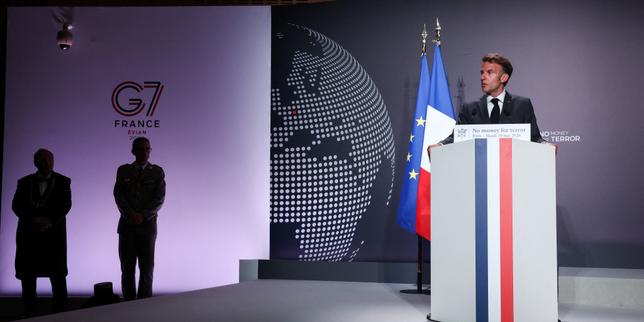
Diplomatic rows usually start with a broken treaty or a sudden trade tariff. They don't usually start because someone threw a massive political party right on your doorstep without asking. But that's exactly what's happening along the shores of Lake Geneva. France decided to host the upcoming G7 summit in Evian-les-Bains. Across the water, Switzerland is furious.
This isn't just about traffic jams or noisy helicopters. The chosen location forces a neutral nation into a security nightmare it didn't ask for, paid for with Swiss tax money, all while the French government takes the credit.
The decision by Paris to bring global leaders back to the shores of Lake Geneva has revived deep-seated cross-border tensions. It highlights a recurring theme in European politics where big powers expect smaller neighbors to absorb the collateral damage of their geopolitical theater.
The Geography of a Diplomatic Headache
Evian is a beautiful town. It is also a logistical trap. Tucked tightly between the French Alps and the southern shore of Lake Geneva, it has very few access routes. When the world's most powerful leaders arrive, the town effectively locks down.
Because of this awkward geography, France cannot secure Evian alone. It physically requires Swiss airspace, Swiss waters, and Swiss infrastructure to keep the summit safe.
When the G7 met in Evian back in 2003, the security perimeter extended deep into Swiss territory. History is repeating itself. The French police will secure the southern side, but the Swiss army and cantonal police forces must secure the northern lake border and the skies above.
Geneva International Airport, located entirely on Swiss soil, serves as the main entry point for delegates, journalists, and security detail. The Swiss end up running the logistical backend for a French political show.
The Sovereignty Trap and the Cost of Neutrality
Switzerland takes its neutrality seriously. It's the core of their global identity. Forcing Swiss security forces to defend a G7 summit—an organization that represents specific Western economic and political alignments—strains that neutrality.
Then there's the money. Security operations of this scale cost millions. During previous cross-border summits, Swiss cantons like Geneva and Vaud had to mobilize thousands of police officers. They had to pay overtime, cancel leave, and deploy military hardware.
The Swiss public is asking a simple question. Why should Swiss taxpayers foot the bill to protect foreign leaders attending a meeting in France?
Local politicians in Geneva aren't hiding their frustration. They remember the 2003 summit well. That event sparked massive anti-globalization protests. Riots spilled over into Geneva and Lausanne. Shop windows were smashed, streets were blocked, and local businesses lost millions in revenue. France enjoyed the prestige of hosting, while Switzerland cleaned up the broken glass.
Cross Border Friction Beyond the G7
The G7 announcement didn't happen in a vacuum. Relations between Bern and Paris have been scratchy for a while.
Take the ongoing dispute over cross-border workers. Around 200,000 French residents commute into Switzerland every day for high-paying jobs in Geneva, Vaud, and Basel. They pay taxes, but how those tax revenues are shared between Swiss cantons and French departments is a constant source of bickering. Swiss authorities feel they provide the infrastructure that enables these workers to earn a living, while France demands a bigger piece of the tax pie.
Airspace control is another flashpoint. The French military frequently conducts exercises near the border, occasionally clipping Swiss airspace and triggering scramble alerts from the Swiss Air Force. Adding a high-security no-fly zone for the G7 summit means commercial flights out of Geneva will face massive delays, hurting Swiss airlines and businesses.
What Happens Behind Closed Doors
Diplomats are trying to smooth things over. They use polite language in public. They talk about "shared security goals" and "regional cooperation."
Don't buy the corporate spin. Behind the scenes, Swiss officials are pushing hard for financial compensation and strict limits on French police overreach. Switzerland wants written guarantees that France will cover a significant portion of the auxiliary security costs incurred on the Swiss side of the lake. They also want a clear chain of command so French security agents don't end up barking orders on Swiss soil.
France, dealing with its own tight domestic budget, is resisting. Paris expects Switzerland to help out of good neighborly duty. After all, a secure region benefits everyone. But that argument falls flat when one side bears the risk and the other gets the photo-op.
The Operational Reality on Lake Geneva
If you live in or plan to visit the Lake Geneva region during the summit, prepare for disruption. The lake itself will turn into a militarized zone. Expect heavy naval patrols, restricted boating zones, and strict identity checks for anyone operating a vessel on the water.
- Flight Restrictions: Expect temporary flight restrictions over the entire Léman region, affecting private aviation and commercial drones.
- Border Delays: Customs checkpoints at the major border crossings will see long lines as French and Swiss border guards tighten security.
- Public Transit Detours: Lake ferry services between Evian and Lausanne will likely face suspensions or severe schedule changes.
Local authorities advise residents to carry identification at all times and monitor daily updates from cantonal police departments. Keep an eye on local transport apps for real-time border delays. If you run a business dependent on cross-border logistics, build a buffer into your delivery schedules now. The political friction in the offices of Paris and Bern is about to become very real on the ground.