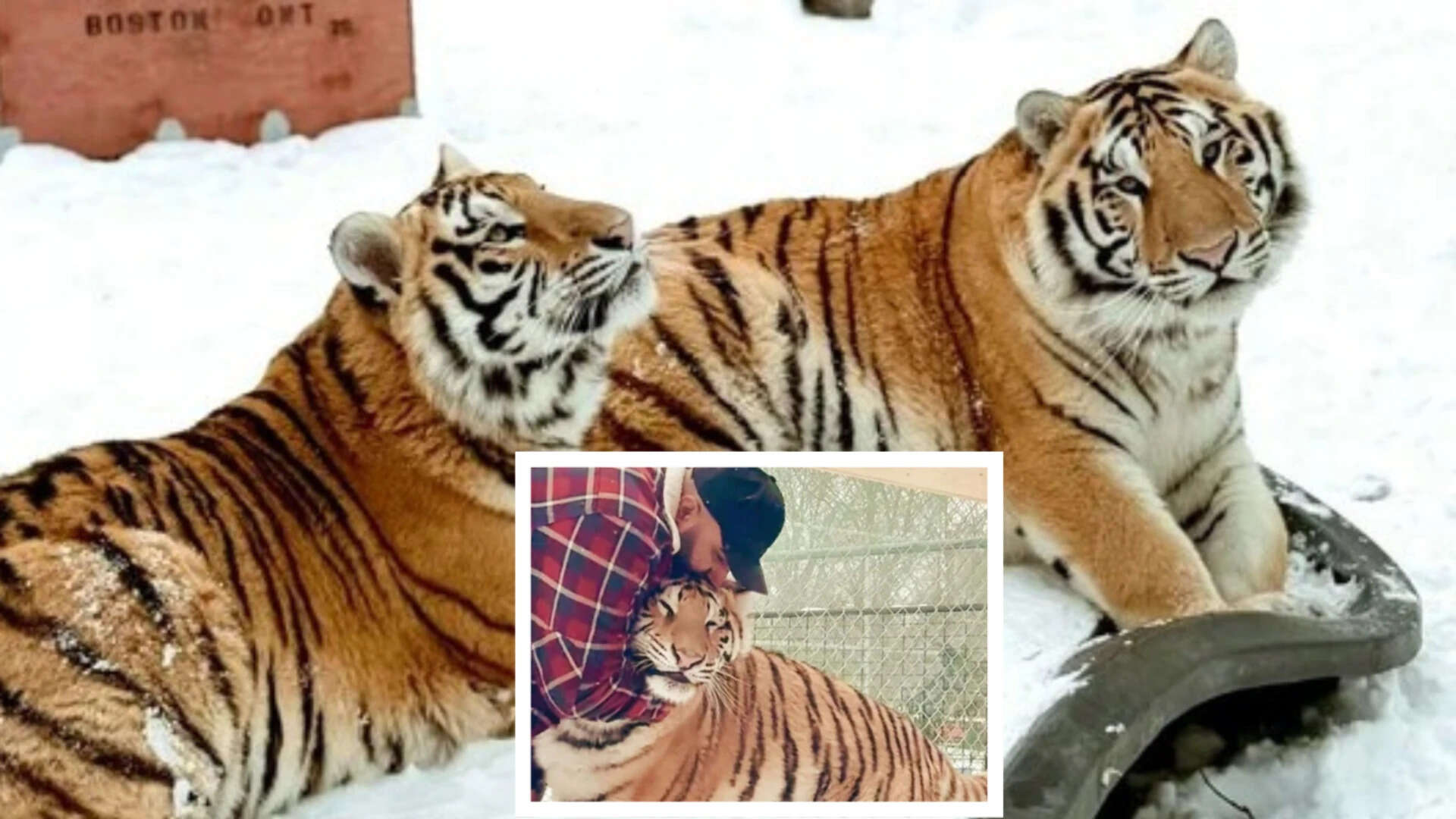
The intersection of private property rights and the maintenance of "apex predators"—specifically Panthera tigris—creates a systemic risk profile that standard municipal bylaws are often unequipped to quantify. When a residential owner in Ontario asserts that a tiger’s "personality" mitigates the inherent danger of the animal, they are conflating subjective behavioral observation with biological probability. This cognitive dissonance ignores the three immutable variables of exotic animal liability: instinctual latency, containment redundancy, and the catastrophic scale of a single failure event.
The Triad of Inherent Risk in Private Menageries
To analyze the viability of keeping tigers on residential property, one must move past the emotional narratives of "bond" and "temperament." Instead, the situation must be viewed through a cold assessment of biological and physical constraints.
1. The Latency of Predatory Instinct
The primary error in the "personality" argument is the failure to account for instinctual latency. Even a tiger raised in captivity remains a non-domesticated species. Unlike dogs, which have undergone millennia of selective breeding for pedomorphosis (retention of juvenile traits) and human-aligned social cues, tigers possess a neural architecture optimized for solitary hunting and territorial defense.
A tiger’s behavioral baseline is not a "tame" state but a "suppressed" state. The transition from a docile interaction to a predatory strike can occur in milliseconds, triggered by external stimuli—a high-pitched noise, a stumble by the handler, or a change in scent—that are outside the owner's control. In a residential setting, these environmental triggers are multiplied by the presence of neighbors, vehicles, and uncontrolled local wildlife.
2. Kinetic Force and Physical Disparity
The physics of an encounter between a 200-kilogram tiger and an 80-kilogram human renders "personality" irrelevant in a conflict scenario.
- Mass Differential: A mature Bengal tiger can outweigh a human male by a factor of three.
- Force Application: Tigers exert a bite force of approximately 1,050 psi.
- Striking Velocity: A tiger's swipe can carry enough kinetic energy to cause blunt force trauma or internal decapitation before the claws even penetrate the skin.
In any physical disagreement, the human participant relies entirely on the animal's willingness to comply. The moment that willingness fluctuates, the human enters a zone of zero-percent survivability. This is not a manageable risk; it is a binary state of safety or fatality.
3. Structural Redundancy Failures
Most residential properties are designed for human habitation, not the containment of megafauna. For a tiger enclosure to meet professional zoological standards, it must incorporate:
- Perimeter Integrity: Fencing must be at least 16 feet high with inward-angled overhangs to prevent leaping escapes.
- Subterranean Barriers: Concrete footings must extend deep enough to prevent tunneling.
- Double-Door Entry (Air-Lock Systems): To ensure there is never a direct path between the animal and an open exit.
Residential owners frequently lack the capital or the zoning permissions to implement these redundancies. This creates a "Single Point of Failure" model where a forgotten latch or a rusted chain link results in a public safety crisis.
The Economic and Legal Friction of the "Grandfathering" Myth
Owners often rely on the fact that they owned the animals before a specific bylaw was passed, hoping for "grandfathered" status. However, this legal strategy is structurally weak in the face of Public Nuisance and Strict Liability doctrines.
Under the principle of Strict Liability, the owner of an inherently dangerous animal is held responsible for any damage caused, regardless of the precautions taken. The law recognizes that some activities are so hazardous that no amount of care can eliminate the risk. Therefore, the owner assumes the entire burden of the animal's potential actions.
From a municipal perspective, the presence of tigers creates an unfunded mandate. The local police and emergency services are rarely trained or equipped with tranquilizer rifles or high-caliber deterrents necessary to manage an escaped tiger. This shifts the "cost" of the tiger's presence from the owner to the taxpayers, who must pay for specialized emergency readiness.
The Cognitive Bias of "The Bond"
The owner’s claim—"we know their personalities"—is a classic example of Anthropomorphic Projection. This bias leads humans to attribute human-like reasoning and emotional consistency to animals. While tigers are sentient and capable of recognizing individuals, their "affection" is not a social contract.
In a professional zoo environment, "Protected Contact" is the gold standard. Keepers never enter a space with a tiger without a physical barrier between them. This protocol exists specifically because professional biologists recognize that "knowing" an animal's personality is not a safety measure. The residential owner’s insistence on "Free Contact" (sharing space with the animal) is not a sign of expertise; it is a sign of a fundamental misunderstanding of the species' ethology.
Operational Constraints of Residential Husbandry
Beyond the risk of escape, the biological needs of a tiger create a logistical bottleneck in a residential area.
- Waste Management: A single tiger produces significant nitrogenous waste. In a residential drainage system, this can lead to soil contamination and olfactory nuisances that violate basic zoning health codes.
- Nutritional Logistics: Tigers require 5–7 kilograms of meat daily. Sourcing, storing, and disposing of the remains of whole-carcass feeding creates a biological hazard profile that attracts vermin and risks the spread of zoonotic diseases.
- Acoustic Impact: A tiger’s roar can reach 114 decibels and carry for over three kilometers. This constitutes a violation of noise ordinances that "grandfathering" clauses rarely cover.
Strategic Recommendation for Municipal Resolution
To address the presence of tigers on residential property, the governing body must move away from debating the "safety" of the specific animals and instead focus on Asset Classification.
The tigers should be classified as High-Impact Biological Assets rather than pets. This allows the municipality to enforce:
- Mandatory Liability Insurance: Requiring the owner to carry a policy (typically upwards of $5 million to $10 million) that specifically covers exotic animal attacks. The prohibitive cost of such premiums usually forces a voluntary relocation.
- Structural Audits: Commissioning third-party engineering firms to certify that the enclosure meets Association of Zoos and Aquariums (AZA) standards.
- Emergency Response Bond: Requiring the owner to post a cash bond to cover the costs of a specialized "Dangerous Animal Response Team."
The owner's defense of "personality" is a qualitative argument in a quantitative crisis. By shifting the requirements to fiscal and structural benchmarks, the municipality can ensure public safety without needing to "prove" the animal is dangerous—the animal's biology already provides the proof. The strategic play here is to make the cost of non-compliance exceed the owner's emotional or financial capacity to maintain the status quo.