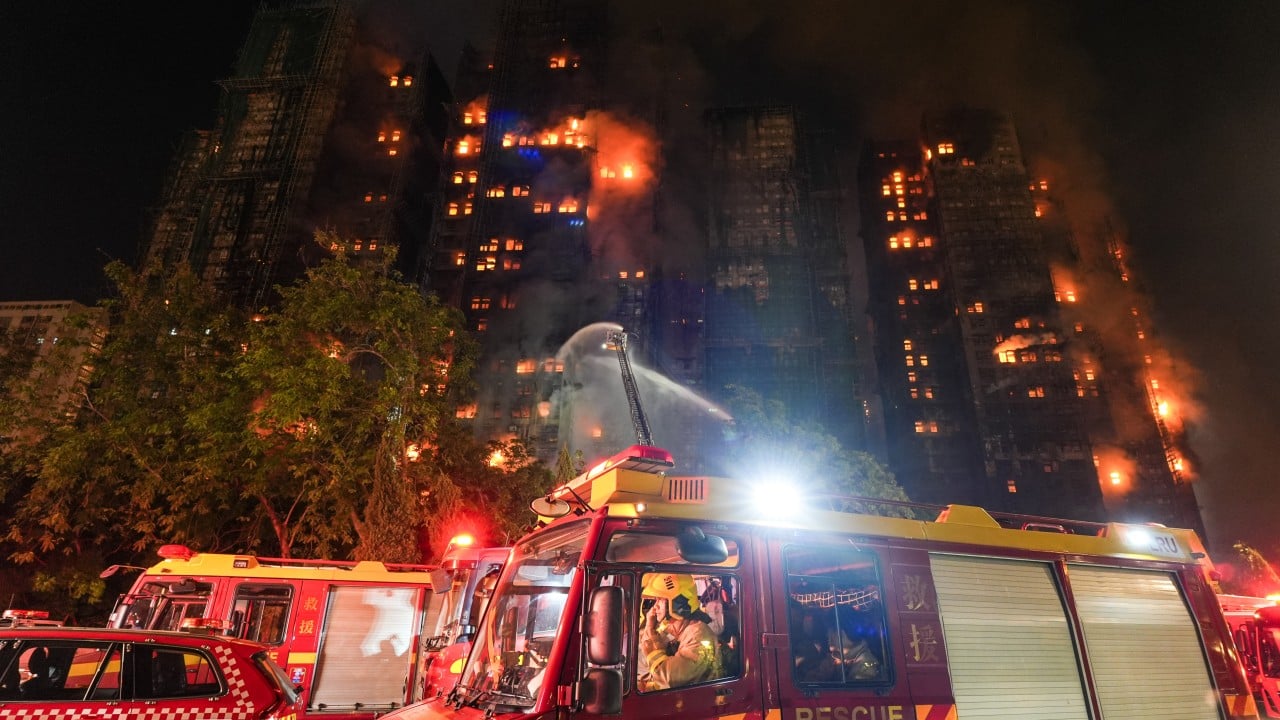
The inquiry into the Wang Fuk Court fire has peeled back the skin of a systemic failure that cost lives and shattered a community. While headlines often focus on individual stories of survival, the testimony from the coroner's court reveals a much grimmer reality about the state of high-rise safety in aging residential blocks. It was not merely a tragic accident. It was a failure of infrastructure, a breakdown in emergency communication, and a glaring example of how technical negligence turns a small spark into a death trap.
Between the lines of the survivors' grief lies a series of mechanical and administrative errors that rendered the building’s defense systems useless when they were needed most. This investigation moves past the surface-level heartbreak to examine the structural rot and the regulatory blind spots that allowed this disaster to escalate.
The Illusion of Fire Protection
Residents of Wang Fuk Court lived under the assumption that the fire hydrants, hoses, and alarms in their hallways were more than just wall decorations. They were wrong. During the hearings, evidence surfaced showing that water pressure in the standpipe system was insufficient. When residents tried to fight the initial flames, they were met with a pathetic trickle rather than a life-saving blast of water.
This is a recurring theme in older housing estates. Maintenance contracts are often awarded to the lowest bidder, leading to "paper inspections" where technicians sign off on equipment without actually testing it under load. If the pumps don’t kick in because of a faulty sensor or a rusted valve, the entire fire suppression strategy for a 30-story building collapses in minutes.
The Problem with Managed Neglect
The inquiry highlighted a culture of complacency within the property management office. It is easy to blame a single faulty appliance for starting a fire, but the building’s inability to contain that fire is a management failure. Fire doors, designed to keep smoke out of stairwells for at least two hours, were found propped open or improperly maintained.
In a high-rise, a propped-open door turns a stairwell into a chimney. The "stack effect" pulls smoke upward with terrifying speed, suffocating people floors above the actual fire. This isn't an act of God. It is a failure of daily oversight.
Why the Stay Put Policy Failed
For decades, the standard advice for high-rise residents has been to "stay put" unless their own apartment is on fire. The logic is sound in theory: modern buildings are built with "compartmentation," meaning each flat is a concrete bunker designed to keep fire out. However, Wang Fuk Court proved that this policy is only as good as the building's physical integrity.
When smoke leaks through gaps in utility pipes or under poorly fitted doors, the "stay put" advice becomes a death sentence. Residents in the upper floors described a harrowing choice: stay and choke, or run into a blacked-out hallway filled with toxic heat. The hearings revealed that many victims were found in the stairwells, suggesting they felt the risk of staying was greater than the risk of fleeing.
The Lethal Chemistry of Modern Furnishings
The speed at which the fire moved shocked even veteran investigators. This is the "dirty secret" of modern residential life. Our homes are filled with polyurethane foam, synthetic fabrics, and plastic electronics. These materials don't just burn; they gasify. They release hydrogen cyanide and carbon monoxide in concentrations that can knock a person unconscious in three breaths.
The fire at Wang Fuk Court reached "flashover" conditions—where everything in a room ignites simultaneously—much faster than the building’s old-school ventilation systems could handle. We are living in high-speed fuel tanks protected by low-speed safety standards.
Communication Breakdown at the Front Lines
The bravery of the first responders is unquestioned, but the inquiry shed light on the chaos that ensues when radio systems fail in concrete towers. Firefighters reported "dead zones" where they could not communicate with the command center outside. When a crew is blind and deaf in a burning building, they cannot coordinate rescues or call for backup effectively.
This technological lag is inexcusable. Bi-directional amplifiers (BDAs) that boost emergency signals are standard in many jurisdictions, yet they remain an afterthought in many older residential blocks. The delay in relaying information about trapped residents on the 26th floor wasn't a human error; it was a hardware failure.
The Cost of Cheap Upgrades
As buildings age, they require retrofitting. This is where the most dangerous corners are cut. During the hearings, questions were raised about recent renovations to the building’s exterior and common areas. If the materials used—such as certain types of cladding or insulation—do not meet the highest fire-rating standards, they can facilitate "vertical fire spread."
Once a fire breaks a window and catches the exterior facade, it "leaps" floor by floor, bypassing the concrete floors that were supposed to stop it. This turns a single-flat fire into a multi-story catastrophe. The investigation into the procurement of these materials remains a point of high tension for the families involved.
A Systemic Disregard for Resident Training
We spend millions on hardware but almost nothing on the "human software." Most residents at Wang Fuk Court had never participated in a real fire drill. They didn't know which stairwell led to the roof or which one led to the ground. In the dark, amid the screaming of sirens and the smell of melting plastic, that lack of knowledge is fatal.
Property managers often view fire drills as an inconvenience to residents rather than a mandatory life-saving exercise. This attitude must change. A building is more than its walls; it is a living system that requires its inhabitants to know how to survive it.
The Path to Accountability
The coroner's findings shouldn't just be filed away. They must serve as a mandate for legislative change. We need a "Right to Safety" act that forces immediate, publicly funded inspections of all pre-1990 high-rise buildings.
- Mandatory Sprinkler Retrofitting: Every residential unit in a high-rise should have automatic sprinklers. It is the only way to kill a fire in its infancy.
- Real-time Pressure Monitoring: Fire pumps should be linked to a central monitoring station that alerts the fire department the moment water pressure drops below legal limits.
- Criminal Liability for Management: If a fire door is found wedged open during an inspection, the penalty should not be a small fine. It should be treated as a serious endangerment of public life.
The survivors of Wang Fuk Court spoke of a "wall of heat" and the sound of breaking glass that sounded like gunshots. Their testimony is a warning. If the structural and mechanical failures identified in these hearings are ignored, the next "tragic accident" is already being written into the blueprints of our aging cities.
Demand an audit of your own building’s fire safety certifications today.