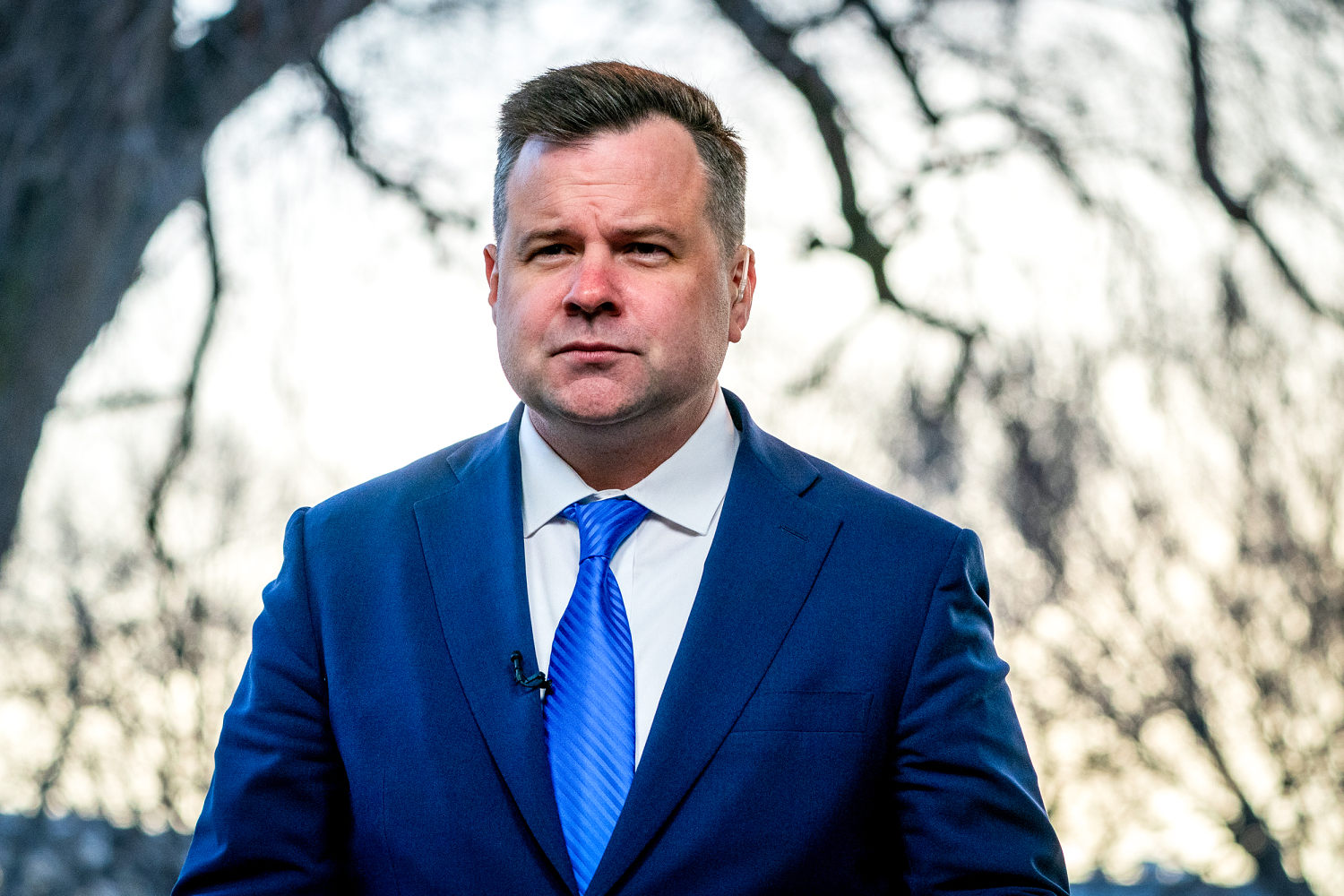
The hand-wringing inside the Washington beltway has reached a predictable pitch. A new intelligence chief is appointed. The media instantly unloads a barrage of anonymous quotes lamenting the death of "objective analysis." They paint a picture of a dangerous partisan warrior about to weaponize the nation's secrets to please the president.
This narrative is not just tired. It is fundamentally wrong. Recently making waves in this space: The Fracture Inside the Fortress of Khan.
The obsession with the myth of the completely detached, politically sterile intelligence director ignores how power actually operates in high-stakes governance. For decades, the national security establishment has hidden behind a shield of alleged neutrality to protect its own institutional inertia. When an outsider with a clear political mandate enters the building, the bureaucracy panics. They call it partisanship. In reality, it is accountability.
The conventional consensus insists that an effective intelligence chief must be a career technocrat who speaks truth to power in hushed, polite tones. But history shows that polite technocrats routinely get frozen out of the inner circle. An intelligence director who lacks the absolute trust and political alignment of the commander-in-chief is worse than partisan. They are useless. More insights on this are explored by NBC News.
The Myth of the Objective Technocrat
Step into any briefing room in Langley or the Pentagon. The foundational lie of the intelligence community is that data speaks for itself. It does not. Human beings collect it, human beings curate it, and human beings apply their own deeply ingrained institutional biases to it before it ever reaches a slide deck.
When critics cry foul over a "partisan" chief, they are projecting. They imply that the existing bureaucracy is a monolith of pure, unadulterated objectivity. I have spent years analyzing how massive security structures deploy information. They operate like any other massive corporation. They protect their budgets. They defend their legacy programs. They minimize risk to their own careers.
An intelligence agency is not a university sociology department. It does not exist to generate academic papers for the sake of intellectual curiosity. It exists to inform executive action. If the president does not trust the person delivering the briefing, the entire apparatus grinds to a halt. We saw this breakdown during the run-up to the 2003 Iraq War, where systemic institutional groupthink—completely divorced from overt partisan pressure—led to one of the greatest strategic failures in modern history. The problem was not political interference; it was an insulated bureaucracy talking to itself.
Alignment Creates Access
Consider the mechanics of the executive branch. A president faces a chaotic barrage of crises every single day. Their time is the most constrained resource on earth. Who gets that time? The people the president trusts to help execute their agenda.
Imagine a scenario where an intelligence chief is a pristine, apolitical figure who views the White House with aloof suspicion. They deliver dry, caveated assessments that refuse to take a definitive stand. They hide behind phrases like "we assess with medium confidence." The president, frustrated by the lack of clarity and sensing a lack of personal loyalty, stops reading the daily briefs. They turn instead to informal advisors, political allies, or defense contractors who offer clear, decisive opinions.
By demanding a total separation between politics and intelligence leadership, the critics actively guarantee the very outcome they claim to fear: the irrelevance of actual intelligence.
A chief who has the president’s ear brings the agency into the room where decisions are made. They possess the political capital required to force a stubborn president to look at uncomfortable data. If a partisan ally tells a president a hard truth, the president listens because they know the advisor shares their ultimate goals. If a career bureaucrat delivers the same truth, it is easily dismissed as institutional foot-dragging or sabotage.
Dismantling the Consensus on Institutional Independence
Let's address the questions that dominate the standard panel discussions on national security.
Does a political appointee corrupt raw data collection?
The short answer is no, because they cannot. The people who think a single director can wave a magic wand and alter the raw satellite imagery or signal intercepts coming out of the National Security Agency do not understand how the system works. The intelligence apparatus comprises hundreds of thousands of analysts, collectors, and contractors spread across 18 distinct agencies. The bureaucracy is too massive, too fragmented, and too stubborn to be hijacked by one person at the top. What a director actually controls is emphasis, priority, and resource allocation. If a director shifts focus from legacy Cold War threats to aggressive counter-proliferation or technological warfare, that is not corruption. That is strategy.
Won't career analysts quit in protest?
Good. Let them. The threat of mass resignations is a standard boogeyman used to terrify incoming administrations into compliance. In practice, the graveyard is full of indispensable people. When entrenched managers who are married to outdated methodologies leave, it opens the door for younger, more adaptable talent. The intelligence community has struggled for a generation to integrate modern commercial software, artificial intelligence, and open-source data analytics because the old guard refuses to change how they do business. A disruptive force at the top breaks the logjam.
The True Cost of the Status Quo
The real danger to national security is not an aggressive, politically aligned director. The real danger is a compliant leader who protects the agency's reputation at the expense of national agility.
Look at the systemic failures of the past two decades. The inability to anticipate major geopolitical shifts, the sluggish response to cyber warfare, and the persistent reliance on legacy hardware over software innovation. These were not failures caused by partisan interference. They were failures of bureaucratic comfort.
When an intelligence chief is insulated from political pressure, they are also insulated from accountability. They can fail repeatedly, hide behind classification stamps, and blame "intelligence gaps" without ever facing consequences. A partisan chief enjoys no such luxury. Their failures are immediately weaponized by the opposition, meaning their margin for error is razor-thin. They are forced to deliver results because their political survival depends on it.
The Strategy for Shaking Up the Apparatus
For any leader entering a highly resistant corporate or governmental structure with a mandate to disrupt, the playbook is identical. Stop trying to win a popularity contest with the people you were sent to reform.
- Bypassing Middle Management: The rot in large organizations rarely lives at the very bottom or the very top. It settles comfortably in the middle tiers of management, where career survival depends on maintaining the status quo. Identify the brilliant, frustrated analysts three levels down and give them direct lines of communication.
- Forcing Definitive Stances: Ban the use of institutional hedging. Force analysts to state exactly what they believe, why they believe it, and what data would prove them wrong. If an assessment cannot be written in plain English, reject it.
- Prioritizing Speed Over Perfection: A flawed intelligence report delivered twenty-four hours before a crisis is infinitely more valuable than a perfectly polished, heavily caveated report delivered twelve hours too late.
The critics will continue to scream about the politicization of the state. They will write their columns and book their television segments, mourning an era of pure objectivity that never actually existed. Let them talk.
The ultimate metric of an intelligence agency is not its popularity among Washington insiders or its adherence to twentieth-century bureaucratic norms. The metric is utility to the executive. A partisan warrior who possesses the absolute trust of the president will always accomplish more than an isolated technocrat shouting from the sidelines.
Stop demanding leaders who pretend to have no opinions. Start demanding leaders who know how to use power to force a bloated system to do its job.