The Breath Before the Shout
The air in eastern Ukraine does not just carry the scent of ozone and wet earth. It carries a vibration. For those living in the basement shadows of Bakhmut or the shattered outskirts of Donetsk, the sound of artillery is not an event. It is the environment. It is the heartbeat of a world gone mad. When that heartbeat stops, even for a moment, the silence is not peaceful. It is terrifying. It is a vacuum that pulls at your eardrums, making you wonder if the world has actually ended or if the monster is simply drawing a long, jagged breath before the next scream.
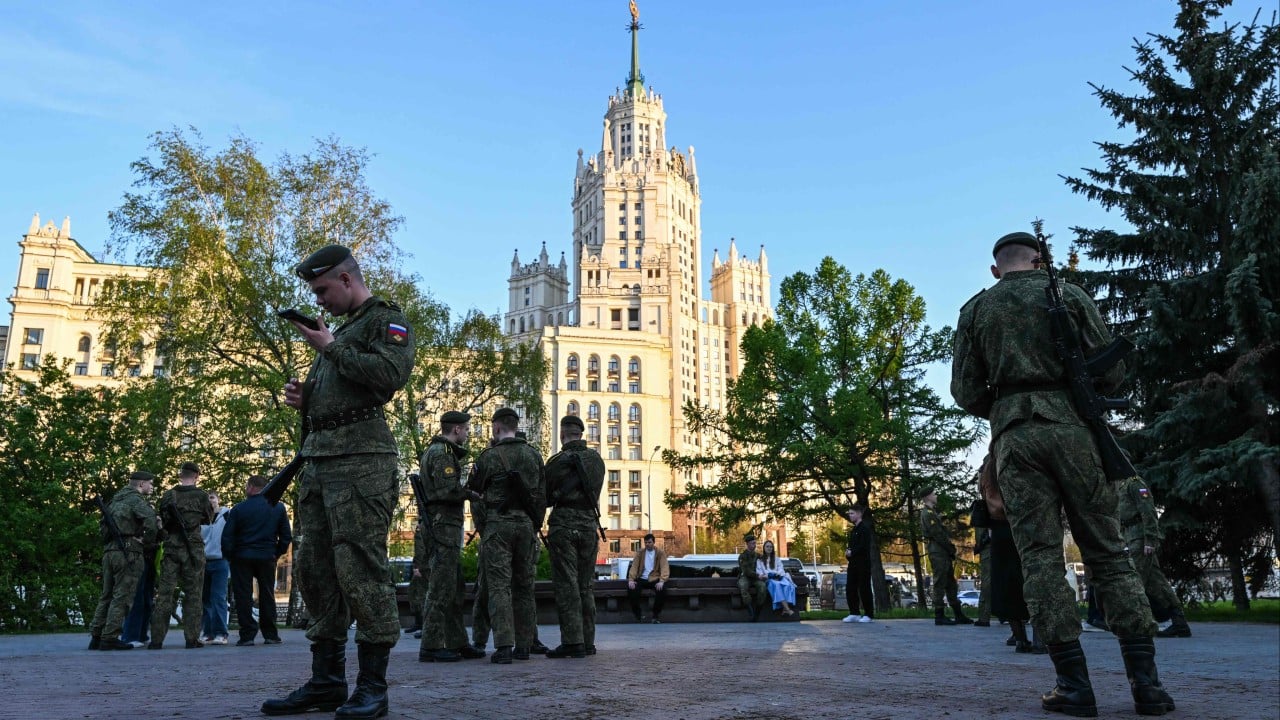
The Kremlin has issued an order. For forty-eight hours, the guns are supposed to go quiet. The occasion is Victory Day, May 9th, the hallowed anniversary of the defeat of Nazi Germany. It is a date etched into the very marrow of Russian identity, usually celebrated with the thunder of boots on Red Square and the glint of medals on the chests of old men. But this year, the victory being celebrated belongs to a ghost, while the war being fought belongs to the living.
Moscow calls it a humanitarian gesture. Kyiv calls it a cynical ploy. To a grandmother huddled over a camping stove in a darkened hallway, it is neither. It is merely a pause in the rain.
The Ghost of 1945
History is a heavy coat. In Russia, that coat is lined with the memories of twenty-seven million dead from the Great Patriotic War. Every family has a photograph of a young soldier who never came home, a black-and-white face staring out from a silver frame with eyes that saw the fall of Berlin. Victory Day is the secular religion of the state. It is the one day where the past and the present are forced to shake hands.
By ordering a ceasefire for this specific window, the Kremlin is attempting to wrap the current conflict in the sacred shroud of 1945. They want the soldiers in the trenches of the Donbas to feel like they are the direct descendants of the Red Army. They want the Russian public to see the pause as an act of grace, a moment of reflection for a nation that views itself as the eternal shield against fascism.
But the reality on the ground is far messier than a parade sequence. Logistics do not stop for holidays.
Consider a hypothetical sergeant named Alexei, sitting in a mud-slicked dugout three miles from the contact line. When the order comes down to cease fire, he does not suddenly feel a surge of historical pride. He feels a crushing anxiety. He knows that forty-eight hours of silence is forty-eight hours for the other side to move equipment, to rotate tired troops, to fix the tread on a stalled tank. Silence is an opportunity. In war, an opportunity is a threat.
The Invisible Stakes of a Frozen Clock
Why stop now?
The timing is not accidental. Strategic pauses in modern warfare are rarely about the soldiers’ well-being. They are about narrative control. By initiating the ceasefire, Russia positions itself as the arbiter of the conflict’s pace. If the Ukrainians fire during these two days, Moscow's state media will paint them as sacrilegious aggressors who respect nothing, not even the memory of the veterans who saved Europe. If the Ukrainians do not fire, Russia gains two days of uninterrupted logistical movement under the guise of peace.
It is a trap wrapped in a tribute.
The Ukrainian leadership knows this. They remember the previous "regimes of silence" that have peppered this conflict since 2014. They know that a ceasefire is often just a comma in a sentence that ends in blood. For Kyiv, Victory Day has a different resonance now. They have moved their own commemorations to May 8th, aligning with the rest of Europe, a deliberate symbolic break from the Soviet shadow. To them, the Russian ceasefire is not a holiday gift. It is a tactical smokescreen.
The Human Geometry of the Pause
Let’s look closer at the geometry of this silence.
In a small village halfway between the lines, there is a woman named Olena. For fourteen months, her life has been measured in the distance between her back door and the cellar stairs. When the shells stop falling, she does not go out to celebrate. She goes out to find water. She goes out to see if the neighbor’s roof is still there.
She moves with a frantic, bird-like speed because she knows the clock is ticking. Forty-eight hours.
172,800 seconds.
In those seconds, the absence of noise allows the brain to play tricks. You hear the wind in the pines and think it’s the whistle of an incoming Grad rocket. You hear a car door slam and your knees buckle. The psychological toll of a temporary ceasefire is often heavier than the shelling itself because it forces the soul to remember what "normal" feels like, only to snatch it away again when the sun sets on the second day.
The Mechanics of the Halt
Mathematically, a two-day pause in a high-intensity conflict changes the calculus of attrition.
- Fuel Consumption: Idle tanks do not burn diesel at the same rate as those in a breakthrough maneuver.
- Ammo Supply: Two days of rest allows the supply lines from the rear to catch up, stockpiling crates of 152mm shells for the inevitable "re-opening" of the front.
- Medical Triage: It provides a window to evacuate the wounded who have been pinned down in "grey zones" where medevac units previously couldn't reach.
But these are cold metrics. They don't account for the heat of the resentment. Soldiers on both sides are tired. They are dirty. They are haunted. When you tell a man who has been fighting for his life to stop for forty-eight hours because of a date on a calendar, you are asking him to step out of the primal state of survival and back into the world of politics. It is a jarring, painful transition.
The Echo in the Kremlin
In Moscow, the optics are everything. The ceasefire is a signal to the domestic audience that the "Special Military Operation" is under control, that the state can afford to be magnanimous. It is a performance of strength.
However, beneath the surface of the parade, there is a tremor of uncertainty. If the ceasefire is broken—and it almost certainly will be, in small skirmishes and "accidental" exchanges—it provides a pretext for a new wave of escalation. We tried to give them peace for the holy day, the rhetoric will claim, and they chose violence. The silence is a setup for a louder noise.
The Weight of the Forty-Ninth Hour
What happens when the clock hits midnight on May 10th?
The transition back to violence is rarely gradual. It is usually explosive. The pent-up tension of the two-day wait releases all at once. The "Victory Day Ceasefire" will likely be followed by one of the most intense periods of shelling in weeks, as both sides seek to reclaim the initiative they felt slipping away during the pause.
We often think of peace as the opposite of war. But a ceasefire is not peace. It is a different phase of war. It is the part of the movie where the music cuts out and the camera zooms in on the hero’s sweating face. It is the tension in the bowstring before the arrow is released.
The tragedy of this forty-eight-hour order is that it uses the memory of a past victory to facilitate a present slaughter. It takes the one day that should belong to the dead—to the shared sacrifice of millions who fought to end a global nightmare—and turns it into a piece of theatre.
As the sun sets over the Dnipro River, the soldiers will check their watches. They will tighten their boots. They will look at the horizon and wait for the first flash of light that signals the end of the holiday.
Olena will go back into her cellar. Alexei will check the safety on his rifle. The ghost of 1945 will retreat back into the history books, leaving the living to deal with the mud, the metal, and the deafening return of the heartbeat.
The world will hold its breath, not because it expects peace, but because it knows exactly what follows the silence.