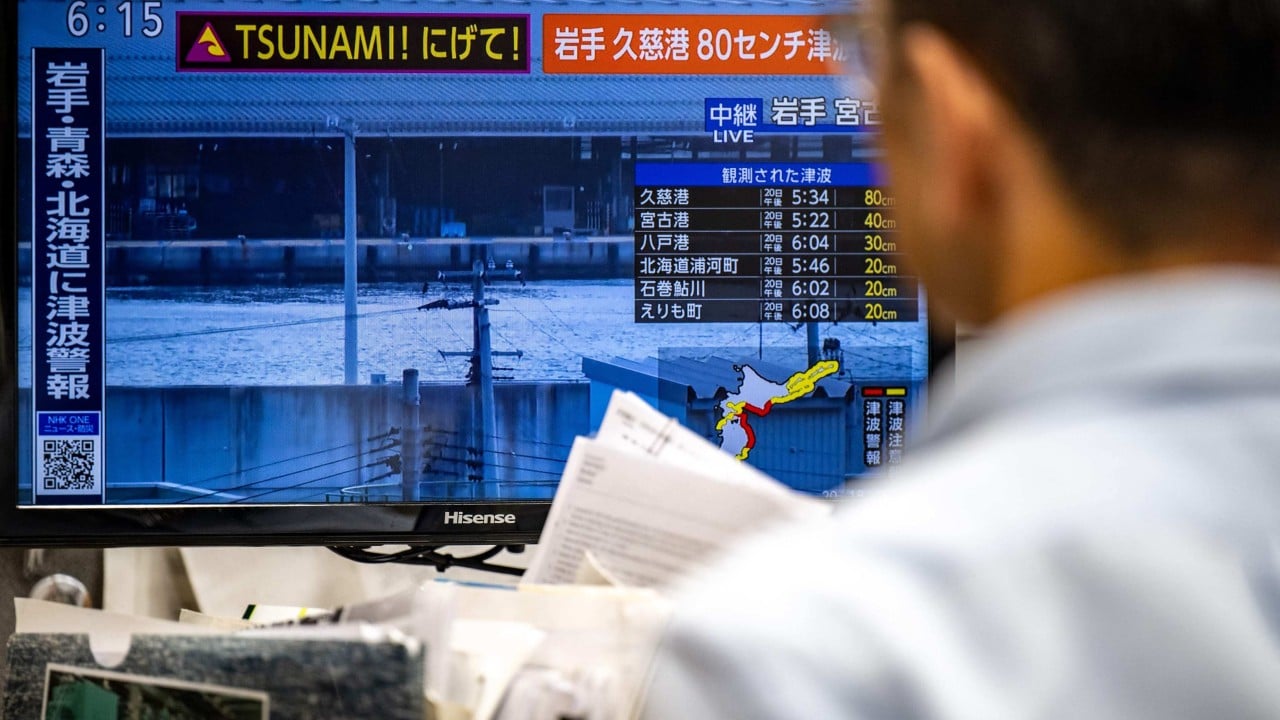
The morning air in Ishikawa usually tastes of salt and cedar. It is a quiet, meditative corner of Japan where time feels less like a racing clock and more like the slow pulse of the tide. For the hundreds of Hong Kong travelers scattered across the region on New Year’s Day, the itinerary promised nothing more strenuous than a soak in an onsen or a slow walk through a seafood market.
Then the earth forgot its place.
A magnitude 7.5 earthquake is not a sound. It is an erasure of silence. It begins as a low, visceral thrumming in the marrow of your bones before the world transforms into a violent, unpredictable sea of concrete and wood. In an instant, the holiday snapshots of temples and snow-dusted streets were replaced by the jagged reality of survival.
The headlines that followed were clinical: "40 Hong Kong tour groups safe." It is a comforting statistic. It suggests a tidy resolution. But a statistic is a cold shroud that covers the sweating, shaking reality of two thousand individual souls caught in a geography that had suddenly turned hostile.
The Sound of Shifting Tectonic Plates
Imagine you are sitting in a tour bus, the engine idling as you wait for the group to return from a souvenir shop. You are thinking about dinner. You are thinking about the flight back to Chek Lap Kok.
The first jolt feels like a heavy truck passing too close. The second jolt, however, unmoors the world. The bus doesn't just shake; it pitches. Outside, the asphalt ripples. Power lines whip like angry snakes against a darkening sky. This was the scene for the 1,100 tourists traveling under various agencies like WWPKG and EGL Tours.
To understand why this happens, we have to look beneath the picturesque shrines. Japan sits at the intersection of four tectonic plates. The Pacific, Philippine Sea, Eurasian, and North American plates are locked in a slow-motion wrestling match that has lasted for eons. Most of the time, they are merely leaning against one another with unimaginable force. But when the friction gives way, the release of energy is equivalent to thousands of atomic bombs detonating beneath the crust.
The Noto Peninsula quake wasn't just a tremor. It was a structural defiance of the landscape.
The Invisible Network of Accountability
When the ground stopped bucking, a different kind of vibration began: the frantic, silent pulse of digital communication.
In the high-rise offices of Hong Kong, travel directors didn't wait for the morning briefing. They were staring at WhatsApp groups and satellite trackers. The logistics of safety are rarely poetic. They involve spreadsheets, emergency roaming data, and the steady voices of tour guides who, despite their own knocking knees, had to stand tall and count heads.
"Everyone, please stay away from the glass."
"Check your neighbor."
"We are moving to higher ground."
These are the phrases that bridge the gap between a disaster and a saved life. The Travel Industry Authority of Hong Kong became the central nervous system for these forty groups. There is a specific kind of terror in being a guide responsible for forty elderly travelers or families with toddlers when the Tsunami sirens begin their haunting, mechanical wail. The threat of the water is often more psychologically taxing than the shaking itself. You cannot fight a wave. You can only outrun it.
The Architecture of a Near Miss
We often view safety as a lack of incident. In reality, safety is a highly engineered achievement.
The fact that all forty groups were accounted for—some sheltering in buses, others in hilltop parking lots, others in local evacuation centers—is a testament to a culture of preparedness that many travelers take for granted. Japan’s building codes are some of the strictest on the planet. The skyscrapers in Tokyo are designed to sway like willow trees, and even the smaller ryokans in the north are often reinforced with a hidden skeleton of steel and seismic dampers.
But the human element is less predictable than steel. Consider a hypothetical traveler named Mrs. Chan. She is sixty-five, she has a bad hip, and she is on this trip to celebrate her retirement. When the sirens go off, she isn't thinking about tectonic plates. She is thinking about the stairs. She is thinking about the cold.
The "success" of this event wasn't just the absence of fatalities among the tour groups. It was the moment a tour leader shared a fleece blanket with Mrs. Chan in the back of a bus. It was the local Japanese shopkeeper who, despite the cracks in his own walls, handed out bottles of water to the "strangers" from Hong Kong.
The Fragility of the Itinerary
The aftermath of a 7.5 magnitude quake is a logistical graveyard. Roads split open like overripe fruit. Rail lines warp. The Shinkansen, the pride of Japanese engineering, becomes a series of very expensive, very stationary metal tubes.
For the tour groups, the "vacation" ended the moment the clock hit 4:10 PM on that Monday. The rest was a masterclass in improvisation. While the news cycles moved on to other tragedies, these travelers were negotiating a landscape where the infrastructure had vanished.
Agencies had to pivot instantly. Flights were rerouted. Buses were diverted through mountain passes to avoid the buckled coastal roads. In Hong Kong, families waited by their phones, the blue glow of the screen the only light in many bedrooms as they waited for a "check-in" notification.
We live in an age where we believe we have conquered geography. We buy a ticket, we board a plane, and we expect the destination to remain fixed, static, and welcoming. We forget that we are guests on a planet that is still cooling, still shifting, still breathing.
The Weight of the Return
The flights back to Hong Kong were quieter than the ones that left.
There is a specific kind of exhaustion that follows a brush with the tectonic. It isn’t the tiredness of a long walk; it is the fatigue of the nervous system. When those 1,100 travelers finally walked through the arrivals gate at HKIA, they weren't just bringing back boxes of matcha cookies or skincare products. They were bringing back the memory of the ground turning to liquid.
The industry calls this "crisis management." The travelers call it a miracle.
But it isn't a miracle. It is the result of a thousand small, correct decisions made under pressure. It is the result of a tour guide knowing exactly where the emergency exit is. It is the result of a driver keeping a full tank of gas "just in case." It is the result of a travel agency prioritizing a human life over the cost of a cancelled hotel booking.
The forty tour groups are home now. The headlines have faded. The Noto Peninsula is beginning the long, grueling process of clearing the rubble and mourning the lives that were not part of a protected tour group—the locals whose homes didn't have the luxury of seismic dampers.
We travel to see the world, but sometimes the world decides to show us exactly what it is made of. We are small. We are temporary. And our greatest strength isn't our ability to predict the quake, but our refusal to leave anyone behind when the dust starts to rise.
The salt and cedar of Ishikawa will eventually smell sweet again. The shrines will be rebuilt. The tourists will return, lured back by the promise of the onsen and the quiet. But they will walk a little more softly on the earth. They will look at the mountains not just as scenery, but as sleeping giants.
They will remember that a holiday is a fragile thing, held together by nothing more than the grace of the ground beneath their feet.