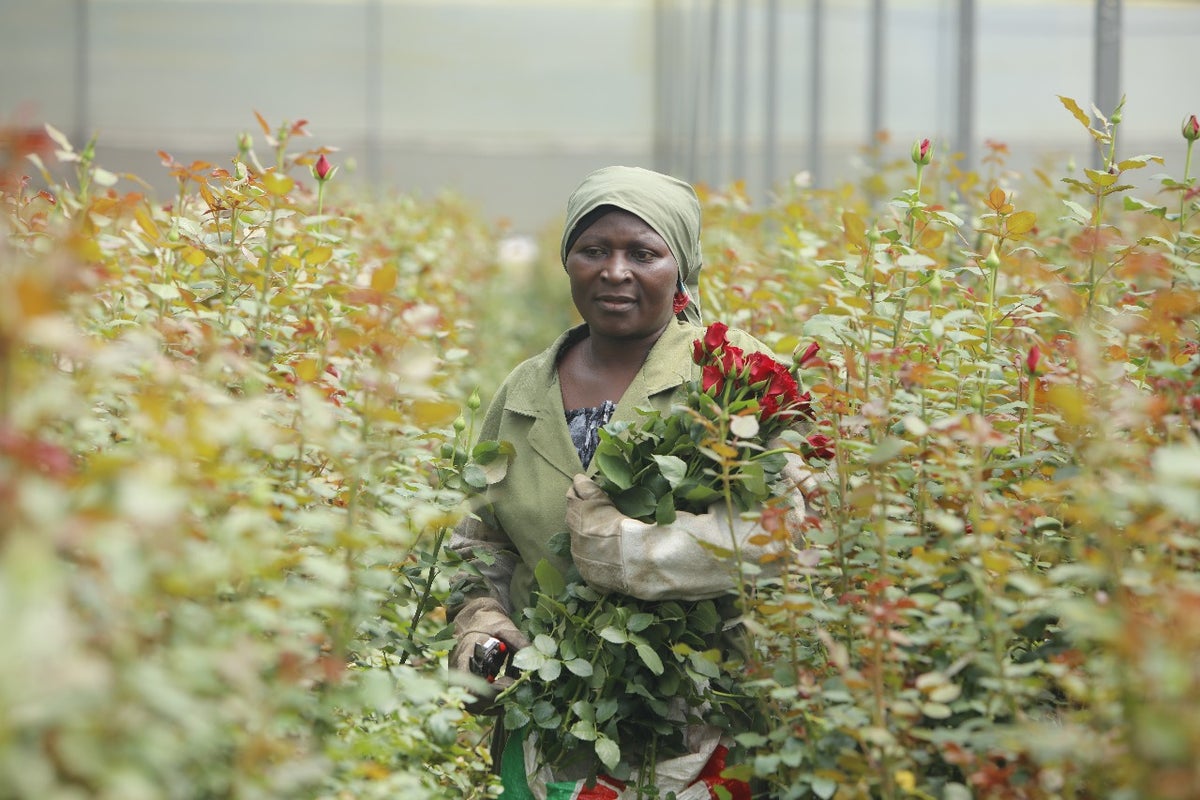
The global cut-flower trade operates on a high-velocity, cold-chain dependency that dictates the economic survival of East African export hubs, specifically Kenya and Ethiopia. While the industry provides a critical source of foreign exchange and employment, the structural reality reveals a system where narrow margins and environmental volatility are outsourced to the bottom of the supply chain. Analyzing the "suffering" often cited in labor reports requires moving beyond emotive descriptions and into the mechanics of cost-shifting, physiological labor limits, and the systemic failure of certification frameworks.
The Triad of Floriculture Value Drivers
The success of a flower export operation is governed by three non-negotiable variables: Time-to-Market, Aesthetic Consistency, and Volume-to-Cost Efficiency. In East Africa, these drivers create a specific operational pressure cooker.
- Biological Expiry Logic: Unlike dry goods, a cut rose loses roughly 15% of its value for every 24 hours spent outside of a climate-controlled environment. This creates a "Zero-Buffer" production cycle. If a shipment is delayed at Jomo Kenyatta International Airport, the financial loss is absorbed not by the UK retailer, but by the grower, who then passes that pressure down to the labor force through mandatory, often unpaid, overtime to meet the next window.
- Chemical-Aesthetic Dependence: European phytosanitary standards are binary. A single pest discovery can result in the destruction of an entire shipment. To mitigate this risk, farms rely on intensive application of pesticides and fungicides. The "suffering" reported by workers regarding respiratory and skin ailments is the direct output of a risk-mitigation strategy that prioritizes the chemical integrity of the product over the biological safety of the applicator.
- The Arbitrage of Altitude: Kenya’s advantage is its equatorial sun and high altitude, which allows for year-round production without the heating costs associated with Dutch greenhouses. However, this natural advantage is offset by the logistics cost. Since air freight accounts for up to 60% of the landed cost of a bouquet in London, labor becomes the only "flexible" variable in the cost function.
Structural Bottlenecks in the Labor Model
The labor issues within the Lake Naivasha and Rift Valley clusters are not anomalies; they are systemic features of the current economic model. To understand why wages remain at a subsistence level despite high retail prices in the UK, one must examine the Labor-Value Gap.
The Seasonal Elasticity Problem
Demand for flowers is hyper-seasonal, peaking during Valentine’s Day and Mother’s Day. During these windows, production requirements can spike by 300% to 500%. Because permanent staff represent a fixed cost that farms cannot sustain year-round, they rely on "casualization." This creates a precarious class of workers who lack the legal protections of permanent contracts, effectively absorbing the market's volatility. When demand drops, these workers are pruned from the payroll with the same clinical efficiency as a stem from a bush.
The Gendered Wage Disparity
Approximately 60% to 70% of the workforce in the East African floriculture sector is female. This demographic concentration is a strategic choice. From a management perspective, female labor is often perceived as more "compliant" and better suited for the delicate task of "pinching" and grading. This creates a power imbalance where female workers, often the sole breadwinners, are less likely to unionize or report sexual harassment for fear of losing their only pathway to the formal economy.
Physiological Depreciation
The physical toll of greenhouse work—high temperatures, repetitive motion, and prolonged standing—leads to a rapid depreciation of human capital. Workers often peak in productivity within the first five years, after which chronic health issues emerge. In a system without robust social safety nets or employer-funded long-term healthcare, the worker is "spent" by the industry and returned to the informal economy with diminished earning potential.
The Certification Paradox: Why Fairtrade Fails to Scale
Consumers in the UK often look for Fairtrade or Rainforest Alliance seals as a proxy for ethical consumption. However, these certifications often suffer from Informational Asymmetry and Audit Fatigue.
- The "Snapshot" Problem: Audits are typically scheduled events. A farm can maintain optimal conditions for the 48 hours an inspector is on-site, only to revert to standard practices once the certificate is issued.
- Cost of Compliance: The financial burden of obtaining and maintaining certifications is often borne by the growers. For smaller farms, the cost of the "Ethical Label" eats into the very margins that could have been used to increase base wages.
- Premium Dilution: Even when a "Fairtrade Premium" is paid, it rarely translates into a direct wage increase. Instead, it is funneled into communal projects like schools or clinics. While beneficial, these projects do not address the fundamental issue of individual income insufficiency, which keeps workers trapped in a cycle of debt.
The Carbon-Water Nexus
The environmental cost of the industry represents a deferred liability. The "suffering" extends to the ecosystem, which provides the life-support system for local communities.
- Water Depletion: Lake Naivasha has seen significant fluctuations in water levels directly correlated to the expansion of greenhouse acreage. The extraction of water for irrigation competes with local pastoralists and domestic needs.
- Eutrophication: Runoff from fertilizer-heavy farms enters the water table, leading to algal blooms that deplete oxygen levels for aquatic life. This creates a secondary economic hit to the local fishing industry, further narrowing the survival options for the local population.
- The Carbon Myth: A common defense of the industry is that the carbon footprint of flying flowers from Kenya is lower than growing them in heated Dutch greenhouses. While mathematically true in terms of $CO_2$ per stem, this metric ignores the Water-Energy-Food Nexus. Exporting flowers is, in essence, exporting "virtual water" from a water-stressed region to a water-abundant one (the UK).
The Strategic Shift: Moving from Volume to Value
The current trajectory of the East African floriculture industry is unsustainable. As UK consumers become more data-savvy regarding ESG (Environmental, Social, and Governance) metrics, the "low-cost, high-suffering" model will face increasing reputational and regulatory risks.
The strategy for the next decade must move away from raw volume and toward Vertical Integration and Digitization.
- Direct-to-Consumer (DTC) Logistics: By bypassing the Dutch auctions and selling directly to UK supermarkets or online platforms, growers can capture an additional 20% to 30% of the value chain. This margin expansion is the only realistic way to fund meaningful wage increases without going out of business.
- Sea Freight Transition: Transitioning from air to sea freight for hardier varieties (like carnations or certain rose cultivars) reduces the carbon footprint by over 80% and drastically lowers the "Time-to-Market" pressure that drives forced overtime.
- Automated Precision Agriculture: Implementing IoT-based irrigation and pest monitoring can reduce chemical usage by 40%. This protects the worker’s health and reduces input costs simultaneously.
The leverage point for change lies with the UK retailers. As long as the "Supermarket Price War" dictates a £5 bouquet, the pressure on the East African worker remains a mathematical certainty. Ethical sourcing must move from a marketing checkbox to a fundamental pricing component.
Retailers should transition to Long-Term Offtake Agreements. By guaranteeing purchase volumes and prices three years in advance, they provide the financial stability required for farms to invest in permanent labor contracts and advanced water-recycling systems. Without this shift in the procurement model, the "suffering" of the East African flower worker remains an inevitable byproduct of the UK's demand for cheap, perpetual spring.