Jim stands in the middle of a warehouse in Ohio, surrounded by the smell of cardboard and industrial grease. For twenty years, his business manufactured small, precision-engineered valves for hydraulic systems. He knows the weight of every brass fitting by heart. But lately, the math that used to govern his life—the simple equation of cost plus labor equals price—has been replaced by a ghost.
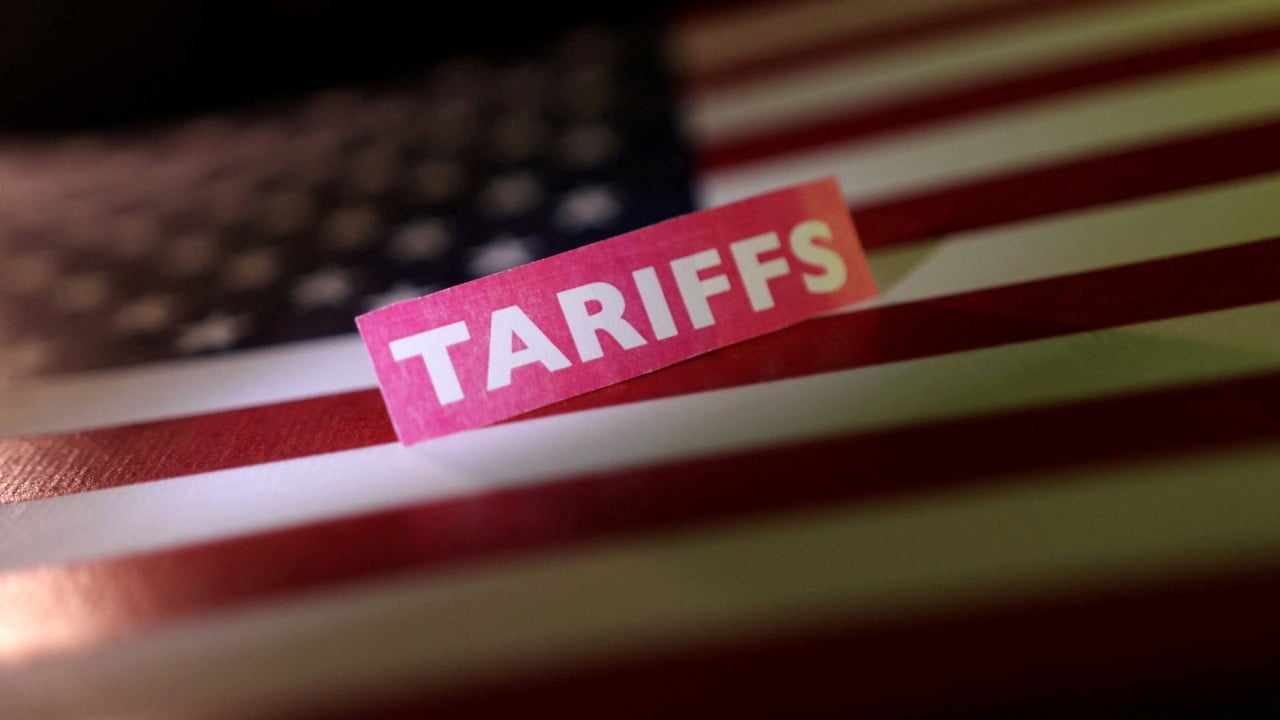
That ghost is the tariff. It doesn't arrive on a shipping manifest, and it doesn't show up in the design specs. It is a silent, invisible tax that has sat on his chest since the trade wars between Washington and Beijing began in earnest years ago. Building on this topic, you can find more in: The Childcare Safety Myth and the Bureaucratic Death Spiral.
When we talk about trade wars, we usually talk about "The US" and "China" as if they are two giant, sentient monsters wrestling in the Pacific. We look at graphs where lines intersect at 25 percent and listen to pundits debate the merits of decoupling. But for the person trying to run a shop floor in the Midwest or a tech startup in San Jose, the trade war isn't a geopolitical strategy. It is a series of frantic, late-night emails to suppliers in Ningbo. It is the sudden, gut-punch realization that a critical component just became 30 percent more expensive overnight.
The Myth of the Easy Win
There was a time when the narrative was simple: tariffs would protect American jobs by making foreign goods more expensive. The logic felt intuitive. If a Chinese-made motor costs more, a buyer will surely look for an American one. Analysts at CNBC have provided expertise on this trend.
But the global supply chain isn't a grocery store shelf where you just swap one brand of cereal for another. It is a nervous system.
Consider a hypothetical smartphone manufacturer based in Austin. Let’s call the founder Sarah. Sarah doesn't "buy a phone" from China. She buys a display assembly from one province, a specialized sensor from another, and a battery from a third. These parts aren't just commodities; they are the result of decade-long relationships and hyper-specialized factory lines that don't exist anywhere else on the planet.
When the tariffs hit Sarah’s sensors, she didn't suddenly find a factory in Texas ready to make them. They don't exist here. Instead, she faced a choice: eat the cost and see her margins evaporate, or pass the cost to her customers and watch her sales crater.
The data bears this out. While the intent was to "level the playing field," the reality for many American firms was a tax on their own inputs. According to several economic studies, the vast majority of the tariff costs were borne by U.S. importers. The "war" wasn't just being fought against a foreign rival; it was being fought in the accounts-payable departments of American small businesses.
The Great Diversification Shuffle
Eventually, the pressure became too much. The word of the year became "diversification." If China was too expensive or too risky, companies had to look elsewhere. Vietnam, India, and Mexico became the new frontiers.
On paper, this looks like a win for American strategy. We reduced our reliance on a single adversary. But if you talk to the logistics managers who actually have to move the freight, the story is muddier.
Moving a supply chain is like trying to transplant a hundred-year-old oak tree. You can’t just dig it up and expect it to thrive in new soil the next day. One manufacturer I spoke with attempted to move their textile production from Guangzhou to Vietnam. They found that while the labor was cheaper, the infrastructure wasn't there. The ports were clogged. The specialized dyes they needed still had to be imported—ironically—from China.
The result? A "China Plus One" strategy that often cost more than the original setup. Companies weren't leaving China because it was the most efficient move; they were leaving because they were being chased out by policy. This created a strange, bifurcated world where the biggest corporations with the deepest pockets could afford to pivot, while the smaller firms were left behind, tethered to the old ways and paying the "war tax."
The Hidden Cost of Uncertainty
Markets hate a vacuum, but they loathe uncertainty even more.
The most damaging aspect of the tariff wars wasn't the 10 percent or 25 percent price hike. It was the "what's next?"
For years, CEOs have been operating in a state of permanent flinch. If you don't know what the tariff rate will be in six months, how do you price a multi-year contract? If you don't know if your primary supplier will be blacklisted by the Department of Commerce, how do you justify investing in a joint venture?
This uncertainty has led to a "wait and see" approach that has choked off innovation. Money that should have gone into Research and Development was instead diverted into "tariff engineering"—the dark art of slightly altering a product's design or shipping route just to qualify for a different customs code.
Imagine some of the greatest engineering minds of a generation spending their afternoons debating whether a specific plastic bracket should be classified as a "vehicle part" or "general hardware" to save 12 percent. That is the brain drain no one talks about. It is the invisible friction that slows down the entire engine of the economy.
The Consumer at the End of the Line
We often hear that the trade war hasn't "really" affected the average American because inflation stayed relatively low for a long time. That is a comforting thought. It is also wrong.
The costs were hidden, but they were there. They showed up in the washing machine that cost $100 more than it should have. They showed up in the "shrinkflation" of consumer electronics, where the price stayed the same but the features were stripped back. They showed up in the stagnant wages of workers at firms that were struggling to stay afloat under the weight of increased input costs.
The trade war didn't just reshape trade; it reshaped the American relationship with the world. We moved from an era of "just-in-time" efficiency to an era of "just-in-case" redundancy. And redundancy is expensive.
The New Normal
Walking through Jim’s warehouse today, you see the remnants of this shift. There are fewer crates from Shanghai, yes. There are more from Monterrey and Ho Chi Minh City. But the prices haven't gone back down. The complexity hasn't decreased.
We have entered a period of "managed trade" where the free market has been replaced by a series of political negotiations. For some industries, like semiconductors or green energy, this might be a necessary evolution for national security. But for the thousands of companies that make the mundane things—the valves, the screws, the gaskets, the toys—the world has simply become a more expensive, more complicated place to exist.
The trade war didn't end with a clear victor standing over a defeated foe. It ended with a quiet, collective sigh as businesses realized the old world was gone. The freight train is still in the living room. We’ve just gotten used to walking around it.
Jim still looks at his brass fittings. He still calculates his margins. But now, he keeps a weather eye on the news from Washington with a weary intensity that has nothing to do with engineering. He knows that his livelihood no longer depends just on the quality of his work, but on the stroke of a pen three thousand miles away.
The valves still turn, but the water is a lot more expensive than it used to be.
Would you like me to analyze the specific economic data regarding how these tariffs impacted the U.S. manufacturing sector's job growth?