The efficacy of third-party mediation in entrenched bilateral conflicts is determined not by rhetoric, but by the alignment of internal political incentives and external pressure variables. Donald Trump’s repeated assertions regarding his role in the 2021 India-Pakistan ceasefire—and broader "decades-old" conflicts—require a deconstruction through the lens of Strategic Arbitrage. This analysis moves beyond the surface-level claims of "solving" disputes to examine the structural mechanics of South Asian stability, the cost-benefit analysis of the Line of Control (LoC) ceasefire, and the actual levers of American influence in the region.
The Triad of Conflict Resolution Variables
To quantify the validity of any claim to have "solved" a conflict, one must isolate three specific variables that dictate the success or failure of diplomatic intervention.
- Incentive Alignment: The degree to which the warring parties find the status quo more expensive than a compromise.
- Enforcement Capacity: The ability of the mediator to impose credible costs for non-compliance or offer tangible rewards for adherence.
- Institutional Continuity: Whether the resolution depends on a specific personality or is embedded into the bureaucratic and military structures of the nations involved.
In the context of the 2021 LoC ceasefire, the "Trump Effect" is often conflated with a shift in the regional security architecture that began during his administration but was finalized under the subsequent one. The claim of direct causation ignores the Internal Security Imperative within both New Delhi and Islamabad.
The Mechanics of the 2021 LoC Ceasefire
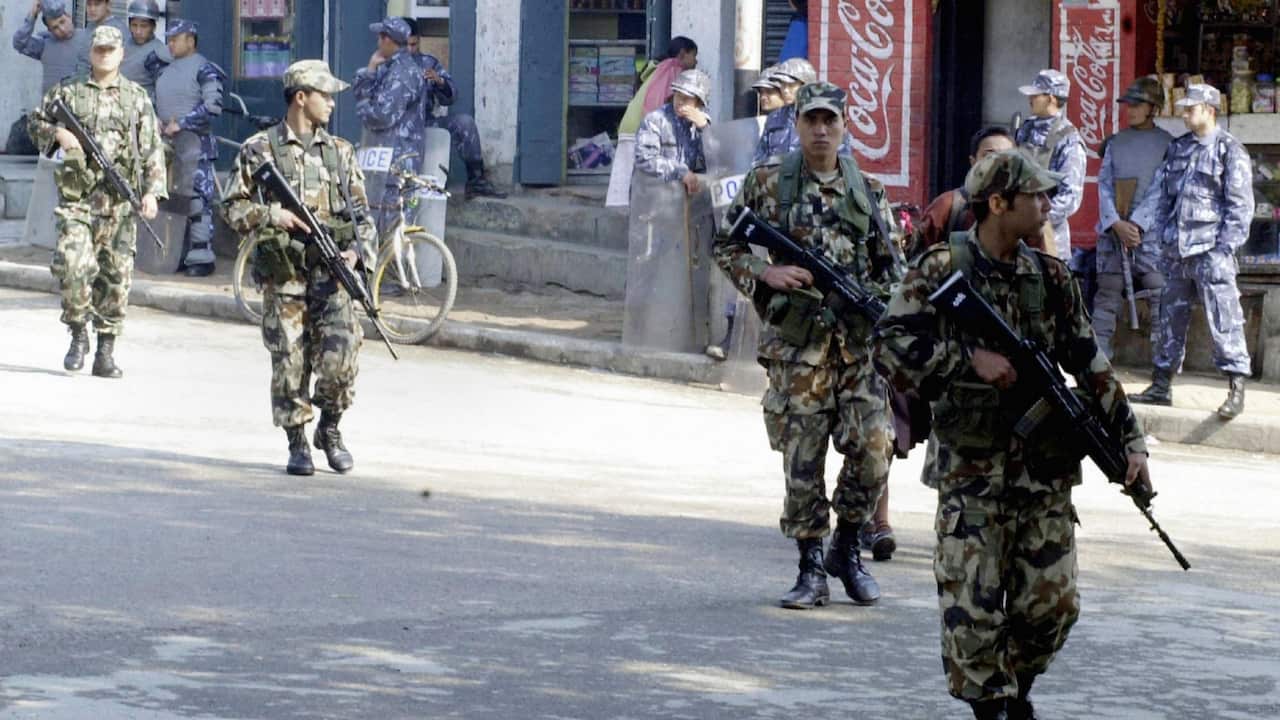
The joint statement issued by the Director Generals of Military Operations (DGMOs) of India and Pakistan on February 25, 2021, was not a sudden burst of diplomatic clarity. It was the result of a specific Resource Reallocation Strategy.
The Indian Calculus: The Two-Front Dilemma
India’s primary strategic constraint shifted in 2020 following the standoff with China in Eastern Ladakh. The Indian military faced a "Two-Front War" scenario, which drastically increased the operational and economic cost of maintaining a high-intensity kinetic environment on the LoC. By stabilizing the western border with Pakistan, the Indian state could reallocate high-altitude warfare assets and logistical bandwidth to the Line of Actual Control (LAC).
The Pakistani Calculus: Economic Survival and FATF
Pakistan’s primary constraint was—and remains—fiscal. During the period in question, Pakistan was under intense scrutiny by the Financial Action Task Force (FATF). Maintaining "Grey List" status restricted foreign direct investment and increased the cost of borrowing. A de-escalation with India was a prerequisite for demonstrating a shift away from the support of non-state actors, which is a key metric for FATF delisting.
Dissecting the Claim of Third-Party Arbitration
The assertion that a single individual "solved" these conflicts overlooks the Backchannel Infrastructure. While the Trump administration’s "Transactional Diplomacy" model applied significant pressure on Pakistan regarding counter-terrorism, the actual mechanics of the 2021 ceasefire were facilitated through intelligence-led backchannels, often attributed to the United Arab Emirates (UAE) acting as a regional conduit.
The Trump administration’s contribution was the creation of a High-Pressure Equilibrium. By reducing traditional diplomatic niceties and focusing on hard-power outcomes (such as the suspension of security assistance to Pakistan in 2018), the administration forced a recalculation of the "Cost of Conflict" function. However, "solving" a conflict implies a permanent settlement of the underlying territorial and ideological disputes. The 2021 agreement was a cessation of hostilities, not a resolution of grievances.
The Structural Limits of Personality-Driven Diplomacy
Claims of resolving "decades-long" conflicts often rely on the Normalization of Outliers. High-profile events, such as the Abraham Accords or the Singapore Summit with North Korea, are used as templates for South Asian intervention. This logic fails because it ignores the Zero-Sum Nature of the Kashmir dispute. Unlike the Abraham Accords, which focused on economic and security integration against a common adversary (Iran), the India-Pakistan conflict is rooted in foundational national identities.
The Problem of Verification
A primary weakness in the claims of "solving" the India-Pakistan conflict is the lack of a formal verification mechanism.
- Breach Frequency: While artillery exchanges dropped significantly after February 2021, infiltration attempts and "hybrid" warfare tactics (drones, targeted assassinations) persisted.
- Political Sustainability: Without a formal treaty, the ceasefire remains a "Gentleman's Agreement" between military commands. This makes it highly susceptible to domestic political shocks in either country.
Quantifying Success in Global Conflict Mitigation
To move from anecdotal claims to analytical rigor, we must apply a Conflict Decay Model. This model measures the success of an intervention by the rate at which violence recurs after the mediator leaves the room.
$$R = \frac{V_{post}}{V_{pre}} \times T$$
Where:
- $R$ is the Stability Rating.
- $V_{post}$ is the volume of kinetic incidents post-intervention.
- $V_{pre}$ is the volume of kinetic incidents pre-intervention.
- $T$ is the duration of the peace in years.
By this metric, the 2021 ceasefire is a tactical success but a strategic stalemate. The "Trump Claim" lacks the $T$ variable (Long-term duration) and the $V_{post}$ reduction in non-kinetic aggression.
The Geopolitical Cost of Transactional Mediation
The strategy of claiming credit for regional stabilities carries a hidden Credibility Tax. When a mediator overstates their influence, they risk:
- Entrapment: One party may intentionally escalate a conflict to "test" the mediator's resolve or to extract further concessions.
- Dilution of Norms: If diplomacy is seen as a series of personal favors rather than a commitment to international law, the resulting "peace" is only as strong as the next election cycle.
The shift in U.S. policy toward India as a primary "Major Defense Partner" during the Trump years undoubtedly changed the regional balance. It signaled to Pakistan that the era of "strategic equivalence" was over. This realization likely accelerated Pakistan's move toward the ceasefire, but it was an indirect consequence of a broader China-centric strategy, not a bespoke solution to the Kashmir problem.
Operational Realities of the India-Pakistan Border
The LoC is one of the most densely militarized zones on earth. Any sustained ceasefire requires more than just a presidential tweet; it requires:
- Technical Monitoring: The use of ground sensors, thermal imaging, and satellite reconnaissance.
- Local Commander Communication: The "Hotline" mechanism between local units.
- Demilitarized Pockets: Specific zones where heavy weaponry is pulled back.
None of these operational requirements were "solved" by American intervention. They remain bilateral military protocols. The U.S. role is best described as a Catalyst, not a Cure. It accelerated a process that was already being necessitated by internal economic and security pressures.
The Strategic Path for Future Regional Arbitration
The path forward for any administration seeking to claim genuine credit for South Asian stability lies in the Institutionalization of De-escalation.
The primary barrier to a permanent resolution is the Asymmetric Cost of Peace. For India, peace is the status quo; for Pakistan, peace without territorial concessions is often viewed domestically as a defeat.
The next strategic play involves moving from "Ceasefire Management" to "Connectivity Incentives." If the U.S. or any third party wishes to claim the mantle of a "conflict solver," they must facilitate a framework where the economic gains of regional trade outweigh the domestic political gains of nationalist posturing. This requires a multi-generational commitment to infrastructure and trade routes that currently does not exist.
The 2021 ceasefire should be viewed as a Tactical Pause generated by a unique alignment of Indian concern over China, Pakistani economic desperation, and a U.S. administration that disrupted traditional diplomatic norms. To classify this as a "solved conflict" is a category error that ignores the underlying tectonic shifts in the Indo-Pacific power balance.
The strategic priority must remain the decoupling of the India-Pakistan relationship from the U.S.-China competition. Failure to do so ensures that any ceasefire remains a temporary truce of convenience, vulnerable to the first sign of domestic instability or a shift in the global risk environment.