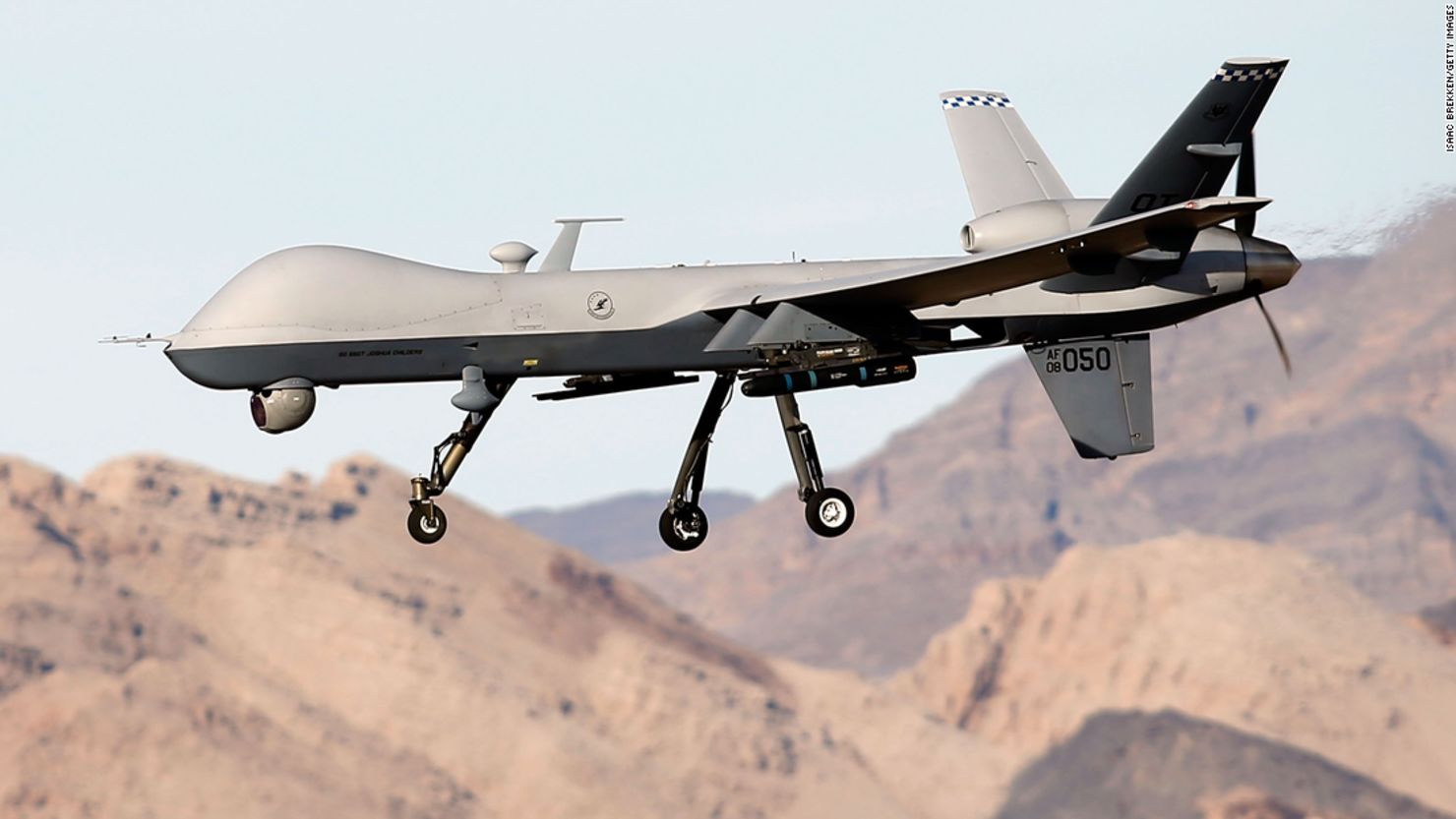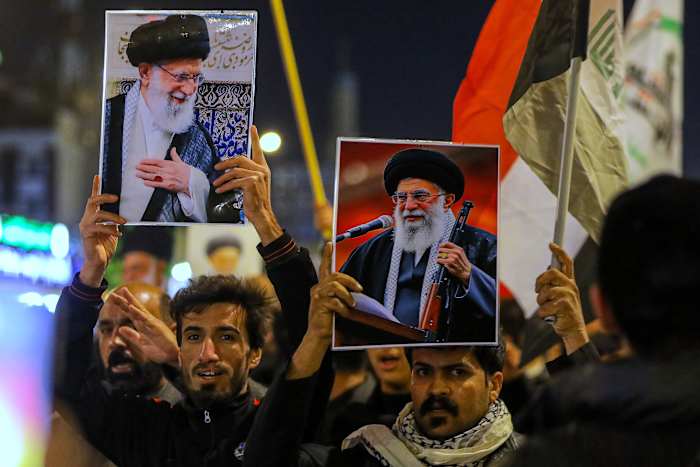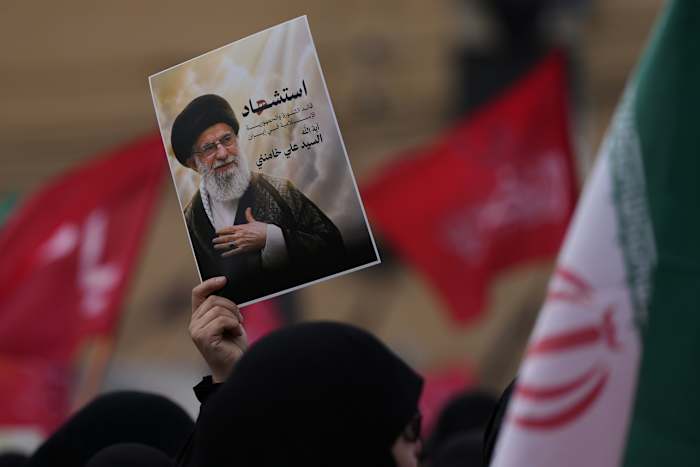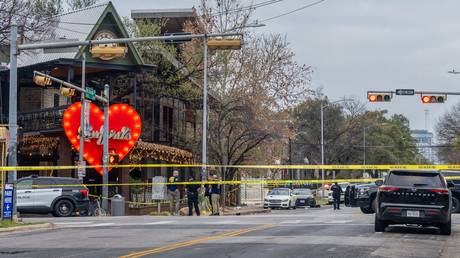
The intersection of kinetic foreign policy and domestic lone-actor violence creates a feedback loop that security architectures are currently ill-equipped to disrupt. When a mass casualty event in the United States is linked to retaliatory motives regarding strikes in the Middle East—specifically involving Iranian interests—the incident shifts from a localized criminal act to a data point in a broader asymmetric warfare strategy. Analyzing these events requires moving beyond "motive" as a psychological trait and instead treating it as a functional component of a multi-stage radicalization funnel.
The Three Pillars of Asymmetric Retaliation
Asymmetric warfare relies on the principle of disproportionate impact. For state or non-state actors facing a superior conventional military force, the goal is not to win a tactical engagement but to increase the political and social friction within the adversary’s domestic environment. This process operates through three distinct mechanisms:
- Informational Saturation: State-aligned media outlets and social media bot nets amplify specific grievances—such as the targeted killing of military leaders—to provide a "justification framework" for latent radicals.
- Stochastic Triggering: By broadcasting high-intent rhetoric, a central actor can influence a distributed network of unaffiliated individuals. The timing of the violence is unpredictable, but the occurrence of the violence is statistically probable.
- The Validation Loop: Once an attack occurs, the perpetrator’s stated alignment with a foreign cause is used by that foreign entity to demonstrate "global reach," regardless of whether a direct command-and-control link exists.
The Radicalization Cost Function
To understand why an individual transitions from ideological grievance to kinetic action, we must analyze the Cost Function ($C$). An actor will engage in a mass casualty event when the perceived utility ($U$) of the act outweighs the sum of the personal costs and the barriers to execution.
$$U > C_{social} + C_{legal} + C_{operational}$$
In the context of the recent shootings allegedly linked to Iranian strikes, the $U$ (Utility) is artificially inflated by "martyrdom" narratives or the desire to participate in a historical counter-strike. Conversely, the $C$ (Cost) is lowered by the availability of high-capacity platforms and the erosion of social ties that might otherwise act as a friction point against radicalization.
The mechanism of "revenge" acts as a cognitive shortcut. It bypasses complex political nuance and replaces it with a binary objective: "They struck us, so I must strike them." This simplifies the internal decision-making process for the attacker, making the transition to violence rapid and often undetectable by traditional surveillance.
Algorithmic Amplification and the Digital Echo
The role of media and digital platforms in these incidents is not merely to report, but to inadvertently provide the infrastructure for the next event. The "copycat effect" is a well-documented psychological phenomenon, but in a geopolitical context, it functions as a decentralized recruitment tool.
When media outlets—particularly those with state backing—frame a shooting as a direct consequence of foreign policy, they provide a blueprint for future actors. This creates a "Proof of Concept" for other individuals who may be harboring similar grievances but lack a clear target or method.
The digital echo chamber ensures that the specific grievances related to Iranian strikes remain at the forefront of the individual's information diet. This creates a high-density environment of radicalizing content where the "barrier to entry" for extremist thought is essentially zero.
Structural Vulnerabilities in Domestic Security
Current counter-terrorism models are designed to identify cells—groups of people communicating via encrypted channels to plan a coordinated strike. These models fail when faced with the "Isolated Node" problem.
- Intelligence Gaps: If the actor has no direct contact with known foreign operatives, there are no "pings" on a signal intelligence (SIGINT) map.
- Speed of Radicalization: The timeline from consuming media regarding a foreign strike to committing a domestic act can be as short as 48 to 72 hours, leaving no window for traditional human intelligence (HUMINT) intervention.
- Platform Proliferation: The shift from centralized social media to fragmented, decentralized, and often unmoderated platforms makes the tracking of radicalizing rhetoric nearly impossible at scale.
The Strategic Play for Threat Mitigation
Addressing this specific breed of domestic threat requires a shift from reactive policing to proactive resilience. The focus must be on disrupting the "justification framework" before it can be utilized by the individual.
Hardening soft targets is a necessary but insufficient defensive posture. The strategic priority must be the "Information Hygiene" of the domestic population. This involves the rapid debunking of state-sponsored narratives that attempt to link domestic grievances with foreign military actions.
Furthermore, law enforcement must integrate "geopolitical sentiment analysis" into their threat assessment models. When a major kinetic event occurs abroad, the probability of a domestic retaliatory strike increases. During these high-risk windows, resources should be surged not just to physical locations, but to the digital monitoring of individuals who have previously exhibited high-affinity markers for the specific foreign interest involved.
The ultimate goal is to increase the $C_{operational}$ (Operational Cost) to a point where the perceived utility of the act is nullified. This is achieved through a combination of increased visible deterrence during geopolitical flashpoints and the aggressive disruption of the digital pipelines that deliver the "justification framework" to the end-user.
Monitor the velocity of state-aligned media narratives following any high-profile international strike. If the narrative shifts from "reporting the news" to "calling for consequences," the threat level for domestic lone-actor incidents must be adjusted upward immediately. Fail to account for this rhetorical shift, and the security apparatus remains one step behind the cycle of violence.
Would you like me to analyze the specific digital fingerprints or platform-level data associated with the most recent Iranian-linked rhetoric to identify the highest-risk domestic triggers?