The S&P 500’s recent rebound masks a systemic mispricing of geopolitical risk. While the index demonstrates surface-level resilience, the underlying mechanism of the market is currently grappling with a "Geopolitical Discount"—a persistent drag on valuation multiples that occurs when the cost of capital rises to account for tail-risk events. The equity market’s recovery is not a signal of peace, but rather an adaptation to a high-volatility environment where the probability of sudden supply chain ruptures or energy shocks remains structurally elevated.
The Triad of Conflict-Driven Market Compression
Markets do not price war as a singular event; they price it as a series of disruptions to three specific variables: liquidity, commodity elasticity, and the risk-free rate. The current disconnect between index levels and geopolitical reality stems from how these variables interact. In other updates, read about: The Geopolitics of Defense Displacement Saudi Arabia vs Pakistan in the African Arms Market.
1. The Energy Basis and Margin Compression
The primary transmission mechanism from war to stocks is the energy market. Conflict in resource-dense regions shifts the supply curve leftward, increasing the input costs for approximately 80% of S&P 500 constituents. Unlike standard inflationary environments where firms can pass costs to consumers, war-driven inflation is often "inelastic." When energy prices spike due to kinetic conflict, consumer discretionary spending undergoes an immediate contraction, leading to a double-edged sword: rising COGS (Cost of Goods Sold) and falling revenue.
2. The Defense-Tech Divergence
We are witnessing a bifurcated recovery. The S&P 500’s performance is heavily weighted toward mega-cap technology firms with "light" physical footprints. These entities act as a synthetic hedge because their primary value drivers—software licenses and cloud infrastructure—are less susceptible to physical supply chain blockades. Conversely, industrial and manufacturing sectors remain suppressed. This divergence creates a "resilience mirage," where the index appears healthy while the backbone of the physical economy remains in a defensive crouch. The Wall Street Journal has also covered this important subject in extensive detail.
3. The Fed’s Geopolitical Constraint
War complicates the central bank’s reaction function. Traditionally, a market downturn prompts a dovish pivot. However, when conflict drives energy prices higher, it fuels cost-push inflation, forcing the Federal Reserve to maintain high interest rates even as growth slows. This removes the "Fed Put," leaving equity valuations exposed to the raw volatility of the conflict.
Quantifying the Uncertainty Premium
To understand why stocks remain "weighted down," one must look at the Equity Risk Premium (ERP). The ERP represents the excess return investors require for holding stocks over risk-free bonds. During periods of active warfare, the "Uncertainty Premium" expands. This is not a measure of known losses, but a measure of the variance of potential outcomes.
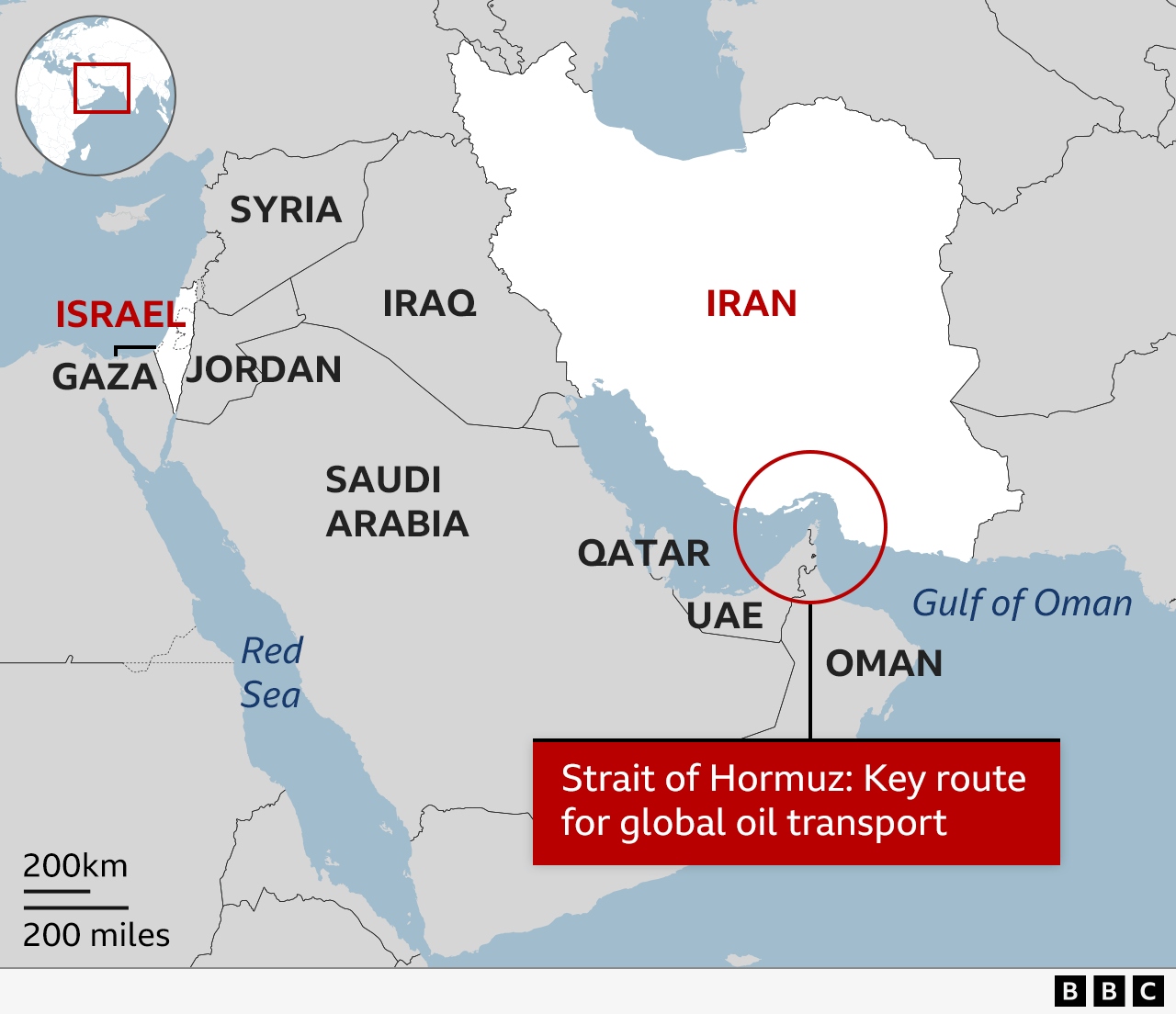
- Binary Risk Outcomes: Conflict introduces non-linear risks, such as the weaponization of trade routes (e.g., the Suez Canal or the Strait of Hormuz).
- Duration Risk: Markets can price a short-term skirmish. They cannot efficiently price a multi-year war of attrition. The longer a conflict persists, the more investors discount future earnings, as the "terminal value" of companies becomes harder to calculate.
The Logic of the Rebound: Mean Reversion vs. Fundamental Shift
The S&P 500’s bounce from recent lows is often misinterpreted as "the market has moved on." A more rigorous analysis suggests two alternative drivers:
Short-Squeeze Dynamics and Sentiment Overshoot
Initial reactions to conflict are characterized by "panic-selling," where correlation moves toward 1.0. As the immediate shock fades, the market enters a mean-reversion phase. This is a technical correction of an oversold condition, not a fundamental reassessment of the geopolitical landscape. The rebound represents the market finding a "floor" where the current level of conflict is priced in, but it does not account for the risk of escalation.
Earnings Resiliency in a High-Inflation Environment
Nominal earnings often look better during periods of war-driven inflation. If a company raises prices by 10% because its costs rose by 10%, its nominal revenue increases even if its real economic value stays flat. Investors looking at nominal P/E ratios may be deceived by "inflationary padding." To find the true impact of war on stocks, one must strip away the nominal growth and look at real, inflation-adjusted cash flows.
The Structural Realignment of Global Supply Chains
The ongoing conflict acts as a catalyst for "de-globalization," a process that is fundamentally bearish for long-term equity valuations. For three decades, corporate margins were expanded by outsourcing production to low-cost, politically stable regions. War shatters the assumption of stability.
- The Cost of Redundancy: Companies are now forced to prioritize "just-in-case" inventory over "just-in-time" efficiency. This requires higher capital expenditure (CapEx) to build domestic factories or diversify suppliers.
- The Security Tax: Defense spending is increasing globally. While this benefits the aerospace and defense sectors, it is essentially a "tax" on the broader economy. Capital that could have been deployed toward innovation or consumer products is instead diverted to non-productive military assets.
Strategic Asset Allocation in the Shadow of Conflict
The current market environment requires a shift from "Growth at Any Price" to "Resilience at a Reasonable Price." The traditional 60/40 portfolio is ill-equipped for conflict-driven volatility because both stocks and bonds often fall simultaneously when inflation spikes.
The Commodity-Equity Correlation
In a war-weighted market, the correlation between equities and commodities becomes the most important metric for a portfolio manager. Direct exposure to energy and industrial metals acts as a hedge against the very forces suppressing the S&P 500. A "Barbell Strategy"—high-growth tech on one side and hard-asset commodities on the other—is the only way to maintain the index's upside while protecting against the downside of kinetic escalation.
Re-evaluating the "Safe Haven"
US Treasuries are losing their status as the sole safe haven. As the US funds its own defense and supports allies, its debt-to-GDP ratio expands, leading to a long-term erosion of the "risk-free" status. Gold and specific currency crosses (like the Swiss Franc or Japanese Yen) are regaining their roles as true hedges when the geopolitical discount becomes too heavy for the equity market to bear.
The strategic play is not to wait for the war to end, but to position for a "fragmented world" where the cost of doing business is permanently higher. Investors must prioritize companies with high "Pricing Power" (the ability to raise prices without losing volume) and "Low Operating Leverage" (low fixed costs). In a world of perpetual conflict, the ability to pivot is more valuable than the ability to scale. The S&P 500 may be rising, but the era of easy, conflict-free growth has ended. The new baseline for equity returns is lower, more volatile, and deeply tethered to the shifting maps of global power.