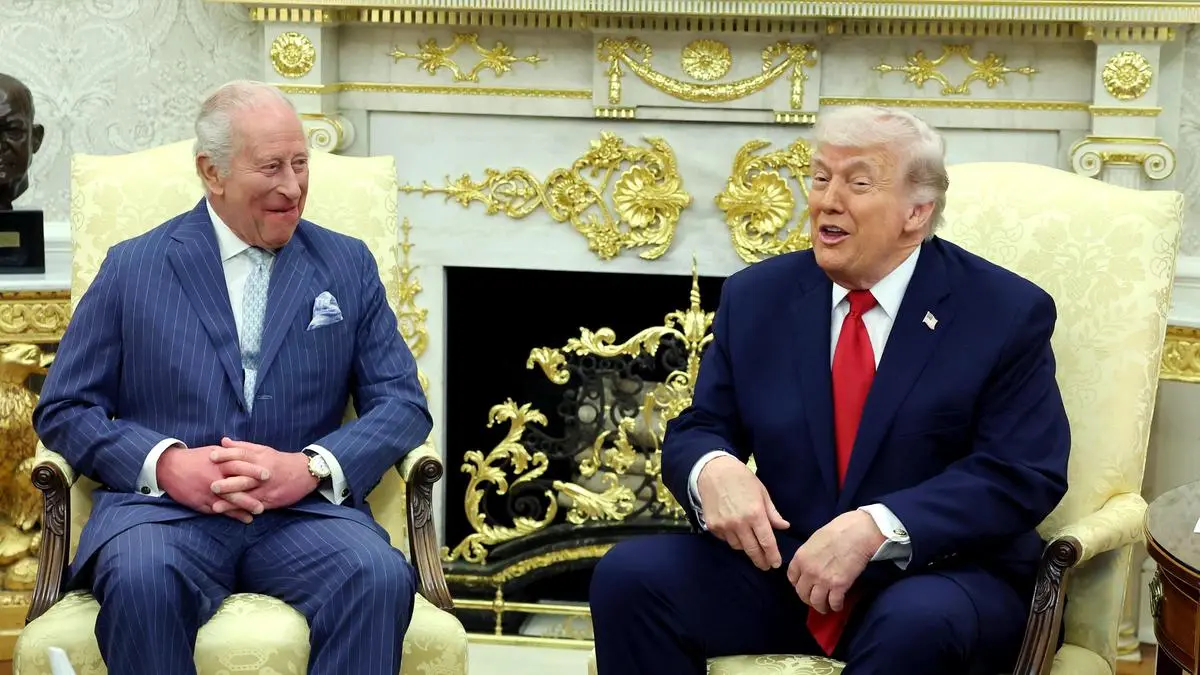
The convergence of a state visit by King Charles III to the White House and the current nadir of UK-US diplomatic relations represents a structural misalignment between symbolic continuity and functional policy divergence. While the British monarchy serves as the ultimate instrument of "soft power" meant to provide a frictionless veneer to bilateral ties, the operational reality is governed by a sharp decoupling of trade priorities, defense spending requirements, and divergent approaches to multilateral institutions. The visit acts as a stress test for the "Special Relationship," exposing a widening gap between the ceremonial expectations of the Atlanticist tradition and the transactional reality of 21st-century isolationism.
The Triad of Diplomatic Decay
The erosion of the UK-US alliance is not a product of personality clashes but is rooted in three distinct structural shifts. Understanding the current low point requires quantifying the friction within these specific domains: If you liked this post, you should check out: this related article.
- The Trade Vacuum: Following the United Kingdom's exit from the European Union, the anticipated comprehensive Free Trade Agreement (FTA) with the United States has transitioned from a high-priority objective to a political impossibility. The US executive branch has shifted toward protectionist industrial policies, such as the Inflation Reduction Act, which treats the UK as a third-party competitor rather than a preferred partner. Without a formal trade architecture, the relationship lacks the economic "floor" that sustains other US alliances, such as those with Mexico or Canada.
- Strategic Divergence on Multilateralism: The current US administration’s "America First" posture—whether expressed through tariffs or withdrawal from international climate and security frameworks—directly conflicts with the UK’s "Global Britain" strategy. London’s reliance on the rules-based international order is a survival mechanism for a mid-sized power; Washington’s skepticism of that same order creates a fundamental strategic mismatch.
- The Defense Burden Paradox: As the US pivots its primary focus to the Indo-Pacific, it increasingly views European security through the lens of burden-sharing. The UK, despite being one of the few NATO members meeting the 2% GDP spending target, finds its influence diminished as the US demands a level of European self-sufficiency that the UK’s current fiscal constraints cannot easily support.
The Mechanics of the Monarchy as a Diplomatic Lever
In the absence of substantive policy alignment, the British state utilizes the monarchy as a strategic asset to bypass the gridlock of traditional diplomatic channels. This is an exercise in high-stakes optics designed to trigger the "prestige effect" within American political circles.
The monarchy functions as a non-partisan bridge. By hosting King Charles, the White House attempts to signal stability to the international community, even as internal policy reflects volatility. However, the efficacy of this lever is declining. In previous decades, a royal visit could serve as a precursor to a major legislative or military breakthrough. Today, it functions more as a maintenance ritual—preventing further degradation rather than catalyzing new growth. The "Special Relationship" is currently in a state of managed decline, where ceremonial high points are used to mask the lack of a shared economic or grand-strategic roadmap. For another perspective on this event, refer to the recent update from Al Jazeera.
Analyzing the Friction Coefficient in Transatlantic Security
The security architecture of the UK-US relationship—primarily defined by the Five Eyes intelligence-sharing agreement and the AUKUS submarine pact—remains the only functional pillar of the alliance. Yet, even this is subject to internal pressures.
The AUKUS agreement represents a 30-year industrial and military commitment. It is the strongest tether between London and Washington, but it introduces a new set of risks. The UK is now inextricably linked to US defense industrial base cycles. Any delays in Virginia-class submarine production or shifts in US export control laws (ITAR) directly compromise UK sovereign capability. This creates a dependency trap: the UK gains high-end technology and regional relevance in the Pacific but loses the ability to chart an independent course should US foreign policy undergo another radical shift in the next election cycle.
The Cost Function of Divergent Fiscal Policies
A primary driver of the current "low point" is the incompatibility of the two nations' fiscal trajectories. The US has embraced a high-subsidy, debt-driven model of industrial renewal. The UK, conversely, is navigating a period of fiscal consolidation and high interest rates, leaving it unable to match US incentives for green energy or domestic manufacturing.
This economic asymmetry leads to:
- Capital Flight: UK-based firms are increasingly incentivized to move operations to the US to benefit from domestic content requirements.
- Regulatory Drift: As the US moves toward a more fragmented regulatory environment, the UK faces the choice of aligning with Washington (and further distancing itself from the EU) or maintaining EU-adjacent standards (and complicating US trade).
The result is a "squeezed middle" effect for British industry, where the lack of a formal US trade deal creates a permanent competitive disadvantage.
The Sovereignty vs. Alignment Trade-off
The core tension of the King’s visit lies in the UK’s struggle to balance sovereignty with the necessity of the US security umbrella. The US perceives the relationship as a tool for regional stabilization; the UK perceives it as an essential component of its national identity and global reach. When these perceptions collide, as seen in the disagreement over tariff structures or the handling of Middle Eastern volatility, the "Special Relationship" becomes a source of domestic political liability for British leaders.
If the UK aligns too closely with US shifts, it risks alienating its European neighbors and losing its role as a diplomatic bridge. If it asserts too much independence, it risks losing the preferential intelligence and military access that defines its global standing. The current "low point" is not a temporary dip in sentiment but a permanent adjustment to a world where the US no longer requires a "deputy" in Europe to the same degree it did during the Cold War or the early 21st century.
Strategic Re-calibration Requirements
To move beyond the cycle of ceremonial peaks and functional troughs, the bilateral strategy must transition from a sentiment-based model to a sector-specific integration model. The expectation of a comprehensive FTA should be abandoned in favor of "mini-deals" focused on critical minerals, artificial intelligence standards, and defense supply chain resilience.
The UK must accept that the "Special Relationship" is now a series of transactional arrangements rather than a broad-spectrum ideological partnership. This requires:
- De-prioritizing the "Grand Bargain": Shifting focus away from a total trade deal and toward specific MOU (Memorandum of Understanding) agreements at the state or industry level.
- Leveraging AUKUS as a Policy Anchor: Using the long-term nature of defense contracts to insulate the broader relationship from the four-year volatility of US election cycles.
- Diversifying Soft Power: Recognizing that the monarchy’s influence is most effective when paired with clear, tech-focused economic incentives that appeal to the US's current focus on national security-linked trade.
The future of the alliance depends on whether London can provide utility to a Washington that is increasingly indifferent to traditional Atlanticist sentiment. The King’s visit provides the theater, but the actual stabilization of the relationship will occur in the unglamorous negotiation of export licenses and sub-national investment frameworks. Without these functional anchors, the relationship remains a hollowed-out institution, high on ceremony but dangerously low on shared strategic capital.