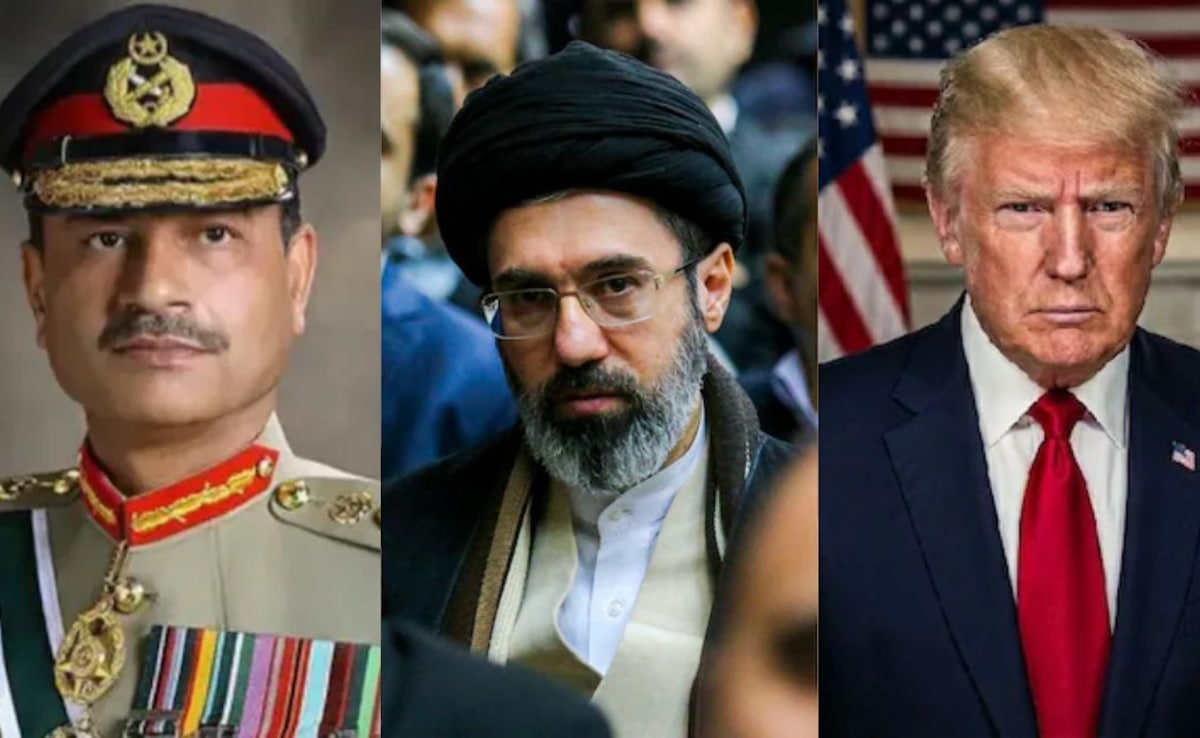
The rejection by Tehran of Islamabad’s offer to mediate a diplomatic thaw with Washington is not a failure of Pakistani diplomacy, but a structural inevitability dictated by the divergent survival imperatives of the Iranian and American regimes. While Pakistan views itself as a natural bridge—leveraging its status as a nuclear-armed neighbor to Iran and a long-term security partner to the United States—this "bridge" logic collapses when applied to the current Iranian security doctrine. Tehran’s refusal to engage through a third party underscores a shift from seeking external validation to demanding direct, bilateral recognition of its regional sphere of influence.
The friction is best understood through three distinct strategic variables: the Autonomy of Iranian Decision-Making, the Pakistani Mediation Paradox, and the Direct Negotiation Mandate.
The Autonomy of Iranian Decision-Making
Iran’s foreign policy is governed by a core tenet of "Neither East nor West," a doctrine that prioritizes strategic independence above tactical gains. When Pakistan offered to facilitate talks, it inadvertently signaled to Tehran that the Islamic Republic required a chaperone to manage its international relations. To the Supreme Leader and the Islamic Revolutionary Guard Corps (IRGC), accepting a mediator from a country heavily reliant on U.S. financial aid and IMF packages creates an unacceptable perception of weakness.
The Iranian decision-making apparatus operates on a "Deterrence via Directness" model. By rejecting Islamabad's overture, Tehran is signaling to the Biden-Harris administration that any resolution to the nuclear file or regional tensions must be negotiated face-to-face. This removes the "filter" of a third party that might prioritize its own regional interests—such as Pakistan’s desire to stabilize its western border to focus on its eastern rivalry with India.
The Pakistani Mediation Paradox
Pakistan’s offer to mediate is driven by its internal economic and security crises. Islamabad requires a stable Iran to ensure the viability of the China-Pakistan Economic Corridor (CPEC) and to manage the volatile Balochistan border. However, the very factors that make Pakistan a candidate for mediation also disqualify it in the eyes of Tehran.
- Dependency Alignment: Pakistan’s frequent reliance on Washington for military subsidies and debt restructuring makes it an "un-neutral" party. Tehran views Islamabad not as an independent actor, but as a state susceptible to American leverage.
- The Sunni-Shia Geopolitical Fault: While Pakistan maintains a delicate balance, its historical security ties with Saudi Arabia—Iran’s primary regional competitor—limit the depth of trust Tehran can extend.
- The Border Security Divergence: Recent cross-border strikes between the two nations (January 2024) have degraded the "Brotherly Muslim Nation" narrative. You cannot mediate for a neighbor while simultaneously engaging in kinetic exchanges over counter-terrorism failures.
This paradox creates a bottleneck where Pakistan’s attempt to gain international "diplomatic capital" is viewed by Iran as an opportunistic move to improve Islamabad's standing with the West at Iran’s expense.
The Cost Function of Third-Party Diplomacy
In game theory, third-party mediation is effective only when both primary actors face a "mutually hurting stalemate" and lack a direct communication channel. This is not the case for Iran and the United States. Despite the lack of formal diplomatic ties, both nations utilize the Swiss Embassy in Tehran, the Omani "Quiet Channel," and direct encounters in multilateral forums.
The cost of adding Pakistan to this equation exceeds the potential benefit for Iran for several reasons:
- Information Leakage: Every additional actor in a sensitive negotiation increases the probability of intelligence leaks. Iran’s nuclear program and regional proxy networks require absolute operational security, which is harder to maintain in a trilateral setup.
- Dilution of Leverage: Iran uses its regional "Resistance Axis" as its primary bargaining chip. A mediator like Pakistan, which opposes non-state actor volatility, would naturally pressure Iran to concede on its most effective leverage points before the real negotiations even begin.
- The "Broker's Fee": Pakistan would expect concessions or support from both sides in exchange for its services. Tehran is unwilling to pay a diplomatic "tax" to a neighbor for a service it can perform itself through existing backchannels.
Operationalizing the "Forums are Their Own" Doctrine
When Tehran stated that "Pakistan's forums are their own," it was a surgical linguistic strike. It defined the boundary between Pakistani domestic political theater and Iranian sovereign strategy. For the Pakistani leadership, being seen as a global peacemaker provides a narrative of relevance to a domestic audience frustrated by economic stagnation. For Iran, foreign policy is a cold calculation of sanctions relief versus ideological preservation.
The Iranian Ministry of Foreign Affairs (MFA) understands that any talk of "rapprochement" mediated by a third party would be framed by Western media as Iran "coming to the table" out of desperation. By shutting down the offer publicly, Tehran retains control of the optics, framing any future talks as a choice rather than a necessity.
The Structural Failure of the "Muslim Unity" Narrative
A recurring theme in Pakistani rhetoric is the appeal to Islamic solidarity. This is a sentimental overlay on a realist landscape. Iran’s strategic depth is built on the "Land Bridge" through Iraq, Syria, and Lebanon. Pakistan’s strategic depth is traditionally viewed through the lens of Afghanistan and the Kashmir conflict. These two "depths" do not overlap.
Tehran’s rejection serves as a reminder that "Ummah-based" diplomacy rarely survives the collision with national interest. Iran’s primary concern is the removal of CAATSA (Countering America's Adversaries Through Sanctions Act) and the restoration of the JCPOA (Joint Comprehensive Plan of Action) frameworks. Pakistan has zero influence over the U.S. Treasury’s Office of Foreign Assets Control (OFAC). Therefore, Pakistan offers no tangible "value-add" to the economic variables that actually matter to the Iranian presidency.
Strategic Realignment and the Omani Precedent
The successful mediation efforts of Oman provide a blueprint for why Pakistan failed. Oman operates on a policy of "Absolute Neutrality," maintaining a low-profile, non-interventionist stance that does not seek to "elevate" its own global profile through the success of others. Pakistan’s approach, characterized by high-visibility press statements and public offers, is the antithesis of the "Quiet Diplomacy" that Iran requires.
If Tehran is to engage, it will do so through a venue that offers:
- Plausible Deniability: The ability to walk away without public embarrassment.
- Technical Expertise: A mediator who understands the nuances of banking sanctions and nuclear enrichment levels.
- Zero Regional Ambition: A facilitator that does not compete with Iran for regional leadership or U.S. attention.
Pakistan, by virtue of its size, nuclear status, and complex relationship with the U.S. military-industrial complex, fails all three criteria.
The Strategic Play for Islamabad and Tehran
The immediate consequence of this rejection is a hardening of the bilateral status quo. Pakistan must now accept that its path to regional relevance cannot be paved by acting as an intermediary for its neighbors. Instead, Islamabad should pivot toward a "Functional Border" strategy—focusing on the Iran-Pakistan (IP) Gas Pipeline and joint counter-insurgency operations against the Jaish al-Adl and BLA (Baloch Liberation Army) elements. These are the "mechanics" of statecraft that Iran values over high-level diplomatic theater.
For Iran, the rejection reinforces its posture of "Active Resistance." By dismissing the Pakistani offer, Tehran forces the U.S. to choose between continued escalation or direct, high-stakes negotiation. This clarifies the board, removing the distraction of "regional well-wishers" and focusing the conflict on its primary actors.
The path forward for regional stability does not lie in more mediators, but in the maturation of bilateral security mechanisms. If Pakistan wishes to be a significant player in the Iranian orbit, it must demonstrate an ability to secure its own borders and manage its own economy without external prompts. Only then will its "forums" be seen as anything other than a stage for a performance that Tehran has no interest in attending.