Charts are the security blanket of the intellectually lazy. When the Middle East erupts, the "expert" class rushes to produce heat maps, shipping lane infographics, and casualty bar graphs. They want you to believe that if you can visualize the chaos, you can predict its trajectory. They are wrong.
Most data-driven analysis of the current Mideast conflict suffers from a fatal flaw: it treats a series of asymmetric, ideological, and deeply personal grievances as a predictable physics problem. You cannot map a martyr's intent. You cannot put a price tag on a thousand-year-old blood feud. By focusing on the "escalation" in charts, we are missing the structural collapse of the West’s ability to project power in the region. For a closer look into similar topics, we recommend: this related article.
The mainstream narrative is obsessed with the "Risk of Regional War." This is the first lie. The regional war isn't coming; it’s been here for a decade, and it doesn't look like World War II. It looks like a fragmented, low-intensity, multi-front grind that bypasses traditional military strength entirely.
The Logistics Fallacy
Economists love to point at the Red Sea. They show you a line graph of container ships diverting around the Cape of Good Hope and tell you that global inflation is the primary "risk" of the conflict. For further context on this topic, comprehensive reporting is available on Associated Press.
I have spent years watching boardrooms react to these spikes. Here is the reality: supply chains are more resilient than your TV screen suggests, but the political will behind them is more fragile than ever. The Houthi rebels didn't just disrupt a shipping lane; they exposed a massive, systemic weakness in the way the West protects the global commons.
We are witnessing the democratization of precision strike capability. When a group with a fraction of a percent of the Pentagon’s budget can effectively "close" a global artery, your $13 billion aircraft carrier becomes a very expensive target rather than a deterrent. The charts show "decreased tonnage"; the reality is a fundamental shift in the cost-benefit analysis of being a global superpower.
The Myth of the Rational Actor
The most dangerous assumption in modern geopolitics is that every player wants to avoid "escalation" because it’s bad for the economy. This is Western projection at its finest.
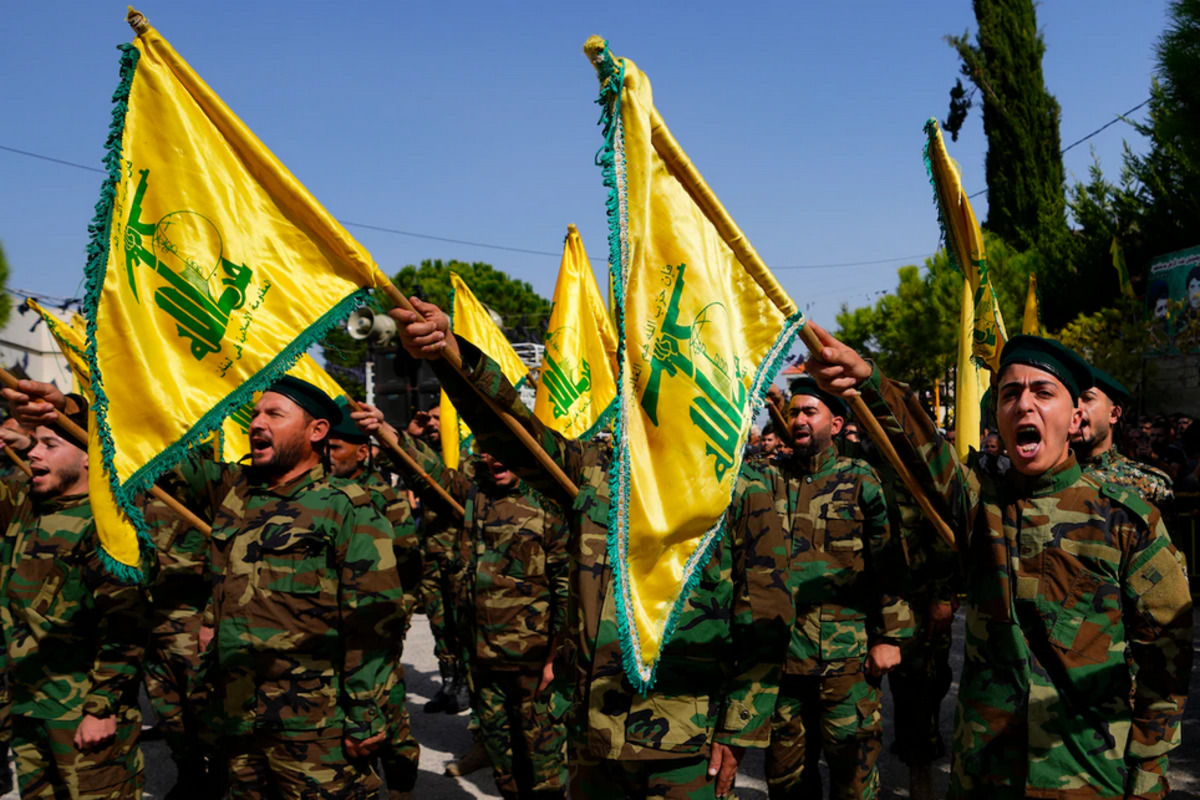
- The Iranian Strategy: Tehran isn't playing for the next quarter’s GDP. They are playing for the next century. Their "Axis of Resistance" is designed to be expendable. If Hezbollah loses 5,000 fighters, the "cost" to the Iranian regime is negligible compared to the strategic benefit of keeping Israel bogged down in a multi-front war of attrition.
- The Israeli Dilemma: For Israel, the "status quo" died on October 7th. You cannot use 2022 data to predict 2026 behavior. When a nation perceives an existential threat, "economic stability" becomes a secondary concern.
- The American Paralysis: Washington is obsessed with "de-escalation." But in a region that respects strength and views hesitation as an invitation, the constant call for "restraint" is actually a primary driver of the very escalation we claim to fear.
Energy Markets Are Lying to You
Look at the oil price charts. Every time a rocket is fired, there’s a tiny blip, and then it settles. The "consensus" take is that the world has decoupled from Mideast oil. We have fracking in Permian; we have EVs; we are fine.
This is a dangerous delusion.
The market isn't pricing in stability; it’s pricing in a lack of imagination. The "shale revolution" hasn't made the U.S. immune to a total closure of the Strait of Hormuz. If that chokepoint shuts down, it doesn't matter how much oil you have in Texas. The global price is a single pool. A 20% supply shock is a global cardiac arrest.
The charts look flat because traders assume the U.S. Navy will always keep the taps open. But look at the hardware. Look at the aging fleet. Look at the recruitment crisis. We are under-writing the security of the global energy market with a check that our current industrial base might not be able to cash.
The "Two-State Solution" Ghost
Every pundit insists that the only way out is a "revitalized" two-state solution. They cite polling data and historical maps.
Let's be blunt: The two-state solution is a zombie policy. It exists in speeches and think-tank white papers, but it has no pulse on the ground.
- The Palestinian Authority is a hollowed-out shell with zero domestic legitimacy.
- The Israeli public has moved so far to the right that any leader proposing a sovereign Palestinian state would be committing political suicide.
- The geography of the West Bank is now a Swiss cheese of settlements and security zones that make a contiguous state a physical impossibility without a mass evacuation that would trigger a Jewish civil war.
Continuing to center our strategy on a 1990s peace framework is like trying to install Windows 95 on a quantum computer. It’s not just outdated; it’s fundamentally incompatible with the current hardware.
The Real Escalation: The Death of the Middleman
For decades, the Mideast stayed relatively stable because of "the deal." The U.S. provided security, the Arabs provided oil, and Israel provided the regional military bulwark.
That deal is dead.
The Gulf states—Saudi Arabia and the UAE—have watched the U.S. exit Afghanistan and waver on Ukraine. They aren't waiting for us anymore. They are diversifying their security portfolios. They are talking to Beijing. They are talking to Moscow. They are even talking to Tehran.
This isn't "diplomacy" in the way we understand it. It’s a hedge. They are preparing for a post-American Middle East.
Stop Measuring, Start Observing
If you want to understand what’s actually happening, stop looking at the charts of drone strikes and start looking at the maps of influence.
We are moving into a "Grey Zone" era. This is a space where the distinction between war and peace is intentionally blurred. Cyber attacks, proxy skirmishes, and economic sabotage are the new primary tools. You can’t put these on a bar graph because they are often invisible until the damage is irreversible.
We are obsessed with the "Big Bang"—the massive regional explosion that ends the world. But the real danger is the "Whimper"—the slow, steady erosion of Western influence, the gradual closure of trade routes, and the normalization of permanent, low-level conflict.
The "Escalating Mideast Conflict" isn't a spike on a chart. It’s the new baseline.
Stop asking when things will go back to "normal." This is the normal. The era of predictable, chartable geopolitics is over. We are now in a world where a $500 drone can upend a trillion-dollar trade route, and no amount of "data" can tell you when the next one will fly.
Burn the charts. Watch the actors, not the numbers. The reality is far uglier than a PowerPoint slide—and far more dangerous than the "experts" care to admit.