The foreign policy establishment is trapped in a loop of looking at the wrong map.
Mainstream analysts look at the Line of Actual Control (LAC) in the Himalayas and see a permanently frozen geopolitical stalemate. They dissect the recent border disengagements, look at the muted diplomatic handshakes, and confidently proclaim that while a temporary "thaw" is underway, structural rivalry makes any deep reconciliation an absolute impossibility.
They are wrong. They are looking at lines in the dirt while ignoring the massive economic pipelines being laid right under their feet.
The conventional consensus treats the geopolitical friction between New Delhi and Beijing as a permanent, defining feature of twenty-first-century statecraft. This view is lazy. It assumes that military posture dictates economic reality, when history repeatedly demonstrates the exact opposite.
What the talking heads call a superficial thaw is actually the messy, loud birth of a highly transactional, hyper-pragmatic economic alliance. It is not driven by sudden brotherly love, but by cold, hard capital efficiency.
The Illusion of Decoupling
For the last several years, the dominant narrative has been that India is successfully decoupling from China. We heard about app bans, tax raids on Chinese smartphone makers, and aggressive regulatory scrutiny designed to choke off Chinese capital. It made for great political theater.
The data tells a completely different story.
I have spent years tracking how capital flows through corporate structures across Asia, watching how easily money bypasses political posturing. While politicians thump their chests on TV, Indian industry has quietly become more reliant on Chinese inputs, not less.
Look at the trade numbers. India’s trade deficit with China has consistently hovered around massive, near-record highs. India imports the vast majority of its active pharmaceutical ingredients (APIs), telecom components, and solar modules from Chinese factories.
+-------------------------------------------------------------+
|  The Reality of Dependence: Key Indian Import Sectors       |
+-------------------------------------------------------------+
|  Sector                               | Chinese Market Share|
+-------------------------------------------------------------+
|  Active Pharmaceutical Ingredients   | ~70%                |
|  Solar Energy Components              | ~80%                |
|  Electronics & Telecom Hardware       | ~40%                |
+-------------------------------------------------------------+
To believe that India can simply cut China out of its supply chain is to misunderstand how global manufacturing works. India’s ambitious Production Linked Incentive (PLI) schemes, designed to turn the country into a global manufacturing powerhouse, cannot function without Chinese machinery, Chinese technicians, and Chinese components.
You cannot build an independent manufacturing ecosystem by blocking the world's primary factory floor. Indian CEOs know this. They have spent the last three years lobbying New Delhi behind closed doors to ease visa restrictions for Chinese engineers and fast-track investment clearances. The state is finally bending to that corporate reality.
Dismantling the Myth of India as the Next China
A favorite talking point of Western investment banks is that India is poised to replace China as the engine of global growth. This premise is deeply flawed.
India is not replacing China; India is scaling with China.
The Western dream of a clean geopolitical bifurcation—where India acts as a fortress against Chinese economic influence—is a fantasy. India’s economic strategy is fundamentally built on arbitrage. New Delhi wants to capture the manufacturing value chain that is moving out of China due to rising domestic labor costs and Western tariff walls.
But to capture that value, Indian factories must integrate seamlessly into existing supply networks, which are overwhelmingly anchored in Shenzhen, Guangzhou, and Shanghai.
Consider the electronics sector. When an Indian factory assembles a smartphone, it relies on printed circuit boards, displays, and camera modules sourced from Chinese vendors. Easing the border tensions is not an act of diplomatic goodwill; it is a critical supply-chain optimization strategy for New Delhi.
Without Chinese capital and components, India’s manufacturing growth stalls, inflation spikes, and the employment crisis worsens. The choice for India was never between standing firm or bowing to Beijing. The choice was between economic stagnation or pragmatic engagement. They chose engagement.
The Capital Flow Reality Check
Geopolitical analysts love to quote military spending and troop deployments. Let's talk about corporate balance sheets instead.
When New Delhi cracked down on Chinese foreign direct investment (FDI) via Press Note 3 in 2020—requiring prior government approval for investments from countries sharing a land border—it was hailed as a masterstroke that would starve Chinese firms of Indian market access.
What actually happened? Capital found a way around the barrier.
Chinese money shifted from direct equity investments to joint ventures, licensing agreements, and third-party routing through Singapore, Hong Kong, and Dubai. Indian tech startups, heavily reliant on venture capital from the likes of Alibaba and Tencent, did not stop needing cash; they just restructured the deals to keep the optics clean.
[Chinese Capital Source] ---> [Singapore / Dubai SPV] ---> [Indian Corporate Asset]
                                  (The Regulatory Bypass)
The recent policy shift in New Delhi to selectively permit Chinese investments in key manufacturing sectors is not a sudden policy reversal. It is an admission of defeat. The regulatory walls did not stop the flow of capital; they just made it more expensive and less transparent. Easing these restrictions is a hard-nosed business decision to lower transaction costs for Indian enterprises.
Why the Border Dispute is Overrated
The core mistake of the standard analysis is the belief that a resolved border is a prerequisite for economic integration.
Look at the history of modern trade. China and Taiwan have structural existential disputes, yet their supply chains are so deeply intertwined that a disruption would collapse the global electronics market. The United States and China are locked in a structural cold war, yet bilateral trade remains a cornerstone of the global economy.
The Himalayan border dispute is a localized, manageable friction point. Both Beijing and New Delhi have demonstrated that they possess the command-and-control capabilities to freeze military escalations when the economic costs become too high. The disengagements at the LAC are not a prelude to a grand peace treaty. They are a mutual agreement to relegate the border issue to the background so that both nations can focus on more pressing economic vulnerabilities.
Beijing faces severe economic headwinds at home, property market instability, and aggressive Western trade containment strategies. It cannot afford a hot, resource-draining conflict on its southern flank.
New Delhi needs to sustain high GDP growth to absorb millions of young people entering the workforce every year. It cannot achieve that growth while fighting a trade war with its largest source of industrial inputs.
The Flawed Questions Everyone Keeps Asking
The media keeps asking the wrong questions about this relationship. Let's dismantle the most common ones.
Is India abandoning its alignment with the West?
This question assumes that geopolitics is a zero-sum game of alliances. India is not a Western satellite state, nor will it ever be. New Delhi’s foreign policy is explicitly built on multi-alignment. India will buy Russian oil, use Chinese industrial machinery, and sell tech services to the United States simultaneously. Engaging with China does not mean turning its back on the Quad; it means India is acting in its own self-interest, refusing to be used as a geopolitical buffer state by Washington.
Will this thaw lead to a permanent resolution of the border?
No. And it does not matter. The border dispute will likely outlive everyone reading this. The mistake is believing that the absence of a final resolution means the relationship cannot progress. The new paradigm is one of compartmentalization. The border will remain patrolled and disputed, while business visas are processed, supply chains are cleared, and investments are approved.
The Hidden Risk of Pragmatism
This contrarian approach is not without its traps. The downside of India opening the doors to Chinese capital and components is the long-term risk of structural dependency.
By integrating deeply with Chinese industrial networks to fuel its own manufacturing boom, India risks cementing its position as a downstream assembly hub rather than an upstream innovator.
If you rely on your rival for the very machinery required to build your factories, you have not achieved strategic autonomy. You have just traded one form of vulnerability for another.
But for New Delhi, this is a calculated gamble. The immediate threat is economic stagnation and a failure to industrialize. The risk of dependency is a problem for tomorrow; the need for growth is an emergency today.
Stop Looking for a Treaty
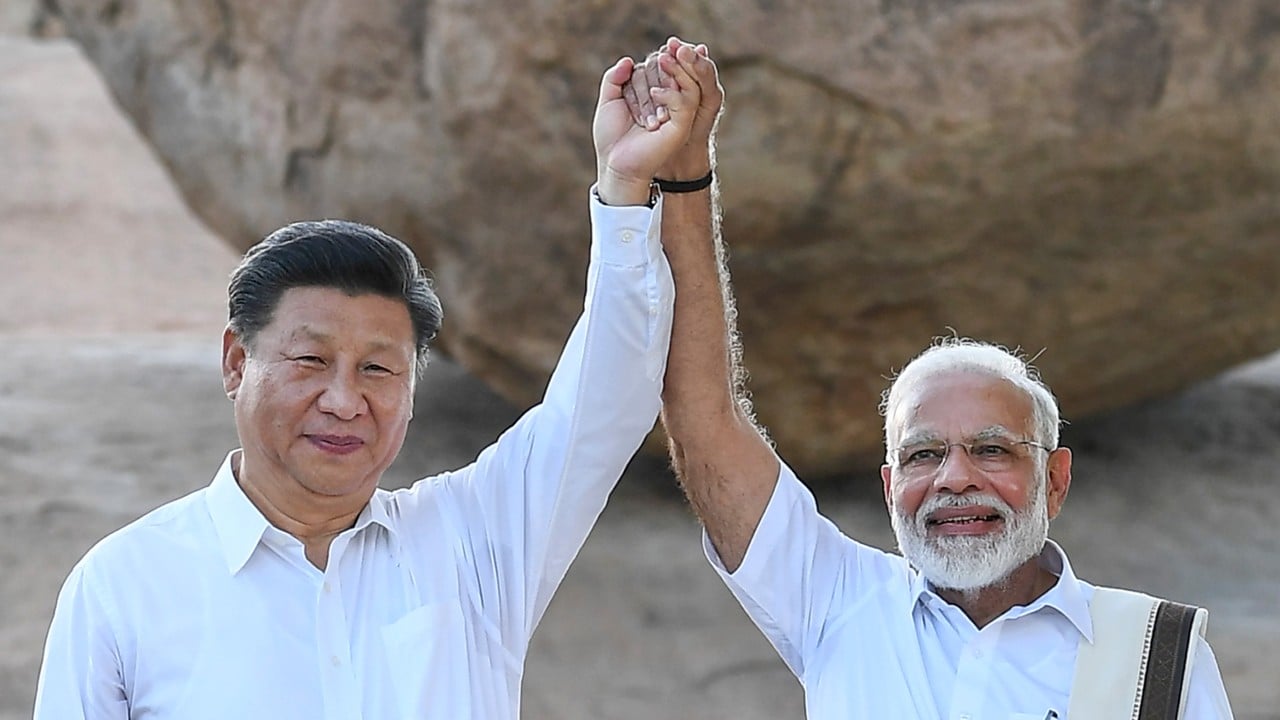
Do not wait for a grand, televised peace summit between Xi Jinping and Narendra Modi to signal that the relationship has changed. That is not how modern Asian geopolitics works.
The real reconciliation is happening quietly in the ministries of commerce, in the corporate boardrooms of Mumbai and Bengaluru, and in the customs clearing houses at the ports of Nhava Sheva and Chennai.
The border patrols will continue to face off in the snow, the diplomats will continue to issue carefully worded, ambiguous statements, and the nationalist media in both countries will continue to drum up outrage for ratings.
Ignore the noise. Follow the supply chains. The economic gravity between a five-trillion-dollar economy and a eighteen-trillion-dollar economy sharing a border is absolute. You cannot veto geography, and you cannot legislate away the laws of comparative advantage.