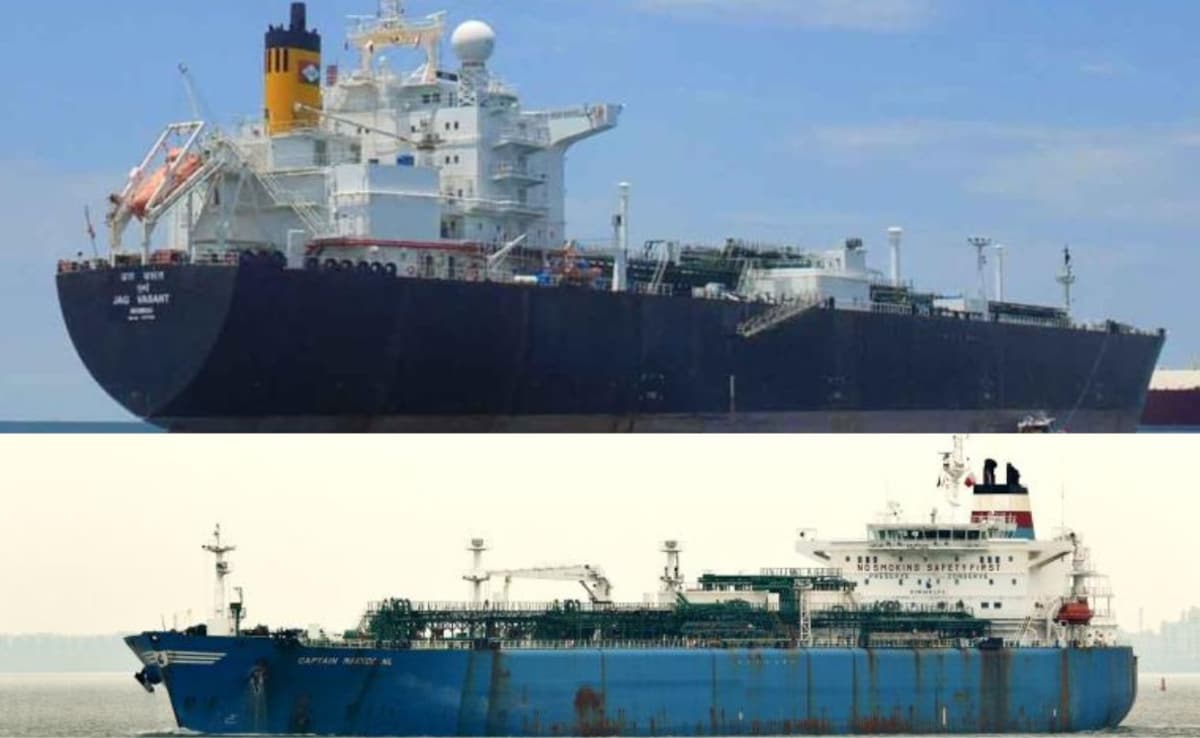
The arrival of two Indian Very Large Gas Carriers (VLGCs) at the Port of Fujairah after transiting the Strait of Hormuz represents more than a routine replenishment of domestic fuel stocks; it is a manifestation of India’s precarious dependence on a single, high-risk maritime chokepoint. While the volume—equivalent to approximately one day of India’s national Liquefied Petroleum Gas (LPG) consumption—appears statistically manageable, the operational mechanics of this transit reveal a fragile equilibrium between energy security, maritime insurance premiums, and the physical limitations of the global VLGC fleet.
The Inventory Velocity Constraint
India consumes roughly 28 to 30 million metric tonnes of LPG annually, with a daily demand profile hovering around 80,000 tonnes. A standard VLGC carries approximately 44,000 tonnes. Therefore, the simultaneous transit of two such vessels essentially covers the nation's entire residential and industrial burn rate for a 24-hour window. This 1:1 ratio between transit events and daily consumption underscores a "just-in-time" supply chain that lacks significant buffer capacity.
The inventory velocity—the speed at which product moves from the loading arm in Ras Tanura or Mesaieed to the bottling plants in India—is governed by three primary variables:
- The Chokepoint Multiplier: The Strait of Hormuz, a 21-mile wide passage at its narrowest point, handles over 25% of global liquefied gas trade. Any deceleration in transit speed, whether due to kinetic threats or increased naval inspections, acts as an immediate tax on India's internal distribution networks.
- Discharge Infrastructure Latency: India’s primary LPG terminals, such as Dahej, Mundra, and Mangalore, operate at high utilization rates. A delay in the Strait does not just postpone a delivery; it desynchronizes the berthing schedule for the subsequent week, creating a "slosh effect" in maritime logistics.
- The Buffer Depletion Rate: National stocks are typically maintained to cover 10-15 days of demand. A 48-hour disruption in the Strait consumes nearly 20% of the safety margin because the supply cannot be instantly rerouted from Atlantic or American sources due to the 25-day sailing distance from the U.S. Gulf Coast.
The Cost Function of Maritime Risk
When vessels like the Nanda Devi or the BR Ambedkar enter the Persian Gulf, the economic architecture of the voyage shifts from operational expenditure (OPEX) to risk-based pricing. The "War Risk Premium" (WRP) is the most volatile component of this cost function.
Typically, hull and machinery insurance is a fixed annual cost. However, the Strait of Hormuz is designated as a "listed area" by the Joint War Committee (JWC). This means shipowners must pay an additional premium for every 7-day period they remain within the zone. In periods of heightened regional tension, these premiums can spike from 0.01% to 0.5% of the vessel's hull value. For a modern VLGC valued at $90 million, a single transit could incur an additional $450,000 in insurance costs alone. These costs are ultimately socialized through the Indian government's subsidy mechanisms or passed to the consumer via the under-recoveries of Oil Marketing Companies (OMCs).
Beyond the WRP, the "Security Surcharge" includes:
- On-board Protection: The cost of private maritime security teams (PMST) or hardening measures like razor wire and water cannons.
- Speed Premiums: Operating at maximum knots to minimize the "window of vulnerability" increases fuel consumption exponentially. The relationship between speed and fuel burn is cubic; increasing speed by 20% can increase fuel costs by over 50%.
Structural Vulnerability in the "Middle Mile"
The Indian LPG sector faces a structural bottleneck referred to as the "Middle Mile." While the "First Mile" (Middle Eastern production) is abundant and the "Last Mile" (domestic cylinder delivery) is highly organized through the Ujjwala scheme, the maritime link remains the point of greatest failure.
The dependence on the Strait of Hormuz is driven by geographic proximity. Middle Eastern LPG (sourced from Qatar, Saudi Arabia, and the UAE) has a voyage time of approximately 4 to 6 days to India's west coast. In contrast, sourcing from the United States—the world’s largest LPG exporter—requires a 25 to 30-day voyage through either the Cape of Good Hope or the Suez Canal.
This creates a "Proximity Trap." The lower freight cost of Middle Eastern supply makes it the default choice, but this choice creates a geographic concentration of risk. If the Strait is closed, India cannot simply pivot to the U.S. or West Africa without a massive surge in the number of VLGCs under charter. There is currently a finite global supply of these specialized vessels, and a sudden shift in trade routes would send daily charter rates from $50,000 to over $150,000.
Tactical Realignment of Energy Logistics
To mitigate the systemic risks highlighted by the transit of these two tankers, the strategic focus must shift from simple procurement to "Logistical Elasticity." This involves three specific interventions:
1. Floating Storage and Off-take (FSO) Integration
India requires permanent floating storage outside the Persian Gulf, likely in the Gulf of Oman or near the southern coast of Sri Lanka. By maintaining 500,000 tonnes of LPG in offshore VLGCs or dedicated FSOs, the country creates a "surge tank" that can feed domestic terminals even if the Strait of Hormuz is temporarily impassable. This decouples the "loading event" in the Persian Gulf from the "delivery event" in India.
2. The Strategic Petroleum Reserve (SPR) Equivalent for LPG
While India has invested heavily in crude oil SPRs, its LPG storage remains largely operational rather than strategic. Expanding underground salt cavern storage or refrigerated tank farms at Kochi and Ennore is a prerequisite for handling the volatility of the Strait. Without physical molecules on soil, "energy security" is merely a theoretical concept.
3. Advanced Predictive Transit Analytics
The use of AIS (Automatic Identification System) data combined with predictive modeling allows OMCs to anticipate congestion or security-related slowdowns before they manifest as shortages. By quantifying "Transit at Risk" (TaR), planners can adjust the discharge priority of vessels already in Indian waters, ensuring that the most critical regional bottling plants remain operational during a supply hiccup.
The transit of 88,000 tonnes of LPG through a volatile chokepoint is a reminder that India's energy heart beats in the Middle East, but its lungs are the narrow shipping lanes of the Strait. The goal is no longer just to ensure the tankers arrive, but to build a system where their failure to arrive does not result in a national standstill.
The immediate strategic priority is the diversification of the chartering mix. Indian OMCs must transition from 90% Middle Eastern spot and term contracts to a 70/30 split that includes a mandatory "long-haul" component from the Atlantic basin. While this increases the baseline freight cost, it provides the necessary operational "muscle memory" and vessel commitments to survive a prolonged regional conflict in the Persian Gulf.