The business press loves a "discreet success" story. They see Zeiss and Trumpf weathering the storm of Germany’s industrial decay and start typing out odes to the Mittelstand spirit. They call these companies "nuggets" or "hidden gems." It is a comforting narrative. It suggests that as long as you have world-class lithography optics or high-end industrial lasers, you are immune to the systemic rot eating away at the European economy.
It is a lie.
The obsession with these "hidden champions" isn't a sign of industrial strength; it is a symptom of a deep-seated survival bias. We are staring at the last two structural pillars standing in a demolished neighborhood and calling it a masterclass in urban planning. Zeiss and Trumpf aren't "defying the crisis." They are the exceptions that prove the rule of German stagnation. If your entire industrial strategy relies on two or three century-old monopolies remaining untouchable in the face of a rising China and a predatory Silicon Valley, you don’t have a strategy. You have a prayer.
The Monopoly Trap: Why Zeiss and Trumpf are Outliers, Not Blueprints
The lazy consensus is that Zeiss and Trumpf succeed because of "German quality" and "long-term thinking." This ignores the brutal reality of their market positions.
Zeiss (specifically SMT) and Trumpf exist in a state of forced relevance. They aren't competing in a free market; they are the sole providers of the bottleneck technologies required for modern civilization. Zeiss provides the mirrors and lenses for ASML’s EUV (Extreme Ultraviolet) lithography machines. Without Zeiss, there are no 3nm chips. Without those chips, there is no AI, no iPhone, and no high-performance computing.
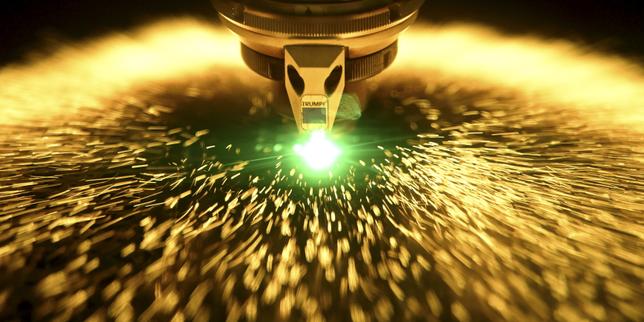
Trumpf holds a similar, though slightly less absolute, grip on the high-end industrial laser market. Their disk lasers are the engines behind the precision welding and cutting that makes the modern EV battery and aerospace industries possible.
The problem with holding these companies up as models for the rest of industry is that you cannot replicate a monopoly. You cannot "copy" a company that has a 30-year head start on the physics of light. Telling a struggling German auto parts manufacturer to "be more like Zeiss" is like telling a local bookstore to "be more like Amazon." It is fundamentally useless advice.
The High Cost of Discretion
The competitor's article praises their "discretion." In the real world, "discretion" is often just a polite word for a lack of ambition in the capital markets.
Because Zeiss is owned by a foundation (Carl-Zeiss-Stiftung) and Trumpf is family-owned, they don't have to deal with quarterly earnings calls. The media frames this as a superpower. They claim it allows for "intergenerational planning." I’ve seen what happens when companies insulate themselves from the "noise" of the market: they become slow, arrogant, and blind to disruption from below.
While Zeiss and Trumpf were perfecting their hardware, they ignored the software layer. The value in the global economy has shifted from the tool to the data generated by the tool.
- The Hardware Margin: You sell a laser once. You maintain it for ten years.
- The Software Margin: You own the platform that optimizes the laser's performance across 10,000 factories.
By staying "discreet" and "traditional," these companies have left the most profitable part of the value chain to American software giants. They are becoming highly sophisticated blacksmiths for a digital world. They provide the hammer, but someone else owns the blueprint and the customer relationship.
The Energy Price Guillotine
Let's talk about the math that the "hidden champion" fans ignore. Germany’s industrial model was built on cheap Russian gas and a wide-open Chinese market. Both are gone.
Even a high-margin company like Trumpf cannot outrun the reality of German electricity prices, which are consistently among the highest in the developed world. When your input costs double, your R&D budget—the very thing that makes you a "champion"—is the first thing to get squeezed.
People ask: "Can German engineering save the economy?"
The answer is: "Not if the factory is too expensive to turn on."
Zeiss is currently insulated because their margins on EUV optics are astronomical. But Trumpf operates in the industrial laser space where Chinese competitors like Han’s Laser are moving up the value chain at terrifying speeds. The "quality gap" is closing. When the quality is "good enough" and the price is 40% lower, "German engineering" becomes a luxury that most global manufacturers can no longer afford.
The Myth of the Specialized Niche
We are told that specialization is the ultimate defense. "Find a niche and dominate it." This is dangerous thinking in an era of general-purpose technologies.
AI and robotics are commoditizing precision. In the past, you needed a Trumpf laser and a German engineer with 40 years of experience to achieve a specific tolerance in a metal part. Today, you can often achieve that same result with cheaper hardware and superior software control.
The "moat" around these companies is made of hardware complexity. But history shows that software eventually eats hardware moats. Consider the following:
- Complexity shifts: From the physical lens to the computational correction of the image.
- Access shifts: From owning the machine to subscribing to the output.
- Intelligence shifts: From the operator's skill to the machine's autonomous adjustment.
If Zeiss and Trumpf don't pivot from being hardware vendors to being AI-first companies, they will eventually become the high-end "dumb pipes" of the manufacturing world. They will be the heavy, expensive infrastructure that someone else's intelligence layer runs on top of.
Stop Asking if They are "Defying the Crisis"
The question itself is flawed. It assumes the crisis is a temporary weather event that you can wait out in a sturdy cellar. This isn't a storm; it's a climate shift.
Germany’s industrial base is shrinking because the fundamental pillars of its 20th-century success have collapsed. Zeiss and Trumpf are not leading a recovery. They are the last survivors of a dying ecosystem. If we want to save European industry, we need to stop fetishizing these legacy giants and start asking why we haven't built a new company of their scale in the last thirty years.
Where is the European Nvidia? Where is the European OpenAI? They don't exist because we are too busy patting ourselves on the back for having a company that makes really good mirrors.
The "discretion" we praise is actually a lack of cultural vitality. We don't want to talk about the massive capital injections needed. We don't want to talk about the labor market rigidities that make it impossible for a startup to poach talent from Zeiss. We just want to believe that "quality" will win in the end.
Quality is no longer enough. Speed, scale, and software are the only currencies that matter now.
If you're looking at Zeiss and Trumpf as the light at the end of the tunnel, you're looking the wrong way. They are the sunset, not the dawn.
Build something new or get comfortable in the dark.