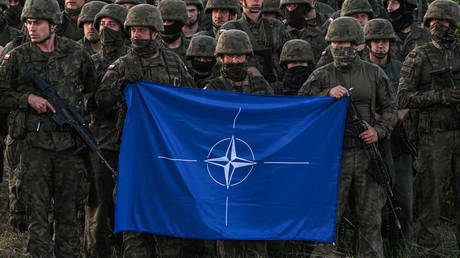
The announcement from the Pentagon on May 1, 2026, was the tremor before the quake. By the time President Trump spoke to reporters in Florida twenty-four hours later, the initial plan to pull 5,000 troops from German soil had already been dismissed as a mere opening act. "We are going to cut way down," the President stated, signaling a reduction that will likely exceed 15,000 personnel, or nearly half of the permanent U.S. presence in the Federal Republic. This is not a routine force posture review. It is the tactical execution of a long-threatened divorce, triggered by a public spat with German Chancellor Friedrich Merz over the escalating conflict with Iran and the perceived "humiliation" of American strategy.
The timing could not be more volatile. While the Pentagon frames the move as a recognition of "theater requirements," the reality on the ground in Germany is one of stunned realization. For decades, the U.S. military presence in Germany served as the logistical backbone of NATO. Now, that backbone is being surgically weakened at a moment when European security feels more fragile than at any point since the 1940s. In similar developments, take a look at: The Silence in the Diner and the Math of a Midterm Storm.
The Logistics of Abandonment
To understand why this withdrawal matters, you have to look past the troop numbers and into the concrete and steel of the bases themselves. Germany does not just host soldiers; it hosts the nerve center of the Western alliance. Ramstein Air Base is the primary hub for every U.S. operation in Europe, the Middle East, and Africa. Landstuhl Regional Medical Center is the only facility of its kind capable of handling mass casualties from distant theaters.
If the U.S. pulls 15,000 troops, they aren't just removing infantry. They are gutting the support structures that make NATO functional. Al Jazeera has also covered this fascinating topic in extensive detail.
The administrative burden of moving these units is immense. When a similar threat was made during the first Trump term, the logistical nightmare of relocating the U.S. European Command (EUCOM) from Stuttgart to Belgium helped stall the process. This time, the political will appears more focused. The administration is banking on the idea that these forces can be "recycled"—either brought home to satisfy a domestic base weary of "forever wars" or shifted to the eastern flank in Poland and the Baltics, where governments are more willing to pay for the privilege of American protection.
The Merz Factor and the Iran Catalyst
The catalyst for this specific rupture was a series of sharp criticisms from Chancellor Friedrich Merz. Merz, who took office with a mandate to modernize the German military, has recently broken with Washington over the U.S.-led "Operation Epic Fury" against Iranian assets. Merz publicly described the U.S. position as a "humiliation," criticizing a perceived lack of clear exit strategy and the economic fallout for European energy markets.
This friction exposed the fundamental flaw in the 2026 NATO alliance: the gap between American military objectives and European economic survival.
For Trump, the criticism was the final proof that Germany remains a "free rider" that enjoys the security of the American nuclear umbrella while publicly undermining American foreign policy. German Defense Minister Boris Pistorius has attempted to play down the withdrawal, calling it "foreseeable" and urging Europeans to take "more responsibility." It is a brave face on a grim reality. Germany’s recent commitment to spend 5% of its GDP on defense is a massive leap from previous years, but it will take a decade for that spending to materialize into a force capable of replacing the U.S. 1st Armored Division or the 86th Airlift Wing.
A Fractured Congress
The domestic reaction in Washington reveals a deepening schism within the Republican Party. While the MAGA wing cheers the withdrawal as a "long overdue homecoming," traditional hawks are sounding the alarm. Senator Roger Wicker and Representative Mike Rogers, who chair the respective armed services committees, released a joint statement expressing grave concern. They argue that withdrawing from Germany doesn't just hurt the alliance; it hurts American interests.
The Congressional Counter-Strategy
- Funding Blockades: Expect the 2027 National Defense Authorization Act (NDAA) to include "poison pill" clauses that prohibit the use of federal funds to deactivate specific bases in Rheinland-Pfalz or Bavaria.
- The Poland Alternative: Many in Congress are pushing to move these 5,000 (and the subsequent thousands) to Poland. Warsaw has already offered "Fort Trump" and billions in subsidies.
- The Russia Problem: Hawks argue that any vacuum left by American boots in Germany will be filled by Russian influence, either through soft power or renewed aggression on the eastern borders.
The irony of the current situation is that Europe has actually started to meet the demands Washington has made for years. In March 2026, NATO Secretary General Mark Rutte confirmed that every single ally had finally met or exceeded the 2% GDP spending target. In fact, many are trending toward 3% or 4%. Yet, the more Europe spends, the more the Trump administration seems to view the alliance as an obsolete burden rather than a shared investment.
The Cost of the Vacuum
What happens when the U.S. leaves? The economic impact on German towns like Kaiserslautern or Grafenwoehr will be catastrophic. These local economies are built entirely around the American presence—thousands of civilian jobs, local contracts, and retail spending. But the geopolitical cost is higher.
Without the U.S. presence in Germany, the "Forward Presence" in the Baltics becomes a tripwire with no backup. If a conflict breaks out in the Suwalki Gap, the reinforcements that would normally flow through German railheads and airfields will no longer be there. The "Spearhead" force of NATO would find itself blunt and isolated.
The German government is now caught in a pincer movement. On one side, a resurgent and aggressive Russia; on the other, an increasingly transactional United States. The era of the Transatlantic Shield, where European security was a given of American foreign policy, has ended. Whether Friedrich Merz can turn Germany into a "military power" fast enough to fill the void is the question that will determine if the European project survives the decade.
The 5,000 troops leaving this year are just the beginning of a total recalibration of global power. The American era in Europe is receding, and it is doing so with a bang, not a whisper.