Ghana is currently attempting a radical pivot in its agricultural policy by betting its food security on a product that doesn't actually grow in its soil. The government and private investors are pouring millions into domestic pasta production to curb a massive import bill, but this strategy ignores a fundamental biological reality. Wheat, the essential ingredient for conventional pasta, does not thrive in West Africa’s tropical climate. By building massive factories to process imported grain, the nation isn't achieving "sovereignty" in the traditional sense; it is simply shifting its dependency from finished Italian or Chinese goods to raw Russian and Canadian commodities.
The logic behind this movement is purely fiscal. Ghana spends billions of dollars annually importing basic food items. Pasta has transitioned from a niche luxury to a staple for the urban middle class and the time-strapped student population. It is fast, cheap, and easy to store. However, the push to brand locally manufactured pasta as a win for national self-sufficiency is a dangerous misnomer. Real sovereignty requires control over the entire value chain, starting from the seed in the ground.
The Mirage of Local Production
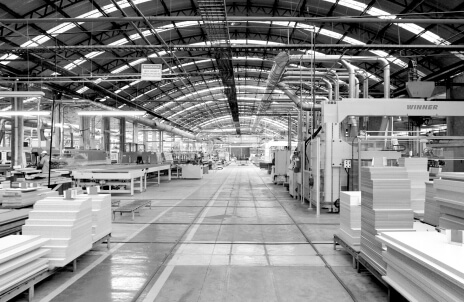
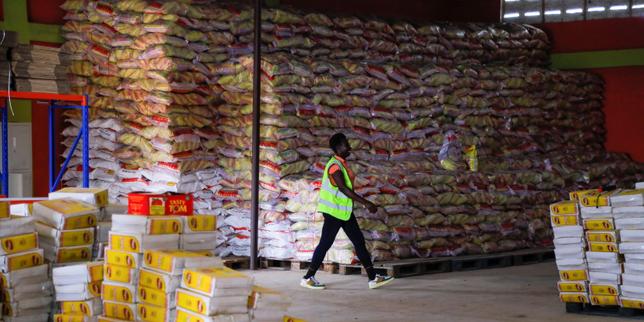
Walk into any supermarket in Accra and you will see "Made in Ghana" labels on bags of spaghetti. To the casual observer, this looks like industrial progress. Under the hood, the mechanics are less impressive. These factories are essentially high-tech assembly lines for foreign ingredients. They import durum wheat, mill it into semolina, and extrude it into shapes.
When global wheat prices spiked following the invasion of Ukraine, these "local" producers were hit just as hard as the importers. They have no shield against international market volatility because they have no local substitute for the core ingredient. A factory located in Tema is still a hostage to the Chicago Board of Trade.
True industrialization in the food sector should focus on what the land provides. Ghana is one of the world's leading producers of cassava, yam, and maize. Yet, the research and development required to turn these indigenous tubers into high-quality, shelf-stable pasta has lagged behind the easier path of importing wheat. The infrastructure for wheat is global and refined. The infrastructure for cassava flour is fragmented and inconsistent.
The Cost of Cultural Displacement
There is a psychological element to this shift that most economists overlook. As pasta becomes the default "convenience food," traditional staples like kenkey or fufu are being pushed to the margins of the modern Ghanaian diet. These traditional foods are tied to local supply chains that support smallholder farmers in the Ashanti or Bono regions.
When a family chooses a box of spaghetti over a ball of banku, the economic benefit skips the local farmer and heads straight to the multinational grain traders. This is a slow-motion erosion of the domestic agricultural base. We are training a new generation to prefer the taste and texture of a crop that cannot be grown within their own borders.
If the goal is genuine food security, the focus should be on "composite flours." This involves blending a percentage of locally grown cassava or sorghum flour into the wheat mix. It is a technical challenge. Too much cassava and the pasta turns to mush in the pot; too little and the economic impact is negligible. Some innovators are experimenting with a 20% local blend, but the scaling has been glacial. The massive pasta plants currently being commissioned are mostly optimized for 100% durum wheat. They are built for efficiency, not for flexibility.
The Infrastructure Trap
Building a massive pasta plant requires stable electricity, specialized logistics, and a steady stream of foreign exchange to pay for the raw grain. Ghana has struggled with all three. The "Dumsor" era of power outages may have stabilized, but the cost of industrial power remains a heavy burden on manufacturers.
Furthermore, the depreciation of the Cedi makes the business model of these factories incredibly fragile. They buy their raw materials in Dollars or Euros and sell their finished pasta in Cedi. If the currency drops 20% in a year, their margins evaporate. They are forced to raise prices, which negates the "affordability" that made pasta popular in the first place.
Comparison of Input Vulnerability
| Factor | Wheat-Based Pasta | Cassava-Based Alternative |
|---|---|---|
| Raw Material Source | International Imports | Local Smallholders |
| Currency Risk | High (US Dollar dependent) | Low (Cedi based) |
| Logistics | Global Shipping / Port access | Rural road networks |
| Processing Complexity | Standardized / Industrial | High (Requires detoxification) |
| Climate Resilience | Vulnerable to global shifts | Adapted to local environment |
The table above illustrates the trade-offs that policymakers are currently ignoring. The "low" processing complexity of wheat is what attracts the big money. It is a proven, turn-key solution. But the "high" currency risk is a ticking time bomb for a developing economy.
The Subsidy Paradox
The government often provides tax breaks and incentives for these large-scale manufacturing projects under the banner of job creation. While these factories do employ hundreds of people, they often do so at the expense of the millions of farmers who find no market for their surplus cassava or yams.
We are subsidizing the displacement of our own farmers. If the same level of fiscal support was directed toward the mechanization of tuber processing or the stabilization of the cassava flour supply chain, the "sovereignty" would be tangible. Instead, we have a shiny new factory that stops running the moment a ship is delayed in the Port of Tema or the central bank runs low on reserves.
Why the Current Model Will Fail
History is littered with African industrialization projects that relied on foreign inputs. In the 1970s and 80s, several nations built flour mills and bakeries that collapsed the moment global commodity prices rose or local currencies were devalued. Ghana is repeating this cycle with pasta.
The current path is a shortcut. It provides a quick win for the "One District, One Factory" initiative and puts a popular product on the shelves. But it doesn't solve the core problem of how Ghana will feed itself in a world where global trade routes are increasingly fragile.
True sovereignty isn't found in the shape of the noodle. It is found in the soil. Until the pasta in Accra is made from the crops of the Afram Plains, the country is just renting its food security from the rest of the world.
Invest in the technology to process what we grow. Stop celebrating the assembly of foreign ingredients. Anything else is just a marketing campaign for a dependency we can no longer afford.