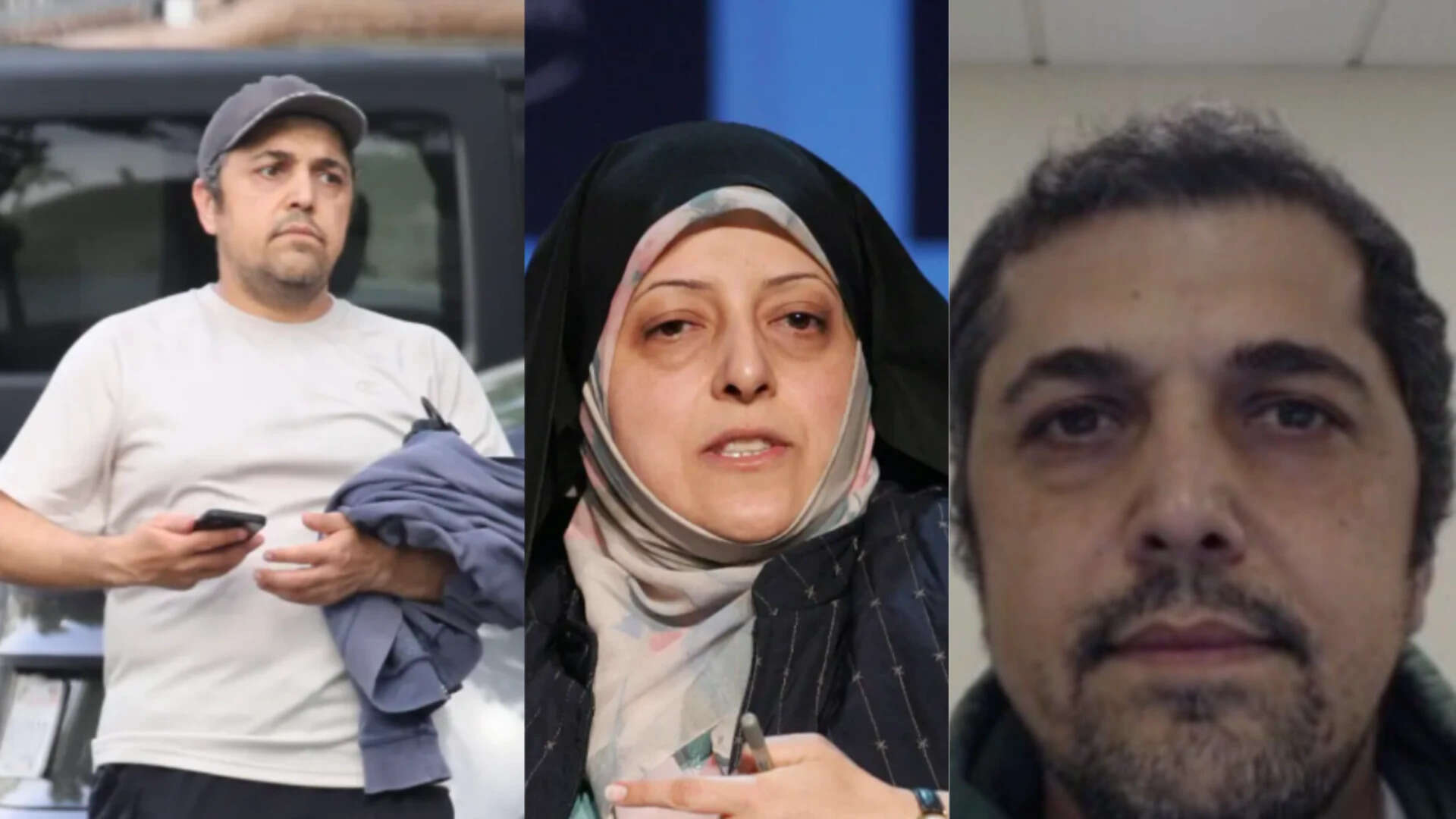
The plastic is thin, barely thicker than a credit card. It carries a specific shade of seafoam green that, for millions, represents the end of a long, desperate sprint toward safety. A green card is supposed to be the ultimate anchor. It says you belong. It says the ground beneath your feet is finally solid.
But for three men living quietly among us, that anchor just snapped.
They weren't hiding in the shadows. They weren't crossing the Rio Grande under the cover of a moonless night. They were here, documented and settled, walking the same grocery store aisles as you, until the federal government decided that their presence was no longer a matter of immigration paperwork, but a matter of national survival. Immigration and Customs Enforcement (ICE) didn’t just knock on their doors; they dismantled the legal fiction that these men were ordinary residents.
The reality was far more chilling. These weren't just "nationals" from a distant land. They were, according to intelligence officials, threads in a web woven directly back to the regime in Tehran.
The Invisible Strings
Imagine a man sitting in a coffee shop in a quiet American suburb. He has a social security number. He pays his utilities. He might even wave to his neighbors. To the world, he is a success story of the American dream. But in his pocket, metaphorically, is a direct line to a government that views his host country as the "Great Satan."
This isn't a plot from a spy novel. It is the administrative nightmare that keeps counter-intelligence officers awake at 3:00 AM.
When the Department of Homeland Security revoked the permanent residency status of these three Iranian nationals, they weren't just correcting a clerical error. They were cutting strings. The Tehran regime operates through a doctrine of "asymmetric presence." They don't always need an army on the border when they have individuals with legal status—people who can move, bank, and organize without the scrutiny applied to a foreign tourist or a diplomat.
The stakes are invisible until they aren't. We often think of national security as a high-tech shield or a massive wall. In truth, it is more like a sieve. Sometimes, the most dangerous elements aren't the ones trying to break in, but the ones who have already been invited to sit at the table.
The Weight of a Revocation
Stripping a green card is a violent act in the eyes of the law. It is the "civil death" of a person's American life. Usually, this happens because of a violent crime or a blatant fraud. But when the revocation is tied to "regime ties," the narrative shifts from the criminal to the existential.
Consider the mechanics of the betrayal. To earn a green card, you swear under penalty of perjury that you are not a threat, that you are not affiliated with certain organizations, and that your intentions are peaceful. When the government moves to revoke that status, they are essentially saying the entire foundation of that person’s residency was a lie.
ICE custody is a cold, fluorescent-lit reality. It is a place of orange jumpsuits and bolted-down furniture. For these three men, the transition from the freedom of a permanent resident to the confinement of an administrative detainee happened in the blink of an eye. One day you are planning your retirement in the West; the next, you are a pawn in a geopolitical chess match between Washington and a revolutionary theocracy.
The government hasn't released every granular detail of what these men were doing. They rarely do. National security thrives in the "classified" margins. But the message sent to Tehran is loud: we are looking closer than you think.
The Myth of the Solid Ground
We like to believe that once a person clears the hurdles of the U.S. immigration system, the vetting is over. We want to believe the system is a one-way door that locks securely behind those who enter.
It’s a comforting thought. It’s also wrong.
The world changed after the recent escalations in the Middle East. The vetting process of yesterday is no longer sufficient for the threats of tomorrow. These revocations signal a shift in posture. The "wait and see" approach has been replaced by "detect and disrupt."
Think of it like a house where you’ve discovered termites in the beams. You don't wait for the roof to cave in before you start pulling out the wood. You act the moment the structural integrity is in doubt. The American immigration system is currently undergoing a massive, silent audit of its structural integrity.
There is a profound, lingering tension in this process. How do we remain an open society while guarding against those who use that openness as a weapon? It’s a question that has no easy answer. We are forced to balance the beautiful ideal of the "huddled masses" against the cold, hard reality of state-sponsored espionage and influence operations.
Beyond the Paperwork
The headlines will focus on the numbers: three men, three green cards, one regime. But the real story is about the vulnerability of our systems.
For every person whose status is revoked, how many more are currently under the microscope? The process of moving from a "person of interest" to an "arrestee in ICE custody" is long, arduous, and requires a mountain of evidence that can stand up in an immigration court. These weren't snap judgments. They were the culmination of months, perhaps years, of surveillance and intelligence gathering.
The "human element" here is twofold. There is the human cost to the individuals being deported, whose lives are being uprooted and sent back to a regime that may or may not welcome them with open arms once their utility is gone. Then, there is the human cost to the American public—the erosion of trust.
Every time a story like this breaks, it makes it harder for the millions of honest, hardworking immigrants to be seen without suspicion. The actions of a few individuals with ties to a hostile government cast a long, dark shadow over everyone else. This is the collateral damage of Tehran’s meddling. They don’t just want to plant agents; they want to sow discord. They want us to look at our neighbors and wonder if there is a ghost in their green card.
The Cold Reality of the Cold War
We are entering a new era of domestic vigilance. The era where a green card was a "set it and forget it" document is over. In its place is a dynamic, constant assessment of loyalty and risk.
These three men are now sitting in a detention center, awaiting a plane ride that will take them back to a country they likely spent years trying to convince us they had left behind. Their departure won't make the evening news for long. The cycle will move on.
But the silence that follows their removal is heavy. It is the silence of a security apparatus that has finally caught a signal in the noise. It is the sound of a door being bolted from the inside.
Somewhere, in an office with no windows, a federal agent is closing a folder. On the front of that folder is a name, a photo, and a stamp that says Revoked. The plastic card itself is likely sitting in an evidence bag, its seafoam green surface scuffed and meaningless. It is no longer an anchor. It is just a piece of trash, a discarded mask from a masquerade that finally came to an end.
The ghost is gone, but the house still feels haunted.