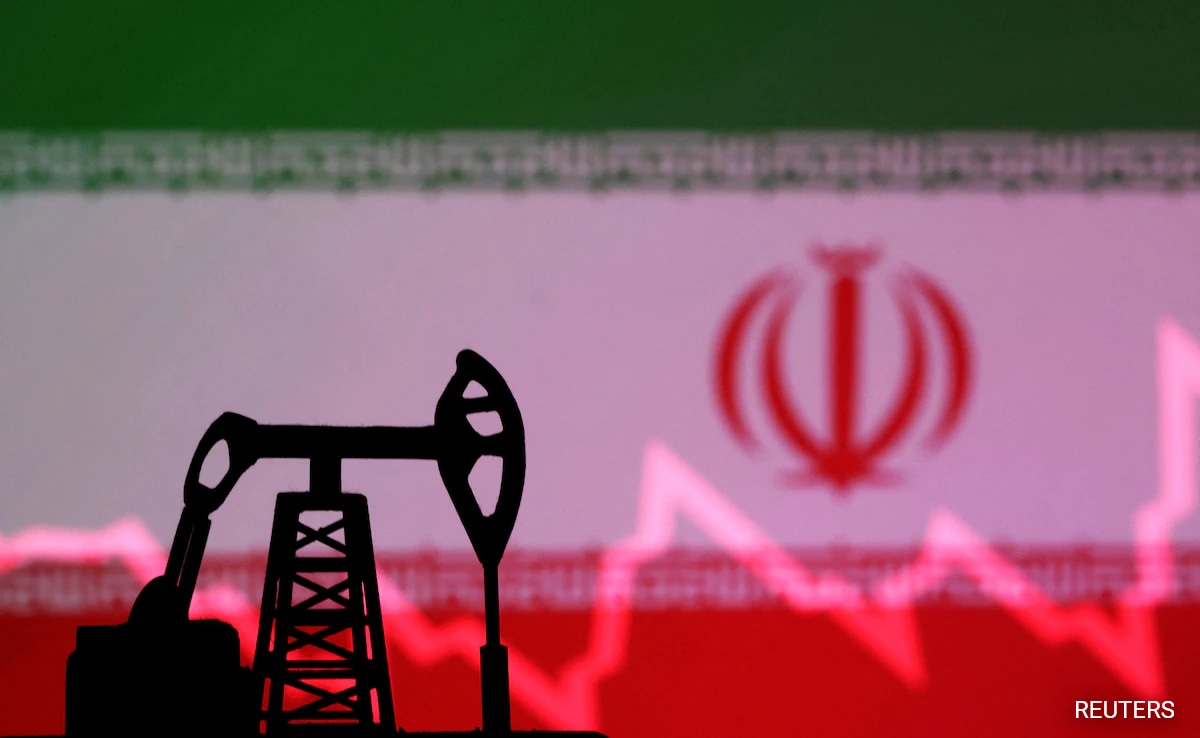
The global sanctions regime against Iran is currently a sieve, and the leak is happening at a specific, weathered outcrop in the South China Sea. While Washington focuses on drone strikes and naval blockades in the Persian Gulf, the real action has shifted thousands of miles east to the waters surrounding the Riau Archipelago. This is where the "Ghost Armada" operates with near-total impunity, using a sophisticated network of ship-to-ship transfers to turn sanctioned crude into "Malaysian blends" that keep the Chinese industrial engine humming.
It is a high-stakes shell game. To understand why U.S. pressure campaigns have failed to strangle Tehran’s economy, you have to look past the rhetoric of "maximum pressure" and focus on the AIS transponders being flicked off in the middle of the night. This isn't just a story about a tiny island; it is a story about the complete failure of the international maritime monitoring system and the emergence of a parallel global economy that the West can no longer control. You might also find this similar story interesting: The Middle Power Myth and Why Mark Carney Is Chasing Ghosts in Asia.
The Architecture of Deception
The process is deceptively simple but executed with military precision. An Iranian Suezmax tanker, laden with crude, leaves Kharg Island. It doesn't head for a major port. Instead, it vanishes. By the time it reappears on digital tracking maps, it is masquerading as a different vessel entirely.
The Riau Islands, particularly the waters near Batam and Pulau Bintan, provide the perfect theater for this. The geography is a nightmare for investigators. Narrow channels, heavy commercial traffic, and a patchwork of jurisdictional overlaps make it easy for a "dark ship" to hide in plain sight. Here, the Iranian oil is pumped into aging, rust-streaked tankers—often vessels destined for the scrap heap but given a second life by anonymous shell companies in the Marshall Islands or Panama. As discussed in latest articles by CNBC, the results are widespread.
These transfers, known as Ship-to-Ship (STS) operations, are the primary mechanism for laundering the origin of the oil. Once the Iranian crude is mixed with a small amount of legitimate product, it is re-papered. It receives a fresh Bill of Lading claiming the cargo originated in Malaysia or Oman. By the time this oil reaches the independent "teapot" refineries in China’s Shandong province, it is technically legal on paper, even if every intelligence agency in the world knows exactly where it came from.
Why the Navy Can't Stop the Flow
There is a common misconception that a few well-placed destroyers could end this trade. That is a fantasy. The logistics of interdicting these vessels in the South China Sea would require a level of maritime policing that would essentially shut down one of the world's busiest trade routes.
The "Ghost Armada" is not composed of high-end commercial vessels. These are bottom-tier tankers, often lacking proper insurance and operating with skeleton crews. If the U.S. Navy were to board and seize one of these ships, they wouldn't just be stopping oil; they would be assuming liability for a potential environmental catastrophe. Many of these ships are "sub-standard" in the truest sense of the word. They are floating liabilities.
Furthermore, the legal gray zone is enormous. If a ship is flagged in a country that doesn't recognize U.S. sanctions and is operating in international waters or the territorial waters of a sympathetic or indifferent nation, the legal basis for seizure is shaky at best. The risk of an international incident—particularly one involving China, the primary buyer—far outweighs the tactical benefit of seizing a single million-barrel shipment.
The Financial Ghost in the Machine
It isn't just about the ships. The money moves through channels that are equally opaque. While the SWIFT banking system remains the primary tool for Western financial dominance, the trade in "laundered" oil has moved to small, regional banks and digital ledgers that don't report to New York or London.
Payment is often settled in Yuan, circumventing the dollar entirely. This "petroyuan" ecosystem is exactly what Beijing has wanted for decades: a way to secure its energy needs without being vulnerable to the whim of the U.S. Treasury Department. When Iran sells oil to China through these island intermediaries, the money stays within a closed loop. Iran uses the credits to buy Chinese manufacturing equipment, consumer goods, and technology. No dollars ever change hands. No Western bank ever sees the transaction.
The Role of Independent Refiners
In the traditional oil market, the "Big Oil" players—the BPs and Shells of the world—have too much to lose to touch sanctioned crude. But the Chinese market is different. The "teapot" refineries are small, independent operations that exist outside the direct control of state-owned giants like Sinopec. These teapots are the primary destination for the smuggled oil. They operate on razor-thin margins and are happy to take a 10% to 15% discount on crude, regardless of its origin.
For these refiners, the island-hopping oil isn't a political statement; it's a survival strategy. As long as they provide a guaranteed destination for the cargo, the "Ghost Armada" will keep sailing.
The Environmental Time Bomb
While the geopolitical implications dominate the headlines, the physical reality of these "sneaking" operations is terrifying. STS transfers are risky under the best conditions. Conducting them with aging tankers, often in the dark, and without the oversight of port authorities is an invitation for a disaster.
The waters around these islands are some of the most biodiverse in the world. A single major spill from a compromised hull would devastate the local fishing industries of Indonesia, Malaysia, and Singapore. Yet, because these ships are "dark," they don't carry the standard $P&I$ (Protection and Indemnity) insurance. If a spill happens, there is no one to sue. The shell company that "owned" the ship will vanish into the ether, leaving the local governments to pick up the bill and the mess.
The world is currently tolerating a shadow fleet that ignores every safety standard established since the Exxon Valdez. We are prioritizing the economic stalemate of sanctions over the physical safety of the oceans.
The Failure of Satellite Surveillance
There is a persistent myth that in the age of "eyes in the sky," nothing can hide. This is wrong. While companies like Maxar and Planet Labs can provide high-resolution imagery, the sheer volume of data is overwhelming. A tanker can "go dark" by turning off its AIS, and while SAR (Synthetic Aperture Radar) can find a ship through clouds, identifying which ship it is among thousands of similar-looking vessels is a monumental task.
The smugglers have also learned to "spoof" their locations. A ship’s AIS might signal that it is docked in a port in West Africa while it is actually offloading oil near Indonesia. This digital misdirection creates enough "noise" to let the shipments slip through. By the time an analyst confirms the discrepancy, the oil has already been offloaded and the tanker is heading back for another load.
The Sovereign Indifference Factor
The most overlooked factor in this entire saga is the quiet complicity of regional players. For countries like Indonesia and Malaysia, policing these waters is expensive and politically sensitive. If they move too aggressively against the oil trade, they risk upsetting China—their largest trading partner. If they do nothing, they maintain the status quo.
For many local officials, the "Ghost Armada" is a source of auxiliary income. These ships need supplies. They need bunkering. They need fresh water and food. A whole shadow economy has sprung up around the islands to service the very ships that are supposedly being "strangled" by international law.
The Pivot to the New Normal
The era of the U.S. being able to flip a switch and turn off a country’s oil exports is over. The "tiny island" strategy has proven that if the demand is high enough and the geography is complex enough, the oil will find a way. We are no longer looking at a temporary loophole; we are looking at the permanent infrastructure of a sanctioned-state economy.
The "Ghost Armada" is growing. It is becoming more efficient. As more nations find themselves under the thumb of Western sanctions, they are simply joining this existing shadow network. It is a parallel world of trade that functions without the dollar, without Western insurance, and without the permission of the United Nations.
The real question isn't whether the U.S. can close this specific island loophole. The question is whether the West can accept a world where its primary economic weapon—the sanction—has been rendered obsolete by a few rusting tankers and a collection of remote islands.
You can trace the ships, you can sanction the shell companies, and you can issue stern warnings from the podium at the State Department. But as long as there is a refinery in Shandong willing to pay and a ship in the South China Sea willing to turn off its lights, the oil will keep moving. The ghost fleet isn't sneaking past the missiles; it is simply sailing around them.
Review the satellite data for the Riau Archipelago over any 48-hour period and count the "unidentified" tankers. The sheer density of the traffic tells the story that the diplomats won't. The system isn't broken; it has been replaced.