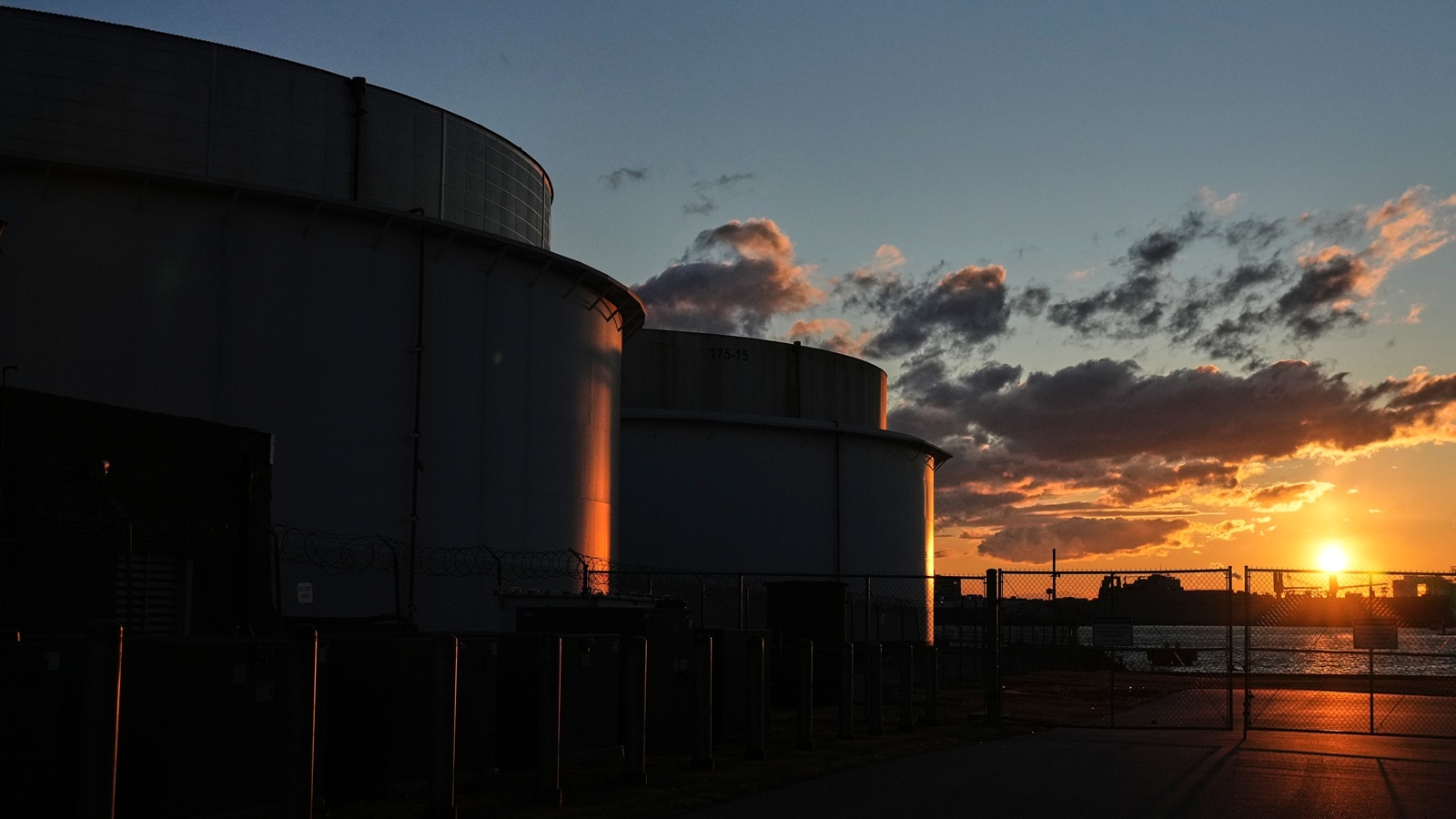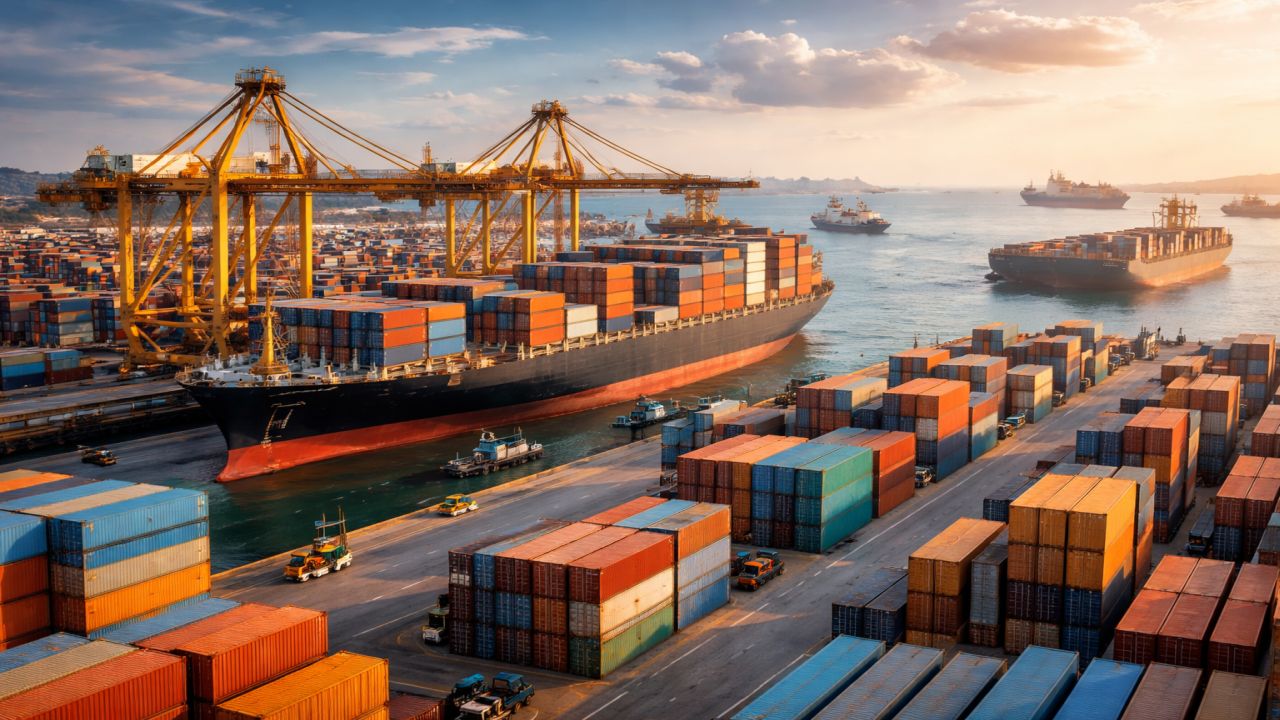
In the pre-dawn mist of Nagoya, the cranes stand like frozen storks against a bruised purple sky. They are heavy, silent, and waiting. For decades, these iron giants have been the pulse of Japan’s survival, swinging steel and silicon from the docks of Honshu to the hungry ports of the world. But lately, the rhythm has changed. The gears are turning, yet the momentum feels thin.
To understand the global economy, you could look at a spreadsheet. Or you could look at a man like Daisuke.
Daisuke is a composite of the many floor managers I’ve met in the industrial heartlands of Aichi Prefecture—men who measure their lives in "takt time" and the precision of a sub-millimeter weld. For Daisuke, a slowing export report isn't a percentage point on a screen. It is the eerie quiet on a Tuesday afternoon when the assembly line for US-bound SUV components pauses because the shipping schedule shifted.
Japan’s export growth has hit a wall, or perhaps more accurately, a series of invisible glass panes. The latest data shows a significant cooling. While shipments are still technically growing, the velocity is vanishing. In the trade world, speed is life. When that speed drops, the friction begins to burn.
The Lunar Shadow and the Empty Pallet
The first pane of glass is timing. Every year, the Lunar New Year ripples through Asia like a long, slow breath held tight. China, Japan’s massive neighbor and a vital node in its supply chain, effectively goes dark for weeks. Factories shutter. Workers travel thousands of miles to ancestral villages. The flow of parts—the sensors, the specialized plastics, the rare earth magnets—simply stops.
Consider the journey of a single semiconductor. It might be designed in Tokyo, etched in a clean room in Kyushu, and then sent to a mainland Chinese facility for packaging before returning to Japan to be installed in a digital camera bound for London. When China pauses for the holidays, that circular dance breaks.
This year, the "holiday effect" hit harder than usual. It wasn't just a seasonal blip; it was a reminder of how deeply Japan has tethered its fate to a neighbor whose own economic engines are sputtering. When China’s domestic demand wavers, the shockwaves travel across the Tsushima Strait with brutal efficiency. Japan isn't just selling less to China; it is struggling to maintain the flow of goods that require Chinese cooperation to exist.
The Tariff Shield and the Fear of 2025
Beyond the seasonal silence lies a much louder, more chaotic threat. In the boardrooms of Marunouchi, the conversation has shifted from "How much can we sell?" to "How much will they let us through the door?"
The United States has long been the "Goldilocks" market for Japanese exports—large, wealthy, and relatively stable. But the political climate in Washington has turned the Pacific into a minefield of potential tariffs. The specter of protectionism is no longer a fringe theory; it is a primary business risk.
Imagine you are a logistics planner for a major electronics firm. You have a shipment of high-end machinery ready to depart Osaka. However, the news from the US suggests a new round of trade barriers or "national security" tariffs on high-tech components. Suddenly, that $50 million cargo is a liability.
Japanese exporters are currently caught in a frantic "front-loading" cycle. They are rushing to get goods into American warehouses before the gate slams shut. This creates a deceptive spike in volume followed by a harrowing drop. The growth we see now is fueled by anxiety, not organic demand. It is the economic equivalent of sprinting because you hear a storm coming, only to realize you’ve exhausted yourself before the rain even starts.
The Yen’s Double-Edged Blade
There is a long-standing myth in trade: a weak currency is a gift for exporters. If the Yen is cheap, Japanese cars and consoles are cheaper for Americans to buy.
But talk to the people who actually buy the raw materials.
Japan is a volcanic archipelago with almost no natural resources. To export a car, Japan must first import the iron ore, the rubber, and the energy to melt the steel. A weak Yen makes those imports punishingly expensive. The "profit" gained from selling a car in Dollars is being eaten alive by the cost of the oil needed to ship it.
The margins are thinning to the width of a razor. For a small-to-medium enterprise in Osaka—the kind of family-run shop that makes the specialized screws for aerospace engines—this isn't a macroeconomic trend. It’s a decision between upgrading equipment or cutting the year-end bonus.
The Human Toll of a Decimal Point
Statistics are cold. They strip away the scent of machine oil and the sound of a forklift’s beep. When we hear that "export growth slowed to 1.3%," we don't hear the silence in the breakroom.
In the high-growth years, the overtime at Japanese plants was a badge of honor, a sign of a world that couldn't get enough of "Made in Japan." Today, the shifts are being optimized. The "just-in-time" philosophy, once the pride of Japanese manufacturing, has become a source of stress. There is no buffer anymore.
Daisuke looks at the shipping manifest and sees fewer destinations in the Midwest. He sees more inventory sitting in the shadows of the warehouse, waiting for a clearance that might not come. The stakes are invisible until they are terminal. If Japan cannot export its way to growth, the social contract of the "salaryman" begins to fray even further.
The country is aging. Its domestic market is shrinking. Without the ability to sell its ingenuity to the outside world, Japan faces an internal pressure cooker. Every slowed shipment is a heartbeat skipped in the national economy.
The Resilience of the Precision Soul
It would be a mistake, however, to count out the cranes of Nagoya.
Japan has a history of thriving when the world tries to box it in. During the oil shocks of the 1970s, it invented the fuel-efficient car. During the tech boom of the 90s, it mastered the hardware that powered the digital revolution.
Today, the pivot is toward "high-value" exports—things the world cannot easily tax or replace. This means specialized medical equipment, hydrogen fuel cell components, and the advanced robotics that other countries need to solve their own labor shortages. The volume might be lower, but the necessity is higher.
The challenge is that these high-value goods require a world that is open and cooperative. They require a world where a tariff isn't used as a blunt-force instrument of domestic politics.
As the sun climbs higher over the Nagoya docks, the first crane finally moves. It lifts a container destined for a port in California. It is a slow, deliberate motion. There is no frantic rush, only the steady, mechanical grinding of a nation trying to find its footing on shifting sand.
The container is a steel box full of cameras, or perhaps transmission gears, or maybe just hope. It swings over the dark water, a lone protagonist in a story of global friction. The ghost of the shipping container isn't what’s inside—it’s the uncertainty that follows it across the sea.
The world is watching the numbers. Daisuke is watching the horizon. He knows that in the end, the math doesn't matter as much as the momentum. And right now, the Pacific has never felt wider.
The crane releases its load with a heavy, metallic thud.
Silence returns to the dock.
Somewhere in a boardroom in Washington, a pen hovers over a trade document.
Somewhere in a factory in Guangdong, a worker turns off the lights for the night.
Japan waits.