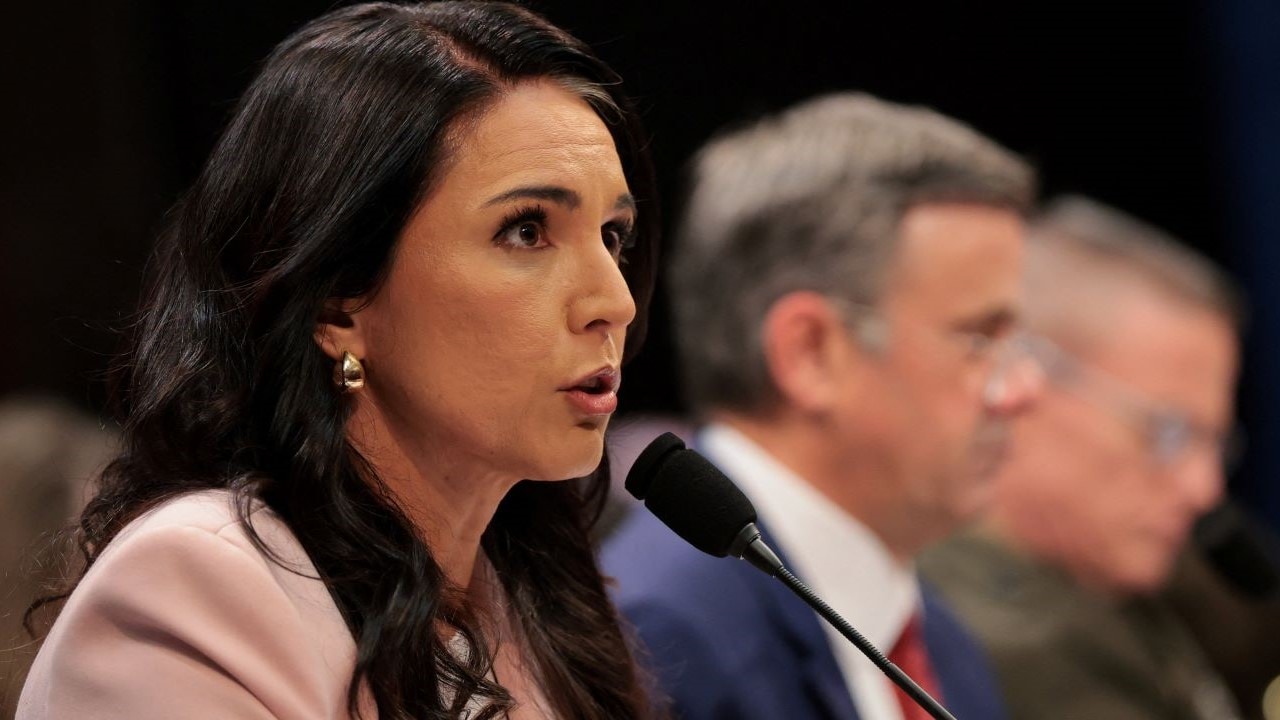
The air in a government office has a specific scent. It is a mix of ozone from aging photocopiers, the sour tang of industrial carpet cleaner, and the dry, papery smell of secrets that have sat undisturbed for decades. When the news broke that federal agents had reportedly entered an office belonging to Tulsi Gabbard to seize boxes of documents, that sterile scent suddenly became the most interesting thing in Washington.
The rumors moved through the digital ether like a fever. They didn't just claim the CIA had arrived; they claimed the agency was hunting for the crown jewels of American paranoia: the lost files of MKUltra and the suppressed truth of the JFK assassination.
It sounds like the opening scene of a political thriller where the protagonist realizes they’ve seen too much. But beneath the layers of internet frenzy and the inevitable partisan screaming matches, there is a human story about the weight of history and the terrifying fragility of the truth.
The Midnight Knock
Imagine a staffer sitting at a desk, surrounded by the mundane clutter of a political life—half-empty coffee cups, schedules for town halls, and stacks of constituent mail. Then, the door opens. The authority that enters isn't just a badge; it’s the physical manifestation of the state.
Reports began circulating that the CIA had coordinated a seizure of documents from Gabbard’s space, specifically targeting records that shouldn't exist in a private office. Tulsi Gabbard has always occupied a strange, friction-filled space in American politics. A veteran, a former Congresswoman, and a woman who has spent the last few years torching her bridges with the establishment. To her supporters, she is a truth-teller being silenced. To her detractors, she is a chaos agent.
But the documents? That’s where the story shifts from a standard political spat into something much darker.
MKUltra. The name alone carries a psychic weight. It was the CIA’s illegal human experimentation program, a nightmare of LSD, sensory deprivation, and attempted mind control that ran from the 1950s through the early 70s. Most of the records were destroyed in 1973 by order of then-CIA Director Richard Helms.
The idea that some of those "destroyed" pages were sitting in a folder in a Hawaiian politician’s office is the kind of spark that sets the dark corners of the web on fire.
Why Tulsi Why Now
The skepticism is healthy. It is necessary. Why would a former representative from Hawaii have the keys to the kingdom’s most guarded skeletons?
The narrative being spun by those close to the situation suggests a chain of custody that feels like a game of telephone played with sticks of dynamite. The theory is that whistleblowers or aging insiders, fearful that these records would be lost to time or the shredder, sought out a figure they felt was sufficiently "anti-establishment" to hold them.
Think about the burden of that choice. If you are a career bureaucrat holding a folder that proves a historical atrocity, who do you trust? You don't go to the New York Times—not anymore, not in the eyes of a conspiracist. You go to someone who has already proven they are willing to burn the house down.
Yet, we have to look at the cold reality of how intelligence works. The CIA does not "seize" things lightly. They operate in the shadows because the light is where they lose their power. If an operation like this occurred, it signifies a breach of "Title 50" proportions—the kind of legal territory that involves the highest levels of national security.
The rumor mill suggests the boxes contained more than just MKUltra notes. They allegedly held unredacted files regarding the events in Dallas on November 22, 1963. For sixty years, the JFK assassination has been the open wound of the American psyche. Every few years, a new batch of "declassified" files is released, usually 90% black ink and 10% bureaucratic fluff.
The suggestion that Gabbard had the "clean" versions is a claim that demands an incredible amount of evidence.
The Mechanics of a Cover Up
If you've ever tried to find a birth certificate in a messy basement, you know that physical records are stubborn. They don't just vanish because you want them to. They linger.
In the world of high-level intelligence, "leakage" is the ultimate sin. But leakage is also a human inevitability. People get old. They get guilty. They take things home as "insurance."
The CIA’s interest in Gabbard’s office, if the reports are taken at face value, wouldn't just be about the information itself. It would be about the provenance. They would need to know who gave it to her. If a leak exists that can hand over the JFK files, that leak can hand over current satellite codes or undercover identities in Moscow.
This is the invisible stake. While the public argues about whether Lee Harvey Oswald acted alone, the intelligence community is panicking about the plumbing of their own secret-keeping.
The Emotional Toll of the Unknown
There is a specific kind of exhaustion that comes from living in an era where everything feels like a lie. When we hear stories about CIA raids on political figures, our first instinct isn't usually to wait for a press release. It's to pick a side.
If you believe the CIA is a rogue entity, this is a gestapo tactic.
If you believe Gabbard is a threat to security, this is a necessary cleanup.
Lost in this binary is the actual truth of what happened to the victims of programs like MKUltra. These weren't just "files." They were lives. They were people like Frank Olson, a bacteriologist who plummeted from a hotel window after being unknowingly dosed with LSD by his own government. They were psychiatric patients who had their memories erased in the name of "science."
When we talk about "seizing files," we are talking about the state reclaiming the evidence of its own sins. That is a heavy, visceral thing. It’s not just paperwork. It’s the accounting of a debt that has never been paid.
The Ghost in the Room
Tulsi Gabbard has remained characteristically defiant, though the specifics of the seizure remain murky. The government, as is its custom, says nothing. "We can neither confirm nor deny" is the mantra of the wall that stands between the citizen and the state.
But the wall is cracking.
Whether these files actually contain the "truth" or are merely the fever dream of an internet-connected world, the impact is the same. The trust is gone. We are a nation looking for our own history in the stolen boxes of a politician's office because we no longer believe the archives are honest.
Consider the physical reality of those boxes. If they exist, they are sitting in a secure room right now. They are being scanned, cataloged, and likely buried once more. The CIA doesn't take things to put them in a museum. They take them to make them disappear.
We are left with the scent of ozone and the silence of a closed door. The files might be back in the hands of the people who wrote them, but the questions they represent aren't going anywhere. They are the ghosts that haunt the halls of power, waiting for someone else to find a key to the cabinet.
The truth isn't just out there. It’s being chased through the corridors of a Hawaiian office building at three in the morning, and we are all just watching the shadows under the door.


:max_bytes(150000):strip_icc():focal(819x186:821x188)/Murdaugh-Family-e90854a716884d608fb6fd925e18d840.jpg)
