In the glass-walled boardrooms of Abu Dhabi, the air carries a specific kind of silence. It is not the silence of emptiness, but the heavy, pressurized quiet of a decision that has been decades in the making. For sixty years, the United Arab Emirates has walked in lockstep with a cartel that defined the twentieth century. Now, they are walking away.
To understand why a nation would turn its back on OPEC—the most powerful oil assembly in history—you have to look past the spreadsheets and the price per barrel. You have to look at the dust. Specifically, the dust being kicked up by massive construction projects that have nothing to do with crude oil.
Consider a hypothetical engineer named Ahmed. He works at a sprawling solar park in the desert, a place where the heat shimmers off millions of panels like a sea made of mirrors. For his father’s generation, wealth was something pumped out of the dark earth, a finite gift that required loyalty to a group of neighbors who often had competing interests. For Ahmed, wealth is captured from the sky and processed through high-tech semiconductors. He represents a shift in identity. The UAE is no longer a gas station with a flag; it is becoming a global venture capital firm that happens to sit on a dwindling resource.
The tension within OPEC has always been a marriage of convenience, and like many such marriages, it eventually ran out of shared dreams. For years, the UAE has felt the chafing of production quotas. Imagine owning a Ferrari but being told by your neighbors that you are only allowed to drive it twenty miles per hour because their old sedans can’t keep up. That is the UAE’s relationship with Saudi Arabia and the rest of the cartel. Abu Dhabi has invested billions into expanding its capacity, building the infrastructure to pump five million barrels a day. Yet, the cartel demands they keep those taps tightened to prop up the economies of members who failed to diversify.
The math of loyalty has finally stopped adding up.
The world is hungry for energy, but the nature of that hunger is changing. We are living through a massive, clunky, and often painful transition. While the West debates the speed of "Net Zero," the Emirates are playing a more pragmatic game. They see the writing on the wall. They know that every barrel of oil left in the ground twenty years from now might as well be salt water. Their strategy is simple and brutal: pump as much as possible, as fast as possible, while the price is still high, and use every cent of that profit to build a post-oil world.
But being in OPEC prevents that. The cartel functions on the principle of scarcity. By artificially limiting supply, they keep prices high. The UAE has realized that high prices today aren't as valuable as market share tomorrow. They want to be the last ones standing in the oil market, the most efficient and reliable supplier, while simultaneously becoming the kings of the green hydrogen and renewable sectors.
This isn't just a policy shift. It is a divorce.
When a country leaves a group like OPEC, the ripples move through every gas station in Ohio and every factory in Guangdong. It signals a breakdown in the old-world order where a handful of nations could sit in a room in Vienna and decide the cost of global commerce. That era is dying. We are entering a period of "every nation for itself," where the urgency of the climate crisis and the volatility of geopolitics make long-term alliances feel like anchors rather than liferafts.
There is a certain irony in the timing. Just as the UAE hosted global climate summits and positioned itself as a leader in sustainability, it pushed for the right to flood the market with more oil. It feels like a contradiction. It is. But it is a human contradiction—the desperate scramble to fund a clean future using the dirty tools of the past. It’s like a smoker selling their last few cartons of cigarettes to pay for a gym membership and a lung scan.
Inside the halls of the OPEC headquarters, the mood is likely grim. If the UAE leaves, the dominoes look precarious. For years, the organization has relied on the duo of Saudi Arabia and the Emirates to provide the "swing" capacity that stabilizes the world. Without Abu Dhabi, Riyadh is left carrying the burden of price control almost entirely on its own. The cartel loses its luster. It becomes less of a global regulator and more of a regional club.
The invisible stakes are found in the bank accounts of the next generation. If the UAE stays and continues to suppress its own potential, it risks falling into the "middle-income trap," where the oil money runs out before the new economy is ready to take over. If they leave, they risk a price war that could crash the market and leave everyone bleeding.
It is a gamble of breathtaking proportions.
We often talk about "global markets" as if they are sentient beings, but they are really just the sum of human fears and ambitions. The UAE's move is a manifestation of a very human fear: the fear of being left behind. They have seen what happens to nations that cling too long to the ghost of a dying industry. They have watched the decline of coal towns and the rust belts of the world. They have no intention of letting the gleaming towers of Dubai become monuments to a forgotten fuel.
The transition won't be smooth. It will be messy, filled with diplomatic spats and market volatility that will make our heating bills and transport costs swing wildly. We are witnessing the dismantling of the twentieth century's most successful monopoly.
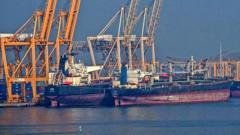
As the sun sets over the Persian Gulf, the tankers still line up at the horizon, waiting to carry their liquid cargo to distant shores. For now, the oil flows. But the signatures on the contracts are changing. The alliances are fracturing. The UAE is betting that the future belongs to the agile, not the grouped. They are choosing the uncertainty of the open sea over the perceived safety of the harbor.
In the end, this isn't about oil at all. It's about the terrifying, exhilarating moment when a country decides it is finally strong enough to stand alone. The Ferrari is accelerating. The neighbors are in the rearview mirror. And the road ahead is wide, scorching, and entirely unpredictable.