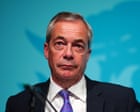
The tarmac at Biggin Hill doesn't care about geopolitics. To the asphalt, a tire is a tire, whether it belongs to a weekend hobbyist or a jet carrying the self-appointed vanguard of British sovereignty. But when Nigel Farage stepped onto a private Gulfstream to fly toward the Chagos Islands, the friction wasn't just between rubber and runway. It was the sound of a very expensive machinery meeting a very complicated truth.
We often talk about "grassroots" movements as if they spring naturally from the soil, watered only by the tears of the common man. It is a romantic image. It is also, frequently, a lie. Behind the wind-swept hair and the defiant rhetoric of the Chagos expedition lies a ledger. In that ledger, names like Christopher Harborne carry more weight than any Union Jack waved for the cameras.
The story of the Chagos "stunt" is not really about a cluster of islands in the Indian Ocean. It is a story about the plumbing of modern power. It is about how a multi-millionaire donor’s private aviation firm provided the wings for a political performance, blurring the lines between personal conviction and corporate sponsorship.
The Anatomy of a High-Altitude Photo Op
Picture the cabin of a private jet. It is quiet. The air is filtered to a point of sterile perfection. Outside, the world is a map of problems that feel small from 40,000 feet. For Nigel Farage and his Reform UK colleagues, this wasn't just transport. It was a statement of capability.
However, the "private" in private jet is a double-edged sword. It offers discretion, yes, but it also leaves a trail of tail numbers and ownership records that eventually lead back to the mahogany desks of the ultra-wealthy. Investigation into the flight reveals a direct link to Christopher Harborne, a man whose wealth has become the lifeblood of the Reform movement.
Harborne is not a household name in the way Farage is. He doesn't seek the limelight. He funds it. Through companies like AML Global, the infrastructure of elite travel is placed at the disposal of political disruption. When the news broke that the jet used for the Chagos trip was tied to Harborne’s business interests, it pierced the bubble of the "man of the people" narrative.
It turns out that the road to standing up for the "little guy" is often paved by men with very large bank accounts.
The Invisible Stakes of the Indian Ocean
To understand why this matters, we have to look at what was being protested. The British government recently agreed to hand over sovereignty of the Chagos Islands to Mauritius. To Farage, this was "surrender." To the people who actually lived there—the Chagossians—it was a chapter in a decades-long saga of displacement and heartbreak.
Imagine being told your home is no longer yours because a superpower needs a base. Imagine being moved like chess pieces across a colonial board. That is the lived reality of the Chagos people.
When a private jet descends into this conversation, it brings a specific kind of gravity. The optics are jarring. On one hand, you have the displaced, fighting for the right to return to the sand and the soil. On the other, you have British politicians arriving on a luxury aircraft funded by a crypto-wealthy donor to tell the world that they are the ones being wronged.
The jet becomes a metaphor for the disconnect. It is a high-tech vessel of nostalgia, fueled by the capital of a man who lives a world away from the consequences of the policies he funds.
The Donor and the Disruptor
Christopher Harborne’s involvement isn't just a footnote. It is the engine. Harborne has donated millions to Reform UK, becoming perhaps the most influential figure in British politics that the average voter could not pick out of a lineup.
His wealth is global, rooted in technology and aviation. This creates a fascinating paradox. The movement he funds is intensely nationalistic, focused on borders, sovereignty, and the "protection" of the British identity. Yet, the tools used to spread this message—the private jets, the offshore structures, the digital assets—are the very definition of borderless.
Consider the mechanics of the transaction. A donor provides the funds. The funds provide the jet. The jet provides the stage. The stage provides the clips for social media. The clips provide the votes.
It is a closed loop of influence.
The danger in this "synergy"—to use a word that makes most people's skin crawl—is that the political agenda begins to mirror the interests of the financier rather than the constituent. When a political party becomes dependent on a single "mega-donor," the "Reform" they promise starts to look like a very specific kind of restructuring.
The Cost of a Free Ride
There is no such thing as a free flight. Even if no money changes hands between the politician and the donor, a debt is recorded. It is a debt of access. It is the understanding that when the donor calls, the door is open.
During the Chagos trip, the narrative was about "standing up to the establishment." But what happens when the people standing up are being propped up by a different kind of establishment? A shadow establishment of high-finance individuals who use political parties as offshore investment vehicles for their own ideologies.
The flight logs tell a story of convenience. But the political logs tell a story of capture.
If we look closely at the paperwork, we see that the jet was operated under the umbrella of Harborne's business interests. This isn't illegal. In the world of high-stakes political maneuvering, it’s actually quite standard. But standard doesn't mean right. It doesn't mean transparent.
The public is told they are watching a crusade for national dignity. In reality, they are watching a highly subsidized logistics exercise.
Why the "Stunt" Matters More Than the Policy
The Chagos Islands are a complex legal thicket involving the US military base at Diego Garcia and centuries of colonial baggage. It is not a topic that fits easily into a thirty-second video clip.
But a private jet? A politician pointing at a map? That is easy. That is content.
The use of Harborne’s jet transformed a complex diplomatic issue into a piece of political theater. By focusing on the "betrayal" of the islands, Farage was able to tap into a vein of nationalistic anxiety. The fact that the trip was made possible by a man whose business interests are as opaque as the deep ocean didn't matter to the cameras. It only matters to those of us trying to follow the money.
We are living in an era where the "human element" of politics is being manufactured. We see the outrage, but we don't see the fuel bill. We see the protest, but we don't see the aviation company’s registration documents.
The Weight of the Wings
Ultimately, the flight to the Chagos Islands was a flight of fancy. It was an attempt to reclaim a past that is rapidly receding, using the most modern and elite tools available.
When the jet finally touched down back in the UK, the passengers stepped off into a world that is increasingly skeptical of these grand gestures. People are beginning to ask the uncomfortable questions. They are looking past the Union Jack decals and noticing the "Property of..." tags on the underside of the wings.
The invisible stakes are the integrity of the political process itself. If the voices of the "forgotten" are only heard when amplified by the private jets of the ultra-wealthy, are they truly being heard at all? Or are they just being used as a frequency for someone else’s broadcast?
The Chagos stunt was a masterpiece of distraction. It focused the eyes of the nation on a distant horizon while the real story was happening right in the cockpit. It was a reminder that in the modern world, sovereignty isn't just about territory. It’s about who owns the plane you’re flying in.
The asphalt at Biggin Hill is still there, indifferent and cold. The jet is tucked away in a hangar, waiting for the next mission. And the donor remains in the shadows, his influence soaring higher than any politician can reach on their own.
Money doesn't just talk in politics. It flies.