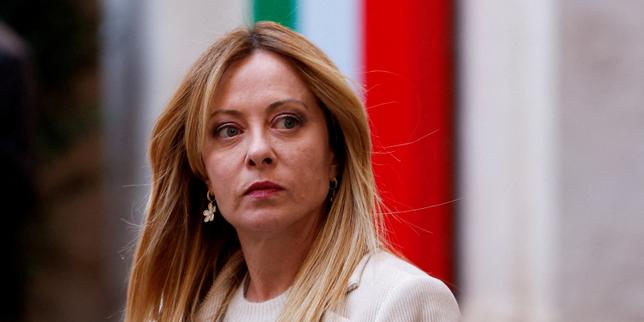
The pundits got it wrong. When Giorgia Meloni stepped into the Palazzo Chigi, the international press sounded the alarm about a "return to the dark past" and a radical shift that would shake the foundations of Europe. They expected a wrecking ball. Instead, they got a pragmatist with a sharp eye for survival. Meloni isn't leading a revolution; she’s managing a reality that has crushed every ideological dreamer before her.
If you look at the numbers, the "ideological defeat" isn't a failure of her party's spirit. It's a surrender to the math. Italy carries a public debt that hovers around 140% of its GDP. You can't be a radical firebrand when you're constantly asking the European Central Bank to keep your bond spreads from exploding. Meloni realized early on that to keep power, she had to play the game better than the technocrats she used to criticize.
The Great Pivot to Brussels
Everyone remembers the old Meloni. The one who shouted about "Brussels bureaucrats" and "globalist elites" at rallies. That version of her was useful for winning an election, but it’s useless for governing a G7 nation.
Once she took office, she didn't pick a fight with the European Commission. She became their best friend in the Mediterranean. Look at her relationship with Ursula von der Leyen. Instead of the expected friction, we saw cooperation on migration deals and the release of recovery funds. It’s a classic bait-and-switch. She kept the fiery rhetoric for domestic cultural issues—things that don't cost the treasury any money—while following the fiscal rules of the EU almost to the letter.
This isn't just "selling out." It's a recognition that Italy's room for maneuver is basically zero. When the markets bark, Meloni sits. That’s the real story of her premiership. The ideology of sovereignism died the moment she had to sign off on the first budget.
Migration and the Reality Gap
For years, the Brothers of Italy promised a "naval blockade." It was a powerful image. Simple. Direct. It suggested that a strong leader could just stop the boats through sheer force of will.
Then came 2023. The migrant arrivals didn't stop; they surged. Meloni found out that international law and the lack of cooperation from North African states are harder to overcome than a campaign slogan. So, she shifted. She started talking about the "Mattei Plan" for Africa—a long-term investment strategy that sounds more like a development project than a right-wing crusade.
She also did something her base didn't expect. She opened up legal channels for hundreds of thousands of foreign workers because Italian businesses were screaming for labor.
- 452,000 new work permits were authorized for the 2023-2025 period.
- This is a massive increase compared to previous years.
- It’s a silent admission that Italy’s aging population needs migration to stay afloat.
When your ideology says "Italy first" but your economy says "we need help," the economy wins every time. Meloni's brilliance lies in her ability to frame this retreat as a strategic advance. She talks about "controlled" and "legal" migration to soothe her voters while giving the industry the bodies it needs to keep the factories running in the north.
Why the Left is Struggling to Fight Back
The Italian opposition is in a bind. They spent months warning that Meloni would be a threat to democracy. But she hasn't dismantled the courts or shut down the press. She’s been... conventional. By acting like a standard conservative on the global stage, she has robbed the left of their biggest weapon.
You can't call someone a fascist when they’re the most reliable ally of the Biden administration on the Ukraine file. Meloni’s staunch support for Kyiv was perhaps her smartest move. It bought her immense political capital in Washington and London. It signaled that Italy wasn't going to be the "weak link" of the West.
Domestically, she plays "identity politics" for the right. She talks about the traditional family, she rails against "woke" culture, and she defends Italian food. These are the low-stakes battles that keep her supporters happy while she follows the neoliberal economic script. It’s a hollowed-out version of her original platform, but it’s incredibly effective at staying in power.
The Economic Straightjacket
Let's talk about the debt. Italy’s debt is the ghost that haunts every meeting in Rome. Every time a minister wants to cut taxes or increase spending, the Treasury points to the interest rates.
Meloni’s predecessor, Mario Draghi, was a technocrat who knew the markets loved him. Meloni knew the markets were suspicious of her. To avoid a repeat of the 2011 crisis that brought down Berlusconi, she had to be even more "Draghi than Draghi." Her finance minister, Giancarlo Giorgetti, is a figure of stability. There have been no wild spending sprees. No "flat tax" miracles that would tank the euro.
This fiscal caution is the ultimate proof of ideological defeat. If you can't change how the money flows, can you really say you've changed the country? Italy remains a country of low growth and high taxes. Meloni is presiding over the status quo, just with a more nationalist soundtrack.
The Mattei Plan Gamble
Meloni’s big "legacy" project is the Mattei Plan. Named after Enrico Mattei, the founder of ENI, it’s supposed to turn Italy into an energy hub between Africa and Europe. It’s an ambitious idea. It aims to trade investment in African infrastructure for energy security and migration control.
The problem? It’s underfunded. Experts suggest it needs billions more than what’s currently on the table to make a dent in the structural issues of North Africa. But it serves a purpose. It gives Meloni a "grand vision" to talk about. It’s a way to look like a stateswoman on the world stage while avoiding the messy details of domestic stagnation.
The Institutional Trap
The Italian system is designed to prevent anyone from having too much power. It’s a reaction to the country's history. Between the powerful Presidency of the Republic, the Constitutional Court, and the complex bureaucracy, "radical change" goes to die in committee.
Meloni is pushing for "Premierato"—a constitutional reform to allow the direct election of the Prime Minister. She says it will bring stability. Critics say it’s a power grab. But even this is a slow, grinding process. It requires referendums and multiple parliamentary votes.
By the time any of these changes happen, the urgency that brought her to power might have faded. This is the "Italian trap." The system eats reformers for breakfast. Meloni hasn't escaped the trap; she’s just learned how to live inside it without getting bitten.
Stop Watching the Rallies and Start Watching the Budgets
If you want to understand where Italy is going, stop listening to the speeches Meloni gives at political festivals in Spain or Italy. That’s theater. Instead, read the reports coming out of the Ministry of Economy and Finance.
You’ll see a government that is terrified of a ratings downgrade. You’ll see a government that is desperately trying to implement the reforms required by the EU's NextGenerationEU fund. This is the reality of modern European politics. The "nation-state" is a junior partner to the global financial system.
Meloni’s "defeat" isn't a personal failure. It’s a realization. She figured out that a small slice of a stable pie is better than a whole pie that’s on fire.
The lesson for anyone watching Italy is simple. Don't fear the rhetoric; watch the constraints. The next time a "radical" candidate rises in Europe, ask yourself two things. Who owns their debt? And what do they need from Brussels? Those two answers will tell you exactly how they’ll govern.
For Meloni, the choice was clear. She chose the palace over the barricades. She’s now a pillar of the European establishment she once vowed to dismantle. That’s not a revolution. It’s just politics.
If you’re tracking European political shifts, pay attention to the upcoming EU parliamentary dynamics. Meloni is positioning herself as the kingmaker between the traditional center-right and the populist fringe. Watch how she votes on the next European Commission president. That’s where the real power lies, far away from the ideological purity of the campaign trail. Expect her to choose influence over dogma every single time. It's the only way she survives.



