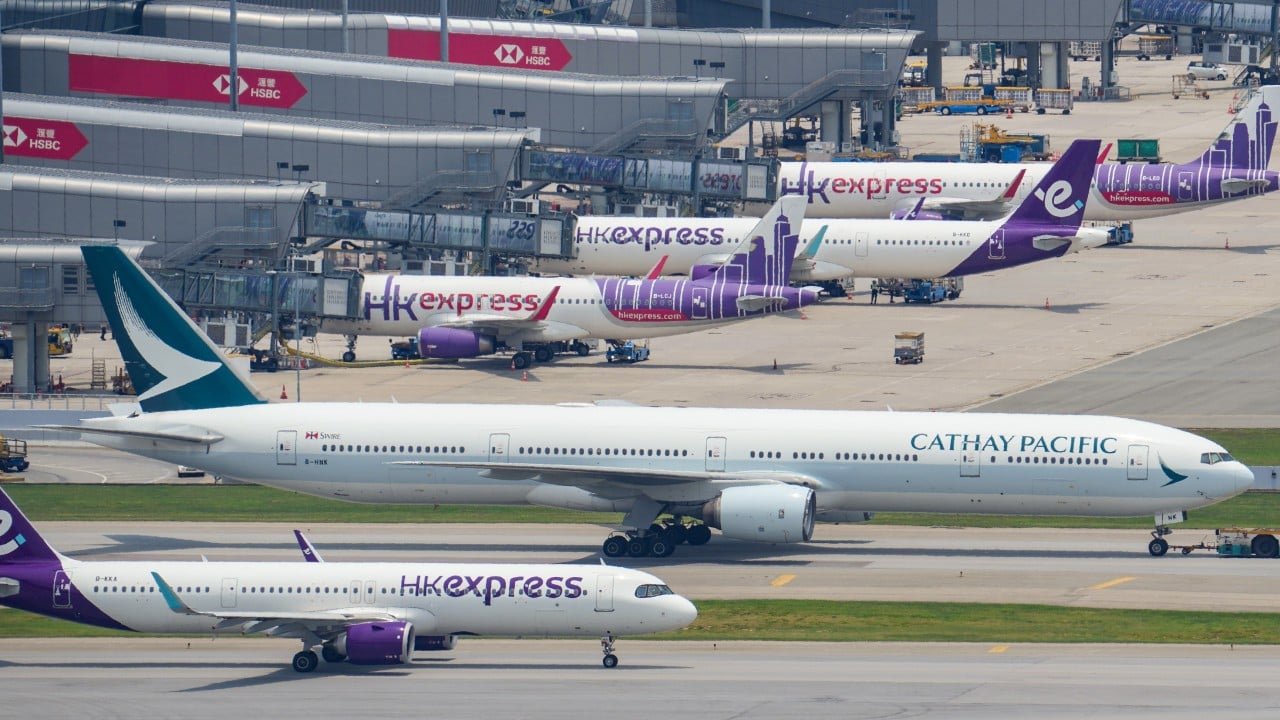
The headlines are bleeding anxiety. Pundits look at the map of the Middle East, track the rerouted flight paths, and declare that Hong Kong’s status as a premier aviation hub is circling the drain. They point to the extra fuel burn, the bypassed airspace, and the logistical nightmares of a world on fire as evidence of an inevitable decline.
They are dead wrong. In similar updates, take a look at: The 50 Percent Gamble and the End of the Shadow Fleet.
What the "consensus" misses is that aviation hubs don't thrive on peace and easy geography. They thrive on necessity. Hong Kong isn't losing its edge because of regional conflict; it is being stress-tested into a more resilient, indispensable version of itself. While the lazy narrative focuses on the inconvenience of longer flight times to Europe, it ignores the brutal reality of how global logistics actually shift when the traditional "straight lines" break.
The Myth of the Efficient Straight Line
Most analysts suffer from a terminal case of "Great Circle" fetishism. They assume that the shortest distance between two points is the only metric that matters for a hub's survival. If a flight from London to Hong Kong has to skirt around conflict zones, adding two hours to the trip, they scream about lost competitiveness. Investopedia has analyzed this fascinating issue in great detail.
Efficiency is a luxury of a stable world. In a fractured one, reliability is the only currency that matters.
Hong Kong’s infrastructure wasn't built for a world where everything goes right. It was built for a world where everything goes wrong. When Middle Eastern hubs like Dubai or Doha face the physical reality of being caught in the literal crosshairs of regional escalations, the "risk premium" of transiting through those desert megaprojects skyrockets.
Insurance companies don't care about the gold-plated faucets in a lounge; they care about the probability of a missile closing an airspace for a month. Hong Kong, positioned at the edge of the Pacific, offers a geographic "safe harbor" that the Gulf simply cannot match when the neighborhood gets loud. We are seeing a flight to quality—not just in service, but in geopolitical stability.
Why Long-Haul Pain is a Short-Term Distraction
The loudest complaints focus on the "Europe-to-Asia" corridor. Yes, avoiding Russian or Middle Eastern airspace is expensive. Yes, it strains the narrow-body ambitions of lesser airlines. But look at the numbers that actually move the needle for the Airport Authority Hong Kong (AAHK).
The real money isn't in a backpacker flying from Berlin to Bali with a stopover. It’s in the high-yield belly cargo and the trans-Pacific trade winds.
- The Cargo Moat: Hong Kong remains the busiest cargo airport on the planet. Why? Because the "Three-Runway System" (3RS) isn't just a construction project; it’s a massive bet on the decoupling of global supply chains. As manufacturing shifts from mainland China to Southeast Asia, Hong Kong acts as the sophisticated nervous system for the entire region.
- The Resilience Premium: While Middle Eastern war disrupts the "East-West" flow, it forces a consolidation of the "North-South" and "Trans-Pacific" routes. Hong Kong is the natural beneficiary of a world that is becoming more hemispheric.
I have spent decades watching airlines burn through cash trying to find "alternative hubs" in Southeast Asia. Singapore is saturated. Bangkok is a logistical mess. Ho Chi Minh City is years away from being a serious contender. Hong Kong’s efficiency in turnaround times and its deep-water port integration make it a beast that cannot be starved by a few extra hours of flight time to London.
The China Factor is a Feature Not a Bug
The most common "hot take" is that Hong Kong is being swallowed by the Greater Bay Area (GBA), losing its identity and therefore its "hub" status. This is backwards.
Hong Kong is no longer just a city-state airport; it is the front door to a 86-million-person powerhouse. The integration with the GBA via the bridge and high-speed rail means the "catchment area" for Chek Lap Kok has effectively tripled.
Imagine a scenario where a manufacturer in Dongguan needs to get a prototype to San Francisco. They don't care about the political discourse in a Western newspaper. They care that Hong Kong has the highest frequency of flights and the most streamlined customs process in the hemisphere. The "strain" people talk about is actually the sound of a pivot. The airport is transitioning from a "Global Transit Lounge" to a "Regional Economic Engine."
Challenging the "Terminal Decline" Data
Let’s dismantle the "connectivity" argument. Critics love to show graphs of "destinations served" compared to 2019. It’s a classic case of using lagging indicators to predict a crash that already happened—and is currently recovering.
Hubs are not static. They are organisms. When one route becomes unviable due to war, the capacity doesn't just vanish; it migrates. We are seeing a massive surge in routes connecting Hong Kong to the "Belt and Road" economies. These are the growth markets of the 2030s, not the stagnant, aging economies of Western Europe that the pundits are so obsessed with.
If you’re an airline CEO, you aren't looking at the 12-hour flight to Paris with much excitement. You’re looking at the 5-hour flight to Jakarta, the 4-hour flight to Mumbai, and the untapped potential of Central Asian markets. Hong Kong is repositioning itself to be the capital of the "Global South" trade, while everyone else is still crying about the old colonial flight paths.
The Harsh Reality of Hub Economics
Aviation is a game of scale and misery. The Middle East war is a tragedy, but for the aviation industry, it is a catalyst for the "Great Rationalization."
The airlines that will survive and thrive are those that have "Fortress Hubs." Hong Kong’s Cathay Pacific has spent the last three years being hammered by the world's strictest quarantine rules and now regional instability. What did they do? They trimmed the fat. They restructured. They didn't just wait for the world to return to normal; they accepted that "normal" is dead.
Compare this to the Gulf carriers who are essentially sovereign wealth funds with wings. They are vulnerable to the whims of geopolitics in a way that a commercially-hardened Hong Kong hub is not. When the oil money needs to stay home to fund regional defense or reconstruction, those "subsidized" hubs will feel a chill that Hong Kong, with its purely commercial DNA, will shrug off.
Addressing the "People Also Ask" Nonsense
"Is Hong Kong still a global aviation hub?"
The question itself is flawed. It assumes a "hub" is a static trophy. Hong Kong is a dynamic hub. If you measure it by its ability to move 5 million tonnes of cargo and 70 million people through a geopolitical bottleneck, the answer isn't "yes"—it's "nobody else even comes close."
"How does the Middle East war affect flight prices?"
It makes them more honest. For years, we lived in a bubble of artificially cheap long-haul travel powered by low fuel costs and open skies. The current "strain" is just the market pricing in the reality of a dangerous world. Hong Kong’s ability to maintain its volume despite these prices proves its utility. People pay the premium because the destination (the GBA) is worth it.
"Will Singapore replace Hong Kong?"
Singapore is a fantastic airport, but it’s a boutique. It lacks the massive industrial hinterland that Hong Kong serves. You don't replace the gateway to the world’s factory with a garden city. They serve different masters.
The Strategy for the Unsentimental Investor
Stop looking at the flight boards and start looking at the land use around the airport. The development of "SkyCity" and the logistics parks indicates a shift toward a "total airport economy."
The smart money isn't betting on a return to 2019. It’s betting on a world where trade is fragmented, risky, and expensive. In that world, the winner is the guy with the biggest warehouse, the fastest customs, and the most runways at the edge of the most productive region on earth.
The Middle East war hasn't weakened Hong Kong. It has highlighted the extreme fragility of its competitors while forcing Hong Kong to double down on its structural advantages. The "strain" is just the sound of the competition breaking.
The world is getting smaller, meaner, and more complicated. That is exactly the kind of environment where Hong Kong has always won. If you're waiting for the "recovery," you've already missed the transformation.
The hub isn't under strain; it’s under construction.