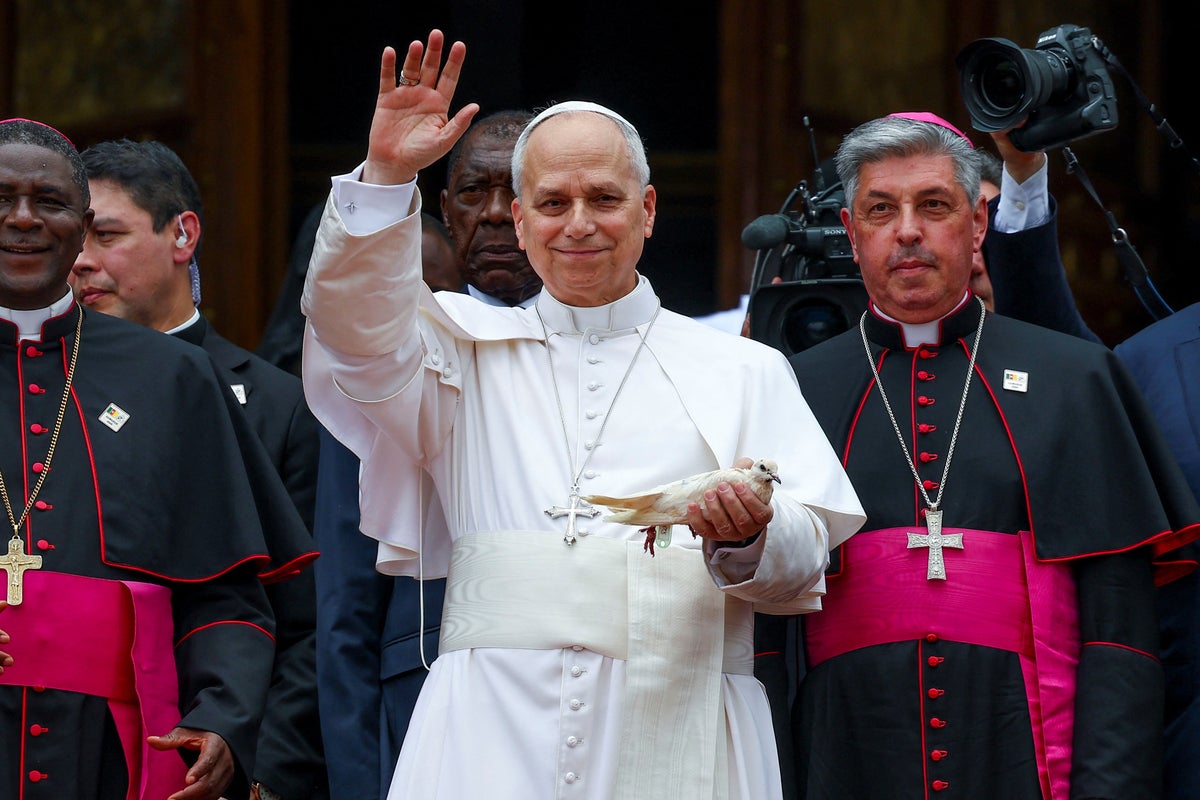
The world is not being ravaged by a handful of tyrants. It is being squeezed by the inevitable friction of a decaying global order.
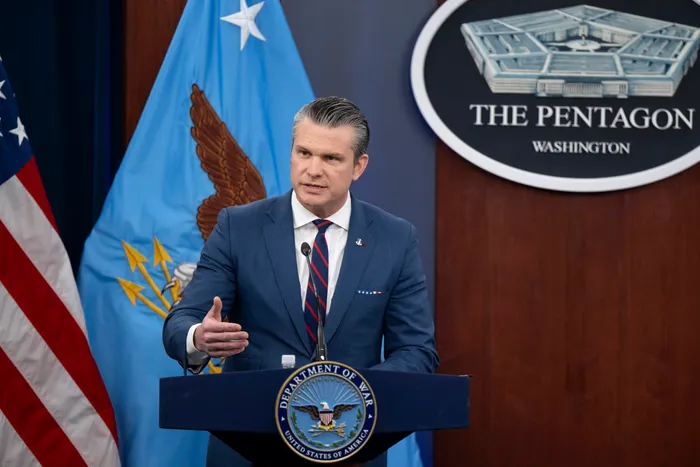
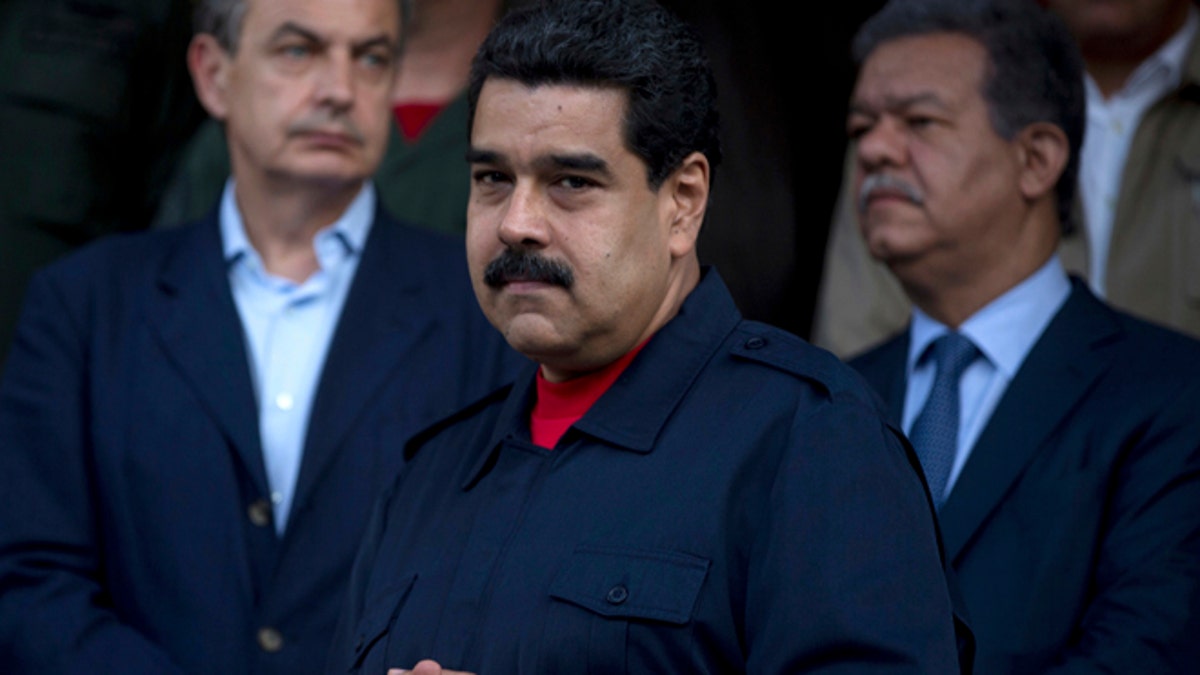
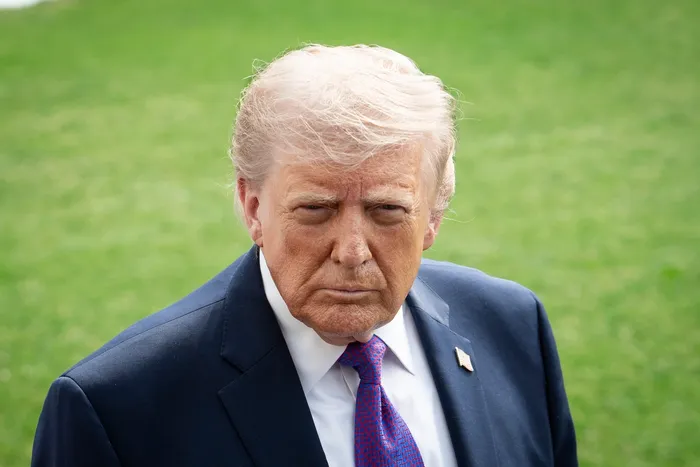
When high-profile figures like Pope Leo or domestic political firebrands decry a small circle of "dictators" or "strongmen," they aren't offering a diagnosis. They are offering a sedative. It’s comforting to believe that the world’s current instability is the fault of five or six bad actors with questionable haircuts and even worse track records on human rights. It suggests that if we simply remove the "tyrants," the system returns to a state of grace.
That is a lie.
The "lazy consensus" of modern geopolitical commentary treats global instability like a Hollywood movie where killing the villain ends the conflict. In reality, these leaders are symptoms, not the underlying disease. They are the logical output of a globalized system that stopped delivering for the middle class thirty years ago.
The Tyrant as a Market Solution
We love to moralize politics because it spares us from having to understand economics.
When Pope Leo points a finger at specific leaders following political attacks, he ignores the market demand for those leaders. Power vacuums don't stay empty. If you have a population that feels economically disenfranchised and culturally erased, they will shop for a "tyrant" the same way they shop for a home security system.
It is a defensive purchase.
The "tyrants" currently dominating the headlines—whether they are the ones being attacked by candidates or the ones being condemned from the pulpit—didn't seize power in a vacuum. They were hired. They promised to protect specific interests against a globalist machine that had become indifferent to local reality.
If you want to stop the "ravaging" of the world, stop looking at the men in the high chairs and start looking at the balance sheets of the people who put them there.
The Mathematical Impossibility of Direct Blame
Let’s talk about the logistics of global chaos.
Critics argue that a "handful" of people are destroying the planet. This gives these individuals far too much credit. Even the most absolute dictator is a prisoner of their bureaucracy and their nation's geography.
Consider the $GDP$ of the nations often labeled as "tyrannical." In many cases, their combined economic output is a fraction of the world total.
If we look at the basic relationship between power and resource control, we can model it loosely:
$$P = \frac{R \cdot S}{O}$$
Where $P$ is effective power, $R$ is resources, $S$ is institutional stability, and $O$ is external opposition.
Even if $R$ is high (oil, minerals, gas), the denominator $O$ (global markets, sanctions, internal dissent) usually keeps the equation in check. The idea that a few individuals can bypass the laws of economic gravity to "ravage" the entire globe is a fantasy used to justify increased spending on "interventions" that rarely work.
The Fragility of the "Strongman" Narrative
I’ve spent years watching how markets react to political volatility. The smartest money doesn't bet on the "strength" of a strongman. It bets on their inevitable overreach.
The term "tyrant" is often used as a synonym for "unpredictable." But these leaders are actually the most predictable assets in the game. They follow a rigid script:
- Consolidate domestic media.
- Manufacture an external enemy (the "Global Elite" or "Western Imperialists").
- Use national resources to buy loyalty from the military.
- Fail to innovate because innovation requires freedom.
- Collapse under the weight of their own inefficiency.
The real danger isn't that these men are powerful. It’s that they are weak. A "ravaged" world is usually just a world dealing with the messy fallout of a failed autocrat trying to stay relevant. When we frame it as a battle between "good" and "tyranny," we miss the chance to manage the decline of these regimes effectively.
Why the Pope and the Politicians Get it Wrong
Pope Leo’s rhetoric serves a specific purpose: moral clarity in an era of terrifying complexity. It’s easier to tell the faithful that "tyrants" are the problem than to explain that the shift from a unipolar to a multipolar world is going to involve twenty years of expensive energy and broken supply chains.
Politicians use the "tyrant" label for a different reason. It’s the ultimate deflection. If I can point at a leader in a foreign capital and call them the source of all evil, I don't have to explain why inflation is high at home or why our own infrastructure is crumbling.
"The tyrant did it" is the "dog ate my homework" of international relations.
The Hidden Cost of Moralizing Geopolitics
When we treat geopolitical competition as a moral crusade against a "handful of tyrants," we lose the ability to negotiate.
You cannot negotiate with "evil." You can only defeat it. This binary thinking has led to some of the greatest foreign policy disasters of the last century. By labeling opponents as sub-human or inherently tyrannical, we close the door on the cynical, transactional deals that actually keep the peace.
Real stability is built on interests, not values.
I’ve seen portfolios wiped out because investors believed the rhetoric of "values-based" diplomacy. They thought a country was "safe" because it talked like a democracy, or they thought a country was "uninvestable" because it was ruled by a "tyrant."
The data tells a different story. Some of the most stable growth periods in history occurred under regimes that the modern press would describe as tyrannical. Conversely, some of the most violent and destructive periods followed the "liberation" of people from those very leaders.
This isn't an endorsement of autocracy. It’s a cold realization that the "tyrant" is often the only thing holding together a collection of warring factions that we don't understand.
Dismantling the "Handful" Myth
The competitor article suggests a small cabal is at fault. This is the "Great Man Theory" of history, but in reverse. It’s "Great Villain Theory."
In reality, the world is being reshaped by:
- Demographic Collapse: Aging populations in the West and China.
- Energy Transition: The violent shift from carbon-intensive economies to whatever comes next.
- Information Silos: The death of a shared reality caused by algorithmic feedback loops.
None of these are caused by a "handful of tyrants." You could replace every dictator on the planet tomorrow with a Harvard-educated democrat, and these three problems would still be there, screaming for a solution.
Stop Looking for Villains and Start Looking for Incentives
If you want to understand why the world feels like it's falling apart, stop reading the op-eds about "strongmen." Start looking at where the capital is flowing.
Power isn't a crown; it's a flow.
When Pope Leo claims the world is being ravaged, he is speaking to a world that feels powerless. He is giving them a target for their anger. But anger doesn't fix supply chains. Indignation doesn't lower the cost of borrowing.
The real "tyrants" of the modern age are the structural inefficiencies we refuse to address because it’s easier to argue about personalities. We are obsessed with the optics of power while the mechanics of power are failing.
The Actionable Truth
If you are an investor, a leader, or just a citizen trying to make sense of the noise, you need to ignore the moral theater.
- Price in the Noise: Understand that "tyrant" is a political label, not a technical one. Use it to gauge sentiment, not reality.
- Watch the Institutional Decay: The threat isn't a strong leader; it's a weak system. A system that can be "ravaged" by a handful of people was already broken.
- Bet on Localism: As global orders fracture, the only things that matter are food, energy, and physical security.
The world isn't being ravaged by tyrants. It’s being ravaged by our refusal to admit that the old rules no longer apply.
Stop waiting for the "bad guys" to go away. They are just the opening act for a much larger, much more complex drama that requires strategy, not just outrage.
Pick a side, but make sure it’s the side of reality. Everything else is just Sunday morning theater.