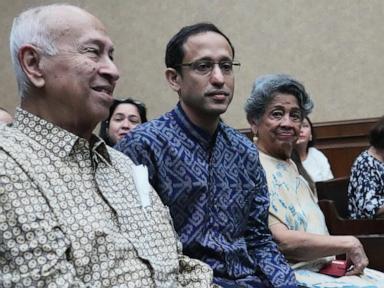
Google just threw a massive wrench into Indonesia's biggest tech corruption trial. On Monday, former top-tier executives from the search giant testified via Zoom at the Jakarta Corruption Court, flatly denying any backroom deals involving a $125 million procurement project. The case isn't just about laptops; it’s a messy collision of big tech, pandemic-era education policy, and the alleged personal business interests of a former minister.
If you've been following the "Chromebookgate" scandal, you know the stakes. Prosecutors claim that Nadiem Makarim—the founder of Gojek who served as Indonesia's Education Minister from 2019 to 2024—manipulated a massive school digitalization program to line his own pockets. The core of the state's argument? That Makarim pushed Google to invest roughly $787 million into his former company, Gojek (now GoTo), in exchange for ensuring the government bought over 1.2 million Chromebooks.
The testimony that could change everything
Scott Beaumont, the former president of Google Asia Pacific, didn't mince words. He told the panel of judges there was "no connection at all" between Google’s investment in the GoTo Group and any discussions with the Ministry of Education. This strikes at the very heart of the prosecution's theory. If Google’s money was moving independently of the laptop deal, the "quid pro quo" narrative starts to look a lot thinner.
Caesar Sengupta, a former Google VP, and William Florence also backed this up. They're positioning Google as a software licensor that doesn't control the final pricing or the hardware vendors chosen by the Indonesian government. From their perspective, the company provided the operating system, but they weren't the ones pulling the strings on the billion-dollar contracts handed out to local manufacturers like Axioo, Zyrex, and Bhinneka Mentari Dimensi.
Why the Chromebook choice was so controversial
The controversy actually started long before the arrests. In 2020, as schools scrambled to go remote during the pandemic, the Ministry of Education pushed a "laptop for all" initiative. But there was a problem. A ministry research team reportedly warned against the Chromebook model, arguing it was ineffective in remote Indonesian regions where internet access is basically non-existent.
Makarim ignored that. Prosecutors say he steered the procurement toward Chrome OS-based devices anyway. They allege this was a "strategic concealment" of his conflict of interest. While Makarim officially stepped down from Gojek to join the cabinet, the state argues he maintained indirect control through "beneficial owners" and close associates.
- The state loss: Prosecutors estimate the damage at 2.1 trillion rupiah (roughly $125 million).
- The payout: It's alleged that Makarim personally received 809 billion rupiah ($48.2 million) through the scheme.
- The price tag: Auditors found the "reasonable price" for these units should have been around 3.67 million rupiah ($214), suggesting massive markups.
Makarim’s defense is playing the long game
Makarim isn't taking this lying down. His legal team, led by high-profile lawyer Hotman Paris Hutapea, argues that his wealth actually dropped by 50% during his time in office. They claim he divested from his business interests completely and that the choice of Chromebooks was a technical decision made by lower-level teams, not a directive from the top.
Makarim himself has called the 2 trillion rupiah loss figure "engineered." He points out that Chrome OS was free to install and that the units were 10-30% cheaper than Windows-based alternatives. It's a classic defense: he’s framing himself as a disruptor who saved the state money while being attacked by a slow-moving bureaucracy.
What happens next for Indonesia’s tech sector
This trial is a trial for the entire Indonesian startup ecosystem. If a founder-turned-minister can be life-imprisoned for a deal involving the very tech company that invested in his startup, it sends a chilling message to the private sector.
Prosecutors are currently seeking sentences of 6 to 15 years for the other defendants, including former ministry officials Sri Wahyuningsih and Mulyatsyah, and tech consultant Ibrahim Arief. With Google’s leadership now on record denying the conspiracy, the court has to decide if the "evil conspiracy" alleged by the Attorney General's Office actually has teeth, or if it was just a poorly executed, high-stakes government project.
The verdict is expected within the month. If the court sides with the prosecution, it won't just be Nadiem Makarim heading to prison—it’ll be a permanent stain on the relationship between global tech giants and the Indonesian government. Keep a close eye on the court's reaction to the BPKP audit findings in the coming days, as those pricing discrepancies are likely where the final gavel will fall.