The air in London’s tech corridors feels different when a door slams. It isn't a physical bang, but a sudden, chilling drop in the room's temperature. One moment, the United Kingdom was positioning itself as the global throne for the artificial intelligence age. The next, a £31 billion promise evaporated into the gray morning mist.
OpenAI, the architect of the world’s most famous digital minds, has walked away from a landmark investment package. For a more detailed analysis into this area, we suggest: this related article.
To understand the weight of this, stop thinking about spreadsheets and venture capital. Think about a small flat in Manchester. Think about a young developer named Sarah, who stayed in the UK because she believed the center of the universe was moving to her doorstep. She saw the headlines about the government’s grand alliance with Sam Altman’s firm. She heard the whispers of a "Sovereign AI" infrastructure that would rival the silicon giants of California.
Now, she is looking at flight prices to San Francisco. For broader context on the matter, detailed analysis can be read at Gizmodo.
The Anatomy of a Ghost
The numbers are staggering. £31 billion is not just a rounding error; it is roughly the cost of building thirty world-class hospitals or funding the entire British space program for a generation. This was supposed to be the "Great British Supercomputer," a massive hardware cluster designed to give the UK the raw processing power to train the next generation of models without begging for time on American servers.
But the deal didn't just break. It disintegrated.
What happened behind the closed doors of Whitehall and the glass walls of OpenAI’s headquarters wasn't a simple disagreement over price. It was a collision of cultures. The UK government, desperate to anchor its post-Brexit identity in the digital frontier, offered a seat at the table. OpenAI, a company currently burning through billions of dollars in a frantic race for General Intelligence, wanted more than a seat. They wanted the table, the chairs, and the deed to the house.
When the two sides couldn't agree on the terms of the infrastructure—specifically, who would own the data and how much control the state would exercise over the safety protocols—OpenAI simply stopped talking.
Silence is the ultimate power move in the 21st century.
The Invisible Infrastructure
Imagine, for a moment, that we are not talking about code and chips. Imagine we are talking about the industrial revolution.
Suppose a visionary company promised to build a network of canals across the Midlands, connecting the heart of British manufacturing to the world’s ports. The promise is made, the maps are drawn, and the workers are ready. Then, overnight, the company pulls its shovels. The canals remain half-dug ditches. The water never flows.
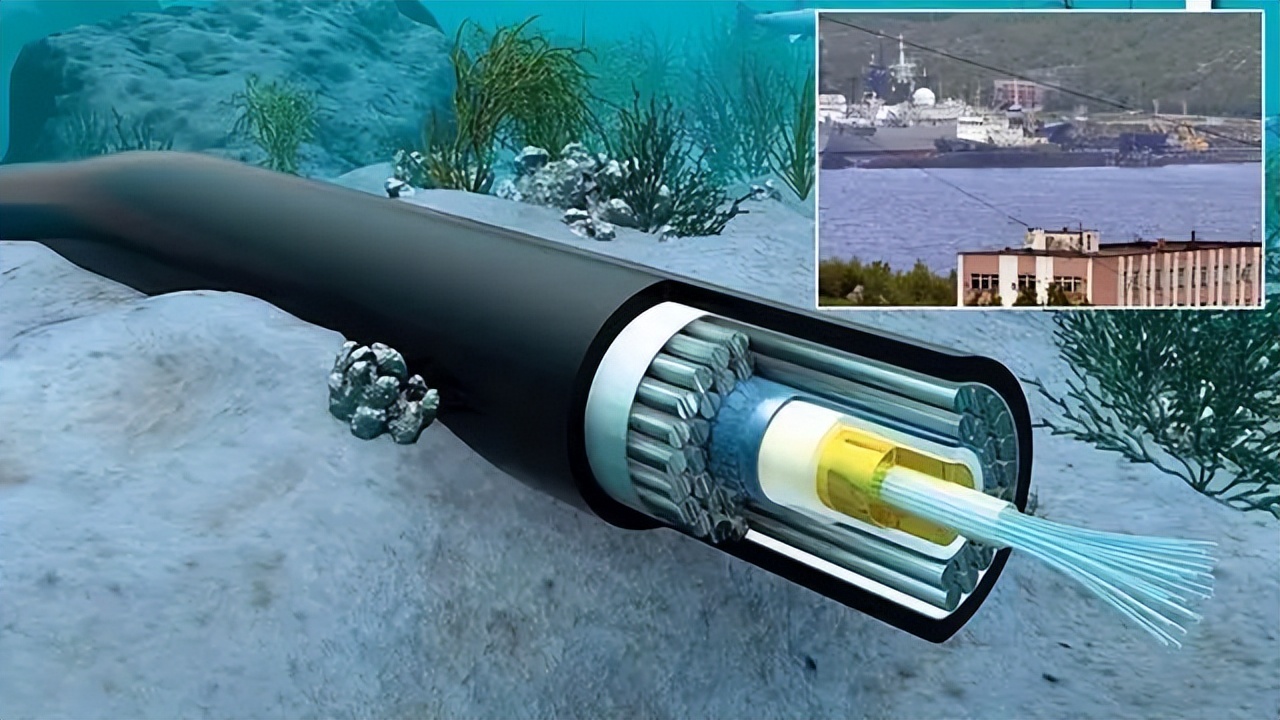
That is the reality of the AI withdrawal. The "ditches" in this metaphor are the data centers that will now go unbuilt, the undersea cables that won't be laid, and the talent pool that will dry up before it ever reaches full tide.
The stakes aren't just about losing a big name. When a titan like OpenAI retreats, they leave a vacuum. Smaller startups that were planning to build on top of that promised British infrastructure now find themselves standing on shifting sand. They can't wait for a slow-moving government to find a replacement. They move.
The brain drain isn't a theory. It’s a leak that turns into a flood.
Consider the hypothetical case of AetherMed, a fictional British startup trying to use AI to detect early-stage lung cancer. They needed that £31 billion package because it promised them subsidized access to the kind of compute power they could never afford on the open market. Without it, AetherMed faces a choice: pay triple the price to use a server in Virginia, or move the entire operation to the United States.
They move. We lose the taxes. We lose the talent. We lose the cure.
The Cost of Caution
There is a growing tension between the way a nation thinks and the way a tech company thinks.
A nation thinks in decades. It thinks about regulations, public safety, voter perception, and the slow, grinding gears of democracy. A company like OpenAI thinks in weeks. It is fueled by "compute-first" ideologies where speed is the only metric that matters. To them, the UK’s insistence on a "Safety-First" framework wasn't a noble pursuit of ethics; it was a bureaucratic anchor.
We are watching a divorce between two fundamentally different views of the future.
The British government wanted to be the world's AI referee. They hosted the Bletchley Park summit. They talked about guardrails. They wanted to ensure that if a machine ever learns to think, it does so with a British accent and a sense of fair play.
OpenAI, meanwhile, is a company that is currently restructuring its entire corporate DNA to become a for-profit entity, shedding the non-profit skin that once defined it. They aren't looking for a referee. They are looking for a rocket ship.
When the referee tried to check the rocket's engine, the pilot decided to find a different launchpad.
The Shadow of the Silicon Valley Sun
For years, the UK has suffered from what economists call the "Golden Triangle" syndrome. We have the best universities in Oxford, Cambridge, and London. We produce the minds. But we don't have the machines.
The £31 billion package was the bridge. It was the moment the UK stopped being just a classroom and started being a factory.
By pulling out, OpenAI has effectively told the world that the UK is a lovely place to give a speech, but a difficult place to build a god. This creates a ripple effect that touches every sector of the economy. If the premier AI firm in the world doesn't think Britain is worth the investment, why should the next tier of investors?
The loss is psychological as much as it is financial.
There is a specific kind of grief that comes with a missed era. My grandfather used to talk about the shipyards in Sunderland. He remembered when the sky was black with smoke and the streets were loud with the sound of steel on steel. He watched that world disappear not because the people stopped working hard, but because the world moved to a different rhythm and the UK didn't keep the beat.
We are standing at that same precipice again. Only this time, the steel is silicon and the smoke is the hum of cooling fans in a server farm.
The Friction of Reality
Critics will say that the UK is better off. They will argue that tying the nation's digital future to a single, volatile American company was a mistake from the start. They will point to OpenAI’s internal dramas—the firings, the re-hirings, the lawsuits from authors and artists—and say we dodged a bullet.
Perhaps.
But you cannot build an economy on the bullets you dodge. You build it on the risks you take.
The government’s plan for a sovereign AI capability is now in tatters. They are left holding a handful of "Memorandums of Understanding" that aren't worth the digital ink they are written with. To fix this, they will have to go back to the drawing board and find a way to entice a new partner, or—and this is the terrifying part—try to build it alone.
Building it alone requires a level of political will and capital that hasn't been seen in Britain since the post-war reconstruction. It requires telling a public struggling with a cost-of-living crisis that we need to spend billions on "compute" instead of "commutes."
That is a hard sell in a pub in Sheffield.
The Terminal Wait
Go back to Sarah in her Manchester flat.
She doesn't care about the geopolitical rivalry between Rishi Sunak, Keir Starmer, and Sam Altman. She cares that when she tries to run a training loop for her new algorithm, the latency is too high because the nearest powerful cluster is three thousand miles away. She cares that her peers in Palo Alto are getting invited to "compute parties" where GPU time is handed out like drinks.
She feels the gravity of the West Coast pulling at her.
The UK’s strategy was to be the "third way" between the wild-west capitalism of the US and the state-controlled digital panopticon of China. It was a beautiful, sophisticated, and deeply British idea.
The problem with a "third way" is that if you don't build the road fast enough, everyone just takes the highway.
The £31 billion withdrawal isn't just a news story about a failed deal. It is a signal. It tells us that the era of "soft power" is over in the tech world. You either have the hardware, or you are a customer of someone who does.
As the sun sets over the Thames, the cranes that were supposed to be lifting the foundations of the British AI revolution stand still. They look like skeletal fingers pointing at a sky that is suddenly much emptier than it was yesterday. The world is moving fast, and for the first time in a long time, the silence coming from the tech sector isn't the quiet of a machine running smoothly.
It is the silence of a room where the most important person has just left.