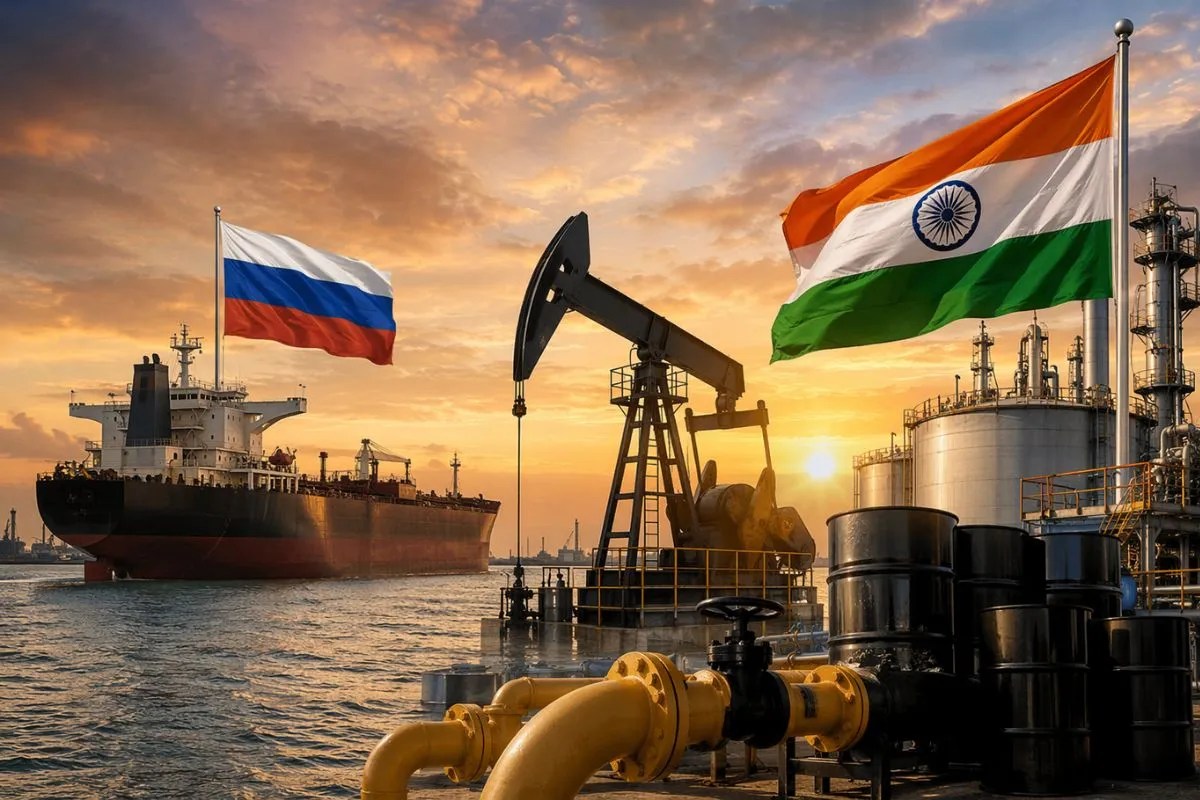
India’s energy strategy isn't a masterclass in geopolitical defiance. It is a desperate, short-term scramble for survival being sold to the masses as a "brave stand" against Western hegemony.
The media loves the narrative. They paint a picture of a defiant New Delhi staring down Washington, refusing to blink while continuing to fill its tankers with Russian Urals. It makes for great television. It feeds the soul of a nation that wants to see itself as a non-aligned superpower. But if you look at the ledger instead of the headlines, the "victory" starts to look like a high-interest loan we’ll be paying off for decades.
The Discount Delusion
Let’s talk about the math that everyone ignores. The headlines scream about "discounted Russian oil," but they rarely mention the landed cost. Buying oil isn't like buying a shirt on sale. When India buys from Russia, it deals with a nightmare of logistics, insurance gaps, and a "shadow fleet" of tankers that would make a maritime inspector faint.
The actual discount has shrunk significantly since 2022. Early on, we saw spreads of $30 per barrel. Now? We are lucky if it’s $5 or $8 after accounting for the massive hike in shipping costs and the "middleman tax" paid to opaque entities in Dubai and Hong Kong. We aren't outsmarting the market; we are just shifting our dependencies from a transparent market to a murky one.
I have seen energy traders lose their shirts trying to navigate these sanctions. The complexity isn't a feature; it's a bug. Every time a new round of sanctions hits, the "compliance cost" for Indian refiners spikes. We are spending billions just to maintain the infrastructure of evasion. That isn't sovereignty. That's a tax on being difficult.
The Rupee-Rouble Trap
The biggest joke in this entire saga is the idea of "de-dollarization." The pundits claim that by trading in local currencies, India is breaking the shackles of the Greenback.
Ask any Russian official what they plan to do with the mountains of Indian Rupees sitting in VTB Bank accounts. They can’t spend them. They can’t invest them back into the Indian economy without triggering massive inflationary pressures. Russia doesn't want Rupees; they want Chinese Yuan or UAE Dirhams.
India is effectively handing Russia a currency it doesn't want for a product India can't live without. This has forced New Delhi into a corner where it must offer Russia massive equity stakes in Indian infrastructure just to "settle the bill." We aren't "buying" oil; we are bartering away our future industrial independence to settle a trade deficit that is spiraling out of control.
Why the West is Actually Smiling
The "India vs. The West" drama is largely performative. Washington isn't "failing" to stop India; they are allowing India to keep the global oil market stable.
If India stopped buying Russian oil tomorrow, global prices would hit $150 a barrel. The global economy would crater. The U.S. State Department knows this. They don't want India to stop; they want India to buy it just cheap enough that Russia doesn't make a profit, but just expensive enough that the oil keeps flowing.
India isn't the rebel here. India is the pressure valve. We are doing the dirty work that allows the West to keep their inflation low while they moralize from the sidelines. We’ve been cast as the "rogue buyer" to keep the global gears turning, and we’re so busy patting ourselves on the back for our "independence" that we haven't realized we're being used as a utility.
The Refiner’s Secret
Follow the money to the private refiners. While the public is told this is about "national energy security," the biggest beneficiaries are private entities that process Russian crude and then export the refined product—diesel and jet fuel—straight to Europe.
- The Input: Cheap, sanctioned Russian Urals.
- The Process: Indian refineries (some of the most sophisticated in the world).
- The Output: "Indian" diesel sold at a premium to the very Europeans who claim to be boycotting Russia.
This is a massive wealth transfer from the Russian state and the Indian taxpayer (via subsidies) to a handful of billionaire shareholders. The "defiant" stance of the government provides the political cover for a massive arbitrage play.
The Geopolitical Cost of "Cheap"
Everything has a price. By leaning so heavily into the Russian energy embrace, India is eroding its leverage with the "Quad" and its neighbors.
- Technology Transfers: Every time India doubles down on Russia, it adds a layer of friction to high-tech defense deals with the U.S. and France.
- Strategic Autonomy: You aren't autonomous if you are dependent on a pariah state for 40% of your energy and 60% of your defense spares.
- The China Factor: Russia is increasingly becoming a junior partner to Beijing. By funding the Russian war chest, India is indirectly strengthening the hand of its primary regional rival.
The Sovereignty Smoke Screen
Real sovereignty isn't the ability to buy oil from a dictator; it's the ability to not need that oil in the first place.
While we celebrate "winning" the right to buy Russian crude, we are lagging behind in the real energy war: deep-sea exploration, nuclear modular reactors, and domestic battery supply chains. We are fighting for the right to remain addicted to a 19th-century energy source from a declining power.
If we were truly "not bowing down," we would be dictating terms to both the West and Russia. Instead, we are navigating a narrow corridor where one wrong move triggers a primary sanction that could freeze our banking system.
Stop Asking if We Should Buy Russian Oil
The question "Should India buy from Russia?" is a distraction. It's the wrong question.
The real question is: Why is our energy policy so fragile that a conflict 3,000 miles away forces us to compromise our long-term strategic alliances for a $5 discount?
We aren't "standing up" to anyone. We are merely surviving. The moment we stop pretending this is a grand ideological victory and start seeing it as a desperate tactical necessity, we might actually start building a strategy that doesn't rely on being a global middleman for pariah states.
The headlines are a sedative. The reality is a slow-motion strategic entrapment. Stop cheering for the discount and start looking at the bill. It's coming, and it's going to be priced in more than just dollars.
Go back to your maps and your spreadsheets. The party is over.



