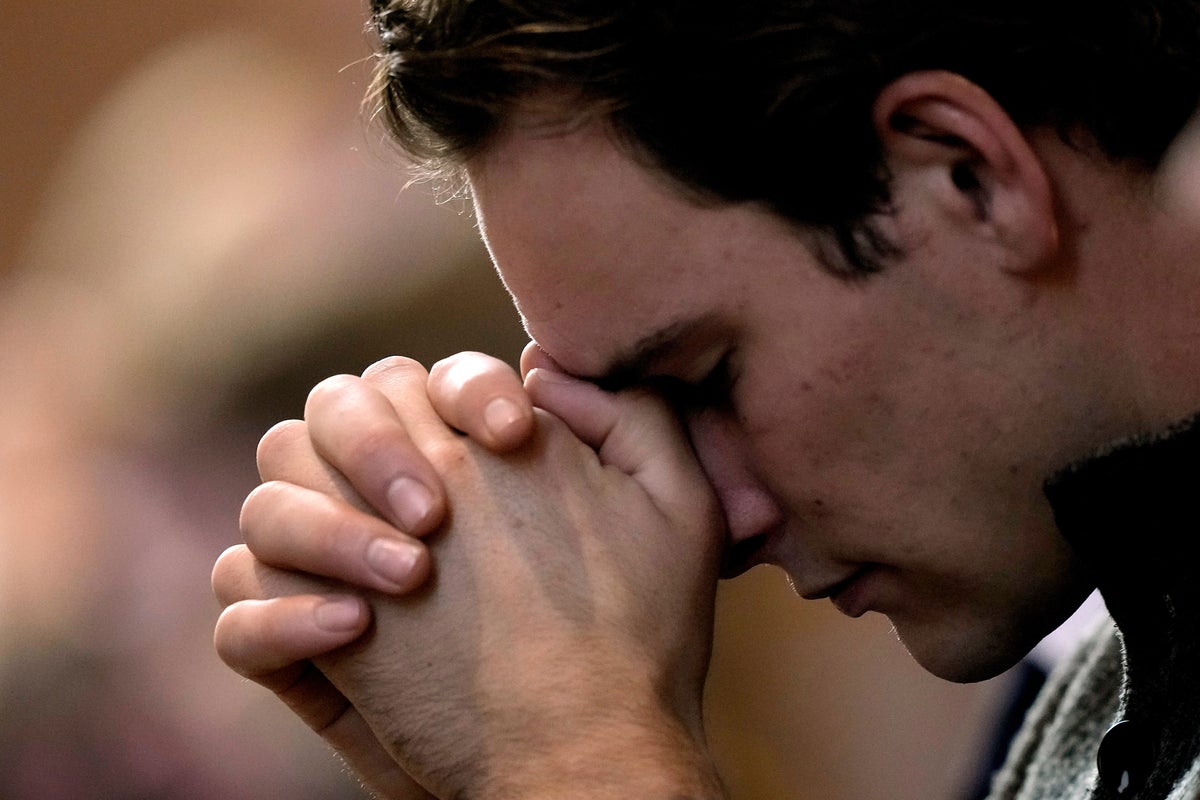
The headlines are breathless. They point to a handful of surveys suggesting a "surprising uptick" in church attendance among Gen Z and Millennial men. The narrative is comforting: in a world of digital chaos and fractured identity, young men are returning to the pews for tradition, community, and moral grounding.
It is a beautiful story. It is also a statistical hallucination.
If you look at the raw data without the rose-colored glasses of religious PR departments, you aren’t seeing a revival. You are seeing the "Selection Bias Trap." We are witnessing a consolidation of the fringe, not a mass-market return to faith. The "rise" of the church-going young man is an illusion created by the collapse of the middle ground.
The Mirage of the Statistical Spike
Most mainstream analysis of this trend relies on self-reported data from sources like the General Social Survey or various Gallup polls. Here is the problem: self-reporting is notorious for "social desirability bias." People report who they want to be, not who they are.
When a young man tells a pollster he attends services "regularly," he is often signaling an identity rather than recording a behavior. In a polarized cultural climate, "churchgoer" has become a shorthand for "anti-progressive" or "traditionalist." They aren't seeking God; they are seeking a bunker.
I have spent fifteen years analyzing demographic shifts in institutional membership. I have seen trade unions, fraternal orders, and political parties mistake a hardening of their core for a broadening of their reach. When the casual members drop out—the ones who went twice a month but didn’t really care—the percentage of "devoted" members naturally looks higher. It is a mathematical trick. The denominator is shrinking faster than the numerator.
Aesthetics Over Atonement
The competitor's view suggests that young men are craving "objective truth." That is a fundamental misunderstanding of the current zeitgeist. They aren't looking for truth; they are looking for an aesthetic.
Look at the rise of "Orthobros" or the fascination with Latin Mass. This isn't a theological deep dive. It is a reaction to the beige, corporate sterility of modern life.
- The Architecture: High ceilings and incense provide a "vibe" that a glass-walled office cannot.
- The Rigor: In an era of "do whatever feels right," a strict set of rules feels like a rebellion.
- The Cost: It costs nothing to be a secular consumer. It costs something to be a congregant.
But do not confuse a thirst for "dark academia" visuals with a long-term commitment to institutional religion. We are seeing a consumerist approach to the sacred. These men are "buying" a traditional identity. Once the novelty of the incense wears off and the actual demands of community—taking care of the sick, tithing when money is tight, dealing with annoying neighbors—kick in, the retention rates crater.
The Political Proxy War
The church is no longer a house of prayer; for a specific subset of young men, it is a gym for the soul where they can build muscle against a culture they despise.
According to data from the Survey Center on American Life, the gender gap in Gen Z is widening. Young women are moving left; young men are staying put or drifting right. Church attendance is becoming a proxy for this political drift.
If you attend a service because you want to "own the libs" or find a trad-wife, you aren't participating in a religious revival. You are participating in a lifestyle brand. This is dangerous for the church. When the pews are filled with people who are there to protest the world rather than serve it, the institution loses its moral authority and becomes just another polarized echo chamber.
The Loneliness Economy
We have to talk about the "Third Place" vacuum. Coffee shops are too expensive. Gyms are solitary. Third places—the spots where you hang out that aren't work or home—have been decimated.
Young men are the loneliest demographic in the West. If you offer a lonely person a seat and a handshake, they will show up. For a while. But a church built on the foundation of "social utility" is a church built on sand.
As soon as a more efficient social lubricant appears—be it a new type of social club, a hobbyist group, or a digital community that actually satisfies—the church attendance numbers will revert to the mean. The church is currently winning by default because it is one of the few remaining physical spaces that doesn't charge a cover fee. That is not a spiritual victory; it is a real estate advantage.
The "Quiet Quitting" of the Pews
What the polls don't show is the "churn." They capture a snapshot of people who are currently in the door. They don't track the ones who left six months later because the "community" was just a series of awkward coffee hours.
In my experience auditing non-profit engagement, we look at "Active Participation" vs. "Passive Attendance."
- Passive Attendance: Showing up, sitting in the back, leaving before the final hymn.
- Active Participation: Volunteering for the nursery, leading a small group, organizing the food pantry.
The "uptick" is almost entirely in the passive category. Young men are "consuming" the service. They are not building the church. An institution cannot survive on spectators. If these men aren't integrated into the boring, gritty work of church maintenance within eighteen months, they vanish.
The Infrastructure of Disbelief
The underlying trend remains undefeated: secularization.
While a small, vocal minority of young men are making noise about their return to tradition, the vast majority of their peers are drifting further away. The "Nones"—those with no religious affiliation—continue to grow.
By focusing on this tiny "uptick," we ignore the massive, tectonic shift in how the average young man views the world. To them, the church isn't a source of hope; it’s a museum of dead certainties.
Even the data used to support the "return to church" narrative is shaky. For instance, the increase is often found within specific, highly motivated sub-sects (like certain Reformed or Catholic circles) while the "Mainline" denominations continue to hemorrhage members. This isn't a rising tide lifting all boats. It's a few people jumping into a lifeboat and calling it a cruise.
Stop Looking for a Savior in the Stats
The desperate need to find a "turnaround" in church attendance reflects a deeper anxiety about the collapse of social cohesion. We want it to be true. We want to believe that the next generation has found the "cheat code" to meaning.
But banking on a sudden influx of young men to save institutional religion is a fantasy. It ignores the reality that these men are often bringing their own baggage—hyper-individualism, political tribalism, and a "customer is always right" attitude—into a space that is supposed to be about self-sacrifice.
The church isn't seeing a revival. It’s seeing a rebranding.
If you are a church leader, stop celebrating the "uptick." Instead, look at the quality of the engagement. If your new members are there for the politics or the aesthetics, they are temporary residents. They will leave as soon as the wind changes.
Stop counting heads. Start measuring the weight of the commitment. Otherwise, you’re just documenting the slow-motion collapse of an institution that forgot how to be anything other than a social club for the nostalgic.
The pews might be slightly fuller this Sunday. But don't mistake a crowded room for a living movement.