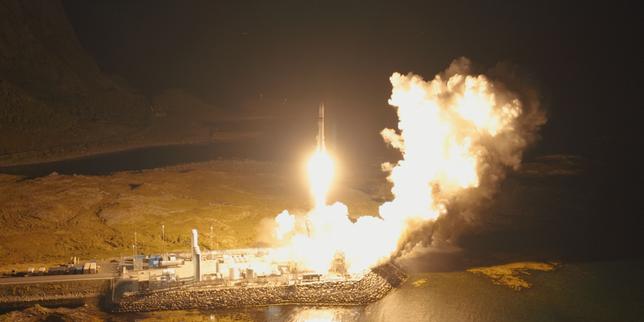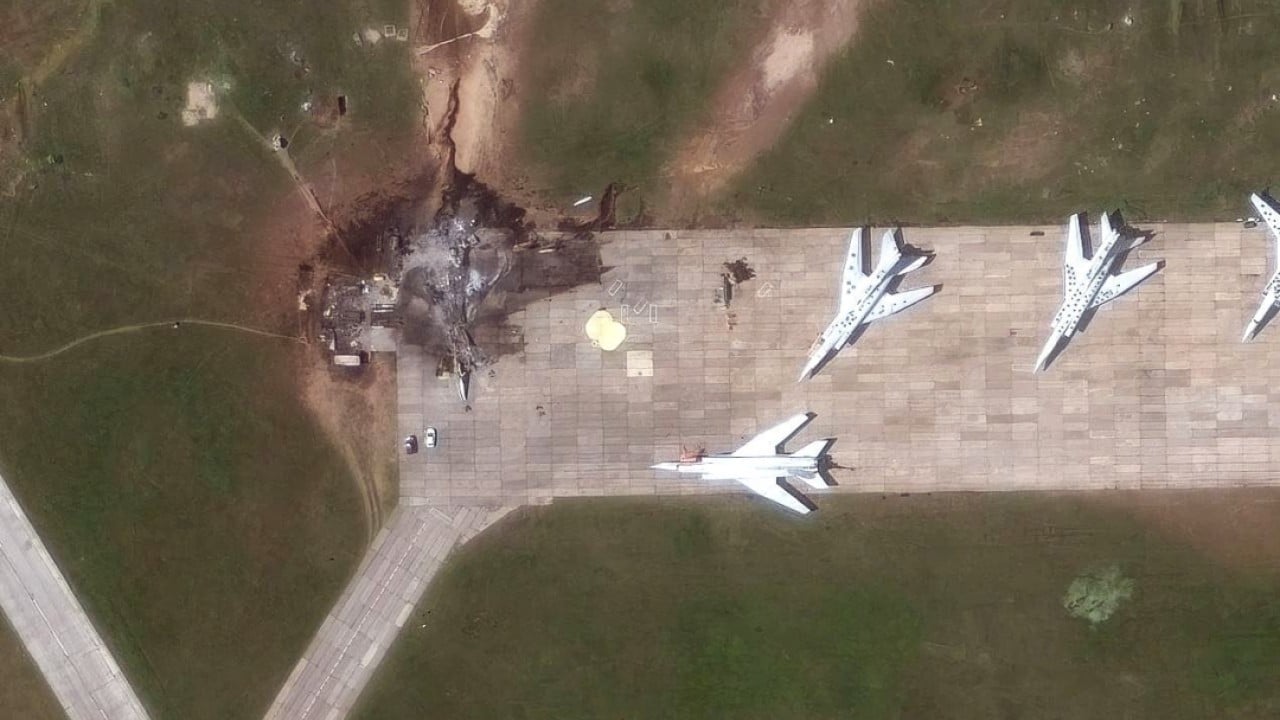
Geopolitics is currently obsessed with the ghost in the machine. Every time a precision missile hits a desert target or a drone swarm bypasses an Aegis system, the "insider" consensus immediately points to Beijing. The lazy narrative—peddled by outlets like EurAsian Times—suggests that China is playing a secret, omnipotent role, providing the Beidou satellite constellation as a digital backbone for Iran and Pakistan to wage war against the West and India.
This narrative is comfortable. It fits the "Axis of Resistance" trope. It makes for great headlines. It is also fundamentally wrong about how modern electronic warfare and orbital mechanics actually function.
The idea that Tehran or Islamabad is "borrowing" Chinese eyes to win wars ignores the cold reality of signal sovereignty, domestic industrial pride, and the sheer physics of terminal guidance. We are looking at a shift in global power, but it isn’t the one the alarmists are selling you.
The Beidou Fallacy and the Myth of the Magic Switch
The most frequent claim is that Iran used Beidou’s high-precision signals to guide missiles during strikes on US and Gulf bases. This assumes that satellite navigation (GNSS) is a plug-and-play cheat code. It isn't.
Military-grade precision requires more than just a signal from space; it requires integrated Inertial Navigation Systems (INS) and, more importantly, the decryption keys for a foreign military’s restricted bandwidth. Do you honestly believe China—a nation that treats its strategic assets with the paranoia of a dragon guarding a hoard—has handed over the encrypted "authorized" Beidou keys to the Islamic Revolutionary Guard Corps (IRGC)?
I’ve spent years analyzing signal interference and procurement chains. Here is what actually happens: Iran and Pakistan use the open, civilian signal of Beidou, just like they use the open signal of GPS, GLONASS, and Galileo. Using a civilian signal for a precision strike is like trying to perform surgery with a butter knife while someone is actively trying to shake your hand.
If Iran were truly reliant on China’s restricted military signal, Beijing would effectively hold a "kill switch" over Iran’s entire missile program. For a regime that prides itself on "Self-Sufficiency" (Khod-Kafayi), that kind of dependency is a strategic non-starter. Iran isn't using China's "secret" help; they are using China’s public infrastructure to mask their own homegrown innovations in terrain-contour matching and optical guidance.
Stop Asking if China Helped and Start Asking Why Our Jamming Failed
The "People Also Ask" sections of the internet are flooded with queries like "Does Beidou make US jamming useless?"
This is the wrong question. The right question is: Why are we still pretending that jamming a satellite signal is the end-all-be-all of electronic warfare?
The EurAsian narrative suggests China provided a "un-jammable" alternative. There is no such thing. Physics does not care about your diplomatic treaties. If you blast enough noise at $1.5$ GHz, you will drown out Beidou just as easily as GPS.
The reason Iranian missiles hit their marks in the Al-Asad airbase strikes wasn't because of a secret Chinese satellite handshake. It was because the IRGC has mastered Sensor Fusion. They use GNSS for the mid-course phase and then switch to cheap, localized digital scene-mapping or simple inertial dead-reckoning for the terminal phase.
When you blame "Chinese satellites," you are giving Beijing too much credit and Tehran too little. It’s a dangerous form of hubris that prevents Western defense planners from addressing the real threat: the democratization of high-precision, low-cost guidance systems that don't need a superpower's permission to work.
Pakistan, India, and the Satellite Security Theater
Switch the theater to South Asia. The "consensus" is that the China-Pakistan Economic Corridor (CPEC) extends into the heavens, giving Pakistan a definitive edge over India via Beidou.
Again, this is a gross oversimplification.
India has NavIC (Navigation with Indian Constellation). While the world looks at Beidou vs. GPS, the real friction is occurring at the regional level. Pakistan’s adoption of Beidou is a move of desperation, not dominance. They are moving away from GPS because they fear the US will flip the switch during a conflict with India.
But here is the friction point no one talks about: Integrating a foreign GNSS into your domestic cruise missile fleet (like the Babur or Ra'ad) creates a massive telemetry vulnerability. Every time a Pakistani missile pings a Beidou satellite, that data is theoretically visible to Chinese ground stations.
Is Pakistan more secure because it switched masters? Or has it simply traded a Washington-shaped "off" switch for a Beijing-shaped one? The "Secret Role" China plays isn't one of a helpful ally; it’s one of a digital landlord collecting rent in the form of strategic intelligence.
The Hardware Reality: Buying the Shell, Building the Brain
Look at the hardware. When we see "Chinese influence" in Iranian drones or Pakistani missiles, we are often looking at commercial-off-the-shelf (COTS) components.
- Fact: You can buy a high-grade GNSS receiver on Alibaba that tracks GPS, GLONASS, and Beidou simultaneously.
- Fact: You can integrate these into a $20,000 drone.
The "insiders" want you to believe there are secret cargo planes landing in Tehran filled with high-tech guidance chips. The reality is far more boring and far more terrifying. The "secret help" is just the global supply chain.
China doesn't need to help Iran or Pakistan officially. They just need to keep the factories running and the shipping lanes open. By the time a Western intelligence agency identifies a specific Chinese chipset in a downed Shahed drone, that chip has already been replaced by a newer, cheaper version available at any electronics market in Dubai or Singapore.
The Nuance: Strategic Ambiguity as a Weapon
China’s real "secret role" is its silence.
By neither confirming nor denying the level of integration between Beidou and its partners, Beijing creates a massive psychological deterrent. They want the US and India to think they are providing precision data. It forces the Pentagon to spend billions on "Beidou-resistant" electronic warfare, even if the actual military integration is minimal.
It’s a masterclass in cost imposition.
If I can make my enemy spend $10 billion to counter a threat that only costs me $10 million in marketing and "partnership" rhetoric, I’ve won the battle without launching a single satellite. The EurAsian Times and other sensationalist outlets are the primary distributors of this Chinese propaganda, doing the work for the PLA by inflating the perceived reach of Chinese technology.
The Death of the Monopoly
For decades, the US military enjoyed a monopoly on the "God’s-eye view." We could turn off the lights whenever we wanted. That era is dead.
The disruption isn't that China is helping Iran or Pakistan. The disruption is that the "God’s-eye view" has been commodified. Between Beidou, GLONASS, Galileo, and various commercial LEO (Low Earth Orbit) constellations like Starlink, the concept of "denying" an enemy navigation data is becoming a fantasy.
If you jam GPS, they use Beidou. If you jam Beidou, they use GLONASS. If you jam all of them, they use automated star-trackers or visual odometry.
The "Secret Role" isn't a conspiracy. It’s a market correction.
The Liability of Reliance
There is a downside to this contrarian view that even I have to acknowledge: over-reliance on any GNSS, even a "friendly" one like Beidou, breeds technical rot.
If Pakistan stops developing its own independent inertial systems because they find Beidou "good enough," they become a vassal state in the most literal sense. Their sovereignty becomes a line of code in a data center in Xi'an.
China isn't empowering these nations; it is digitizing them. It is creating a tether that looks like a gift but functions like a leash. The precision strikes we see in the Middle East aren't a showcase of Chinese-Iranian "synergy"—they are the final gasps of regional powers trying to prove they are relevant before they are completely absorbed into the tech-spheres of the two remaining superpowers.
Stop looking for secret treaties and hidden satellite uplinks. Look at the shipping manifests and the open-market sensors. The revolution isn't being televised; it's being sold at a discount with free shipping.
The threat isn't that China is helping its allies win. The threat is that China has made the very idea of "allies" obsolete, replacing them with end-users who don't even realize they've lost their independence until the signal goes dark.
You don't need a secret role when you own the infrastructure of reality.
Now, go back and look at those "precision strikes" again. Ask yourself if you’re seeing the hand of Beijing, or just the inevitable result of a world where the "elite" tech of 1995 is now a toy in the hands of anyone with an internet connection and a grudge.
The monopoly is over. Get used to the noise.