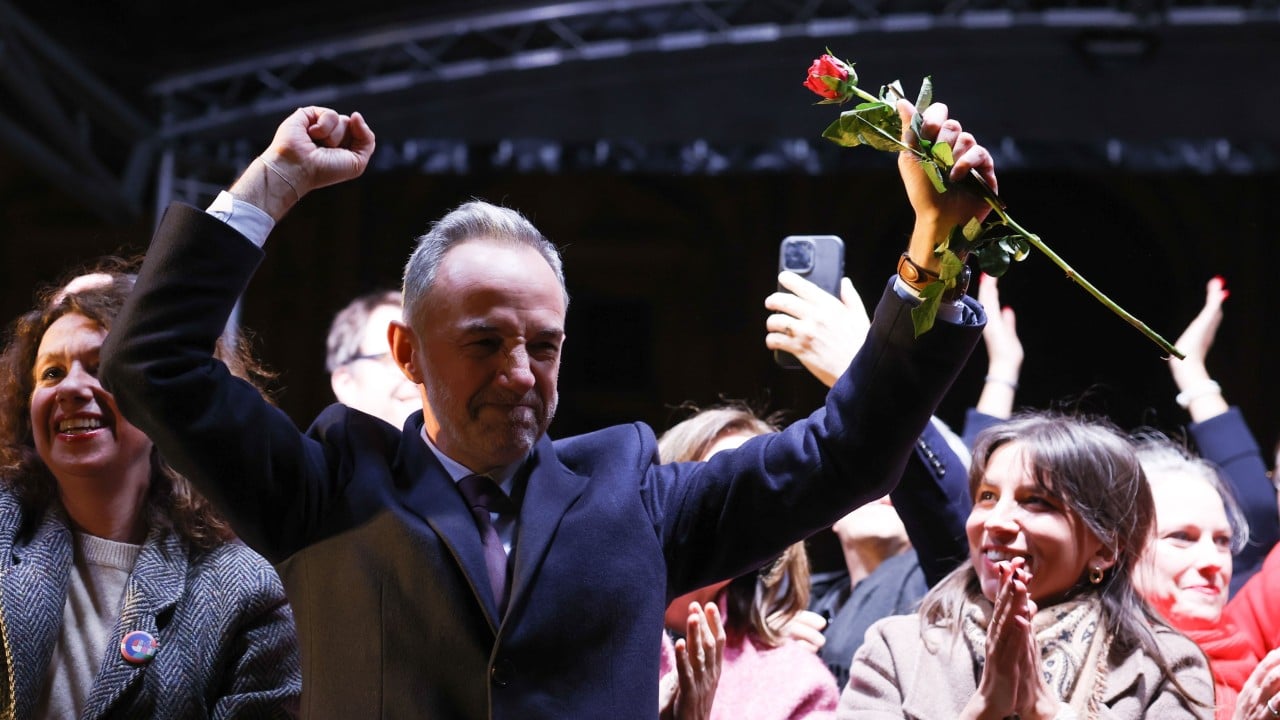
The headlines are predictable. They speak of "continuity," "stability," and a "new chapter" for the French capital. They frame Emmanuel Gregoire’s ascension to the mayoralty as a seamless handoff from Anne Hidalgo, a passing of the socialist torch in the City of Light.
They are lying to you.
What happened in the Hôtel de Ville wasn't a transition; it was a retreat. By crowning Gregoire, the Parisian political establishment has chosen the path of least resistance at a moment when the city is screaming for a structural overhaul. This isn't a new era. It is the managed decline of a global powerhouse into a boutique museum for the ultra-wealthy and the tourists who serve them.
If you think a change in name at the top of the ballot solves the exodus of the middle class or the crumbling infrastructure of the peripherique, you haven't been paying attention to the math.
The Myth of the Green Successor
The lazy consensus suggests that Gregoire is the pragmatist to Hidalgo’s ideologue—the man who can keep the "green" momentum while smoothing over the jagged edges that alienated local business owners.
This is a fundamental misunderstanding of how urban power functions. Gregoire isn't the antidote to the "Hidalgo Method"; he is its primary architect. As her first deputy for years, he was the one who balanced the books while the city’s debt skyrocketed to over 8 billion euros. He was the one who negotiated the very urban planning shifts that have turned the Right Bank into a permanent construction site.
To expect a radical departure from a man whose entire career is built on the preservation of the current socialist-green coalition is a fantasy. Paris doesn't need a "softer" version of the last decade. It needs a wrecking ball.
The Debt Trap No One Mentions
Let's look at the balance sheet. While the press fawns over new bike lanes, the fiscal reality of Paris is terrifying. The city’s debt-to-revenue ratio has deteriorated to a point that would make a private sector CEO face a shareholder revolt.
- Operating costs are bloated. The municipal workforce is massive, yet basic services—trash collection, road maintenance, lighting—are visibly slipping.
- Investment is misdirected. Millions are poured into symbolic "green" projects while the structural integrity of the city’s social housing and transport links to the banlieues remains stagnant.
- Revenue is fragile. Paris is increasingly dependent on high property transfer taxes (droits de mutation). In a cooling real estate market, that’s a gamble on a bubble that already has needles poking at it.
Gregoire’s "safe pair of hands" is actually holding a ticking financial bomb. He won't cut the bureaucracy because that bureaucracy is his voting base. He won't stop the vanity projects because they are the only thing keeping the international press from noticing the fiscal rot.
The Middle Class Exodus is Feature, Not a Bug
The most damning indictment of the current regime—and the one Gregoire will double down on—is the demographic cleansing of Paris.
Since 2011, the city has lost more than 120,000 residents. These aren't the rich; the rich have pied-à-terres they use twice a year. These aren't the extremely poor; they are tethered to social housing and state support. The people leaving are the teachers, the nurses, the mid-level managers, and the young families.
The "Gregoire Strategy" ignores this because the departure of the middle class actually makes the city easier to govern for a Socialist-Green alliance. Families demand schools, sports centers, and functional transport. Tourists and the nomadic elite demand "vibes," pedestrianized plazas, and aesthetic perfection.
By prioritizing the latter, the administration has successfully turned Paris into a luxury product. It is a city that is beautiful to visit but impossible to live in. Gregoire’s promise of "continuity" is a promise to keep pushing the people who actually make a city function out past the ring road.
The Olympic Hangover
Gregoire inherits a city that has just spent years being poked and prodded for a few weeks of Olympic glory. The "legacy" talk is already starting to sour. The promised cleanup of the Seine remains a PR win with questionable long-term ecological impact. The security infrastructure installed for the games is a permanent shadow over civil liberties.
The competitor’s narrative suggests Gregoire will "capitalize" on the Olympic momentum. In reality, he has to manage the hangover. The bills are coming due. The temporary tourism surge is over. The residents who fled the city during the games aren't all coming back, and those who stayed are exhausted by the disruption.
A real leader would admit that the Olympics were a massive distraction from the existential crisis of Parisian housing. Instead, Gregoire will likely use the "success" of the games as a shield to deflect from the fact that 20% of the city's housing stock is currently unoccupied or used for short-term rentals.
Dismantling the "Safe Candidate" Fallacy
Why did the Socialist Party pick him? Because he is "safe."
In politics, "safe" is usually a synonym for "unwilling to take the risks necessary to prevent a crash." The establishment fears a populist surge from the right or a radical splintering on the left. By choosing Gregoire, they are betting that the status quo can be maintained through sheer inertia.
They are wrong. Inertia in a changing global economy is just a slow-motion collision.
If you are a business owner in Paris, expect more regulations disguised as environmental protections. If you are a renter, expect your costs to rise as supply remains strangled by "preservation" laws that protect the views of billionaires. If you are a commuter, expect your journey to become more difficult as the city's war on cars continues without a corresponding, massive investment in heavy rail and metro reliability.
The Real Question You Should Ask
The press is asking: "Can Gregoire fill Hidalgo's shoes?"
The real question is: "Why are we still wearing these shoes when our feet are bleeding?"
The obsession with "fellow Socialists" and "political lineages" ignores the fact that the challenges of 2026 are not the challenges of 2014. Paris is no longer competing with London or Berlin; it’s competing with a world where talent is mobile and the "Parisian Dream" is increasingly seen as an overpriced nightmare of strikes, smog, and soaring costs.
Stop Celebrating Stability
Stability is only a virtue if the system you are stabilizing is healthy. The Parisian system is not. It is a closed loop of political favors, taxpayer-funded aesthetics, and a refusal to face the reality of a shrinking tax base and an aging infrastructure.
Gregoire is the ultimate "company man." He will give great speeches. He will look the part in a well-cut suit at the next international climate summit. He will manage the decline with professional poise.
But he will not save Paris. He will not bring back the families. He will not fix the debt. He will simply be the one holding the pen when the city finally realizes it can no longer afford its own myth.
The coronation is over. Now comes the bill.
Stop looking for a savior in the deputy's office. If you want to see where Paris is going, look at the outbound trains at Gare du Nord, not the ceremonies at the Hôtel de Ville.