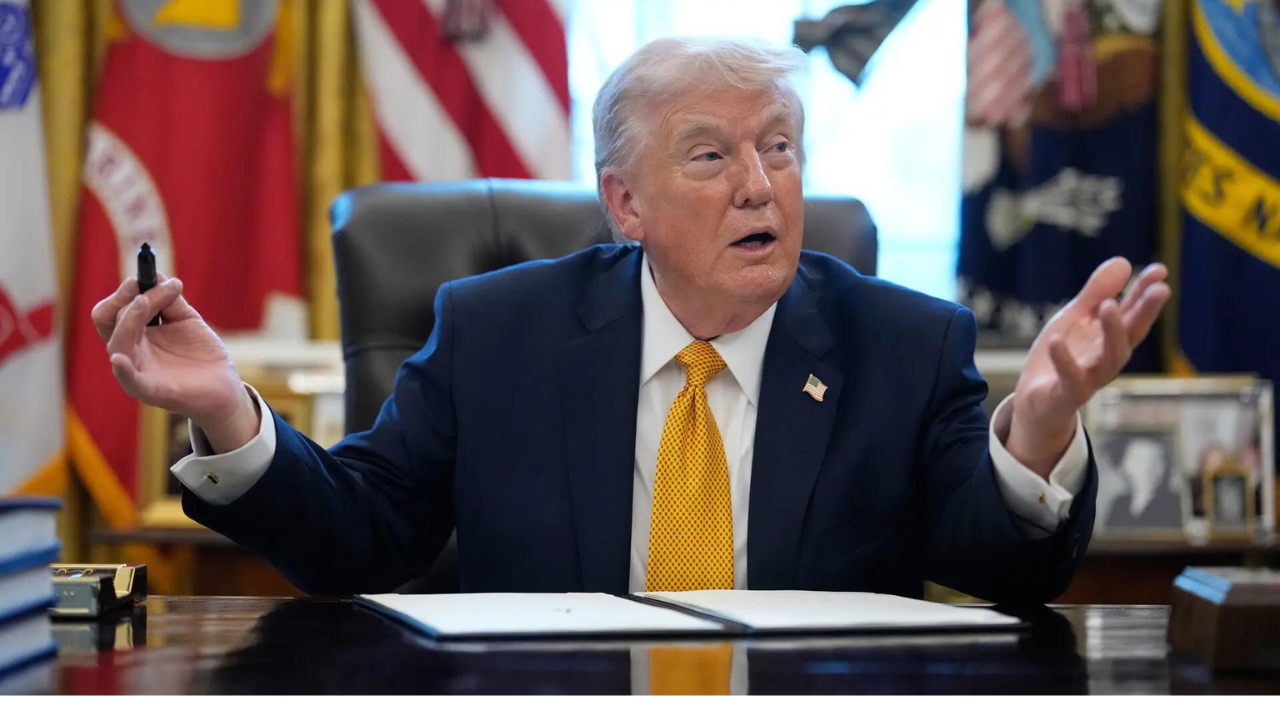
The smoke rising from the Shah gas field in the United Arab Emirates this week is not just a sign of localized damage; it is the funeral pyre of a decades-old security arrangement. While President Donald Trump expresses "shock" at the Iranian strikes against America’s closest Arab allies, the reality behind the scenes is far more cynical. Intelligence assessments provided to the White House weeks before the February 28 launch of Operation Epic Fury explicitly detailed that a massive Iranian retaliation against the Gulf states was a primary contingency. The administration didn't just miss the signals—it ignored them.
By the time the first U.S.-Israeli missiles struck Tehran, the Persian Gulf was already a pre-packaged sacrifice. For years, the strategic consensus was that the "Shield of David" and the American "Umbrella" would protect the energy hubs of the world. Instead, the Gulf monarchs have discovered they were the collateral. Now, with the Strait of Hormuz paralyzed and Brent crude stubbornly hovering above $100, the global economy is discovering that "America First" means every other partner is second, or third, or simply an afterthought.
The Intelligence the White House Refused to Read
The official narrative from the Oval Office is one of blindsided indignation. Trump has repeatedly claimed that Tehran "wasn't supposed to go after these other countries." However, sources within the intelligence community confirm that the President was briefed on a "horizontal escalation" strategy long favored by the Islamic Revolutionary Guard Corps (IRGC). This strategy didn't involve a suicidal direct confrontation with the U.S. Navy. Instead, it focused on the "soft ribs" of the global economy: the desalination plants, refineries, and loading terminals of the GCC.
The logic was simple. If Iran’s own oil exports—anchored at Kharg Island—were threatened, it would ensure that no one else’s oil left the region either. This wasn't a secret. It was a doctrine.
- The Warning: Intelligence reports in mid-February suggested that Iran had pre-positioned "sleeper" drone cells and mobile missile launchers specifically aimed at the UAE’s Shah gas field and Saudi Aramco’s remaining operational hubs.
- The Response: The administration prioritized the defense of Israeli airspace and U.S. carrier groups, leaving Gulf allies with rapidly depleting interceptor stocks and no advance notice of the initial February 28 strikes.
- The Result: A regional blockade that has cut 10 million barrels of oil per day from the market, a disruption far exceeding the 1973 oil crisis.
The Strategy of Forced Chaos
Why would a veteran administration ignore such blatant risks? The answer lies in the "Escalation Ladder." To Trump and his inner circle, the chaos in the Gulf isn't a failure—it’s a pressure tactic. By allowing the conflict to widen, the U.S. forces regional players to abandon their neutral stance and commit fully to the military campaign. Senator Lindsey Graham’s recent warnings that "consequences will follow" for allies who don't "get more involved" underscore this coercive diplomacy.
However, this is a high-stakes gamble with other people’s infrastructure. The Gulf states now face an impossible choice: enter a hot war they didn't start or watch their "desert miracle" cities become unlivable as power and water facilities are targeted. The UAE’s reopening of its airspace this week was a desperate attempt at normalcy, but the drone strike on the Shah field shortly after proved that Iran is not finished.
Markets in the Grip of a New Reality
Wall Street and Asian refineries are currently operating in a vacuum of reliable information. The International Energy Agency (IEA) has released 400 million barrels of crude—the largest emergency release in its history—yet the price hasn't buckled. The market knows something the politicians won't admit: you cannot replace the Strait of Hormuz with strategic reserves forever.
The economic damage is radiating outward from the Gulf at a rate of roughly $600 million a day in lost tourism and transit revenue alone. But the deeper threat is the "Sulphur Shock." The chemical fertilizer industry depends on the regional output of sulphur. If the blockade lasts another month, the production of corn, soybeans, and wheat in the Midwest and South America will face a supply-side crisis that no amount of interest rate hiking can solve.
The Technological Retaliation
Beyond the missiles, a quieter war is unfolding in the servers of the world’s largest tech firms. Iran has officially labeled Google, Amazon, and Microsoft "legitimate targets," citing their cloud infrastructure's role in supporting regional defense. This isn't just rhetoric. Cyberattacks targeting regional offices in Dubai and Abu Dhabi have surged by 400% since the war began.
The "Cyber Retaliation" narrative is shifting from symbolic website defacements to targeted ransomware on critical infrastructure. For a small business in Kuwait or a logistics firm in Bahrain, the war isn't just "over there" in the mountains of Iran; it’s in their encrypted databases and their paralyzed supply chains.
The Illusion of a Short War
The administration continues to push the idea that the Iranian regime is on the verge of "unconditional surrender." Yet, the rise of the new Supreme Leader, Mojtaba Khamenei, has signaled a hardening of the Iranian position. His first public message was a vow to keep the Strait of Hormuz closed until every U.S. and Israeli asset leaves the region.
This is the "Escalation Trap." The U.S. and Israel have tactical dominance—they can hit any target they choose—but they lack strategic control. They can destroy a missile silo, but they cannot force a tanker to sail through a mine-strewn waterway when insurance companies have already pulled coverage.
The betrayal of the Gulf allies has created a vacuum that Russia and China are already beginning to fill with "neutral" mediation offers. While Trump demands that regional partners "protect their own territory," those same partners are starting to realize that the old American security guarantee was written in disappearing ink.
The burning gas fields are a reminder that in this new era of warfare, the goal isn't necessarily to win the battle, but to make the cost of the status quo unbearable for everyone else.
Would you like me to analyze the specific impact of the "Sulphur Shock" on global food prices for your next report?