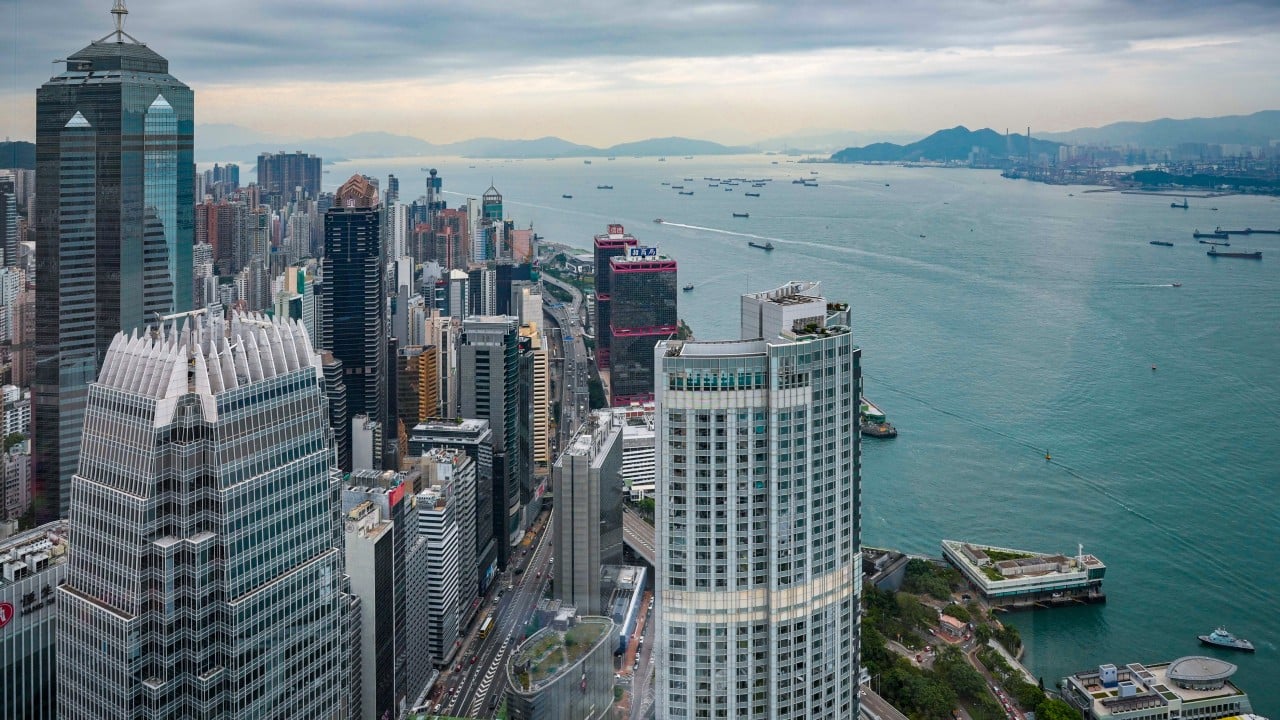
The narrative is seductive. Western capital flees Hong Kong due to geopolitical friction, and like a clockwork miracle, "petrodollars" from the Gulf arrive to fill the void. It suggests a seamless baton pass between superpowers. It paints a picture of Middle Eastern sovereigns swooping in to rescue the Grade A office market from a 16% vacancy rate.
It is also total fantasy.
Wall Street analysts and real estate brokers are desperate to manufacture a floor for the Hong Kong market. They point to the "Looking East" policy of Saudi Arabia’s Public Investment Fund (PIF) or the Abu Dhabi Investment Authority (ADIA) as a guaranteed tailwind for Central’s skyline. They are mistaking diplomatic handshakes for signed leases. If you believe the Gulf is about to backstop a crashing commercial real estate market out of ideological solidarity, you don’t understand how sovereign wealth funds (SWFs) actually operate.
The Yield Trap and the Mirage of Occupancy
The consensus view suggests that as Saudi Arabia and the UAE diversify away from the US dollar, Hong Kong becomes the natural clearinghouse for their capital. The logic follows that this capital inflow will necessitate massive physical footprints.
This ignores the brutal math of the Hong Kong office market. We are currently witnessing a historic supply glut. Between the Henderson in Central and the massive deliveries in West Kowloon, the city is drowning in premium square footage at exactly the moment the "hub" model is being dismantled.
Gulf investors are many things, but they are not philanthropic. They are predatory yield-seekers.
When a Dubai-based family office looks at Hong Kong right now, they don't see a "gateway." They see a falling knife. Why would an institutional titan sign a long-term lease at $120 per square foot when the vacancy trend suggests they could get it for $80 next year? The "Gulf Pivot" is a strategic investment play—private equity, tech, and infrastructure—not a commitment to prop up the landlords of Two IFC.
Diplomatic Tourism vs. Hard Capex
I have sat in the rooms where these "strategic partnerships" are discussed. There is a massive delta between a Memorandum of Understanding (MoU) signed at a high-profile summit and the actual deployment of people.
The current "inbound" interest from the Middle East is largely diplomatic tourism.
- Fact: Setting up a representative office for an SWF requires a headcount of maybe ten to twenty people.
- Reality: To move the needle on Hong Kong’s 14 million square feet of vacant office space, you need thousands of workers.
The math doesn't check out. Even if every major Middle Eastern fund opened a flagship office tomorrow, they wouldn't soak up two floors of a mid-tier tower in Wan Chai. The Western firms they are supposedly replacing—the Goldmans, the Morgan Stanleys, the legal giants—historically occupied dozens of floors. You cannot replace a whale with a school of minnows and claim the ocean is still full.
The "Neutral Ground" Fallacy
The most dangerous misconception in the competitor's narrative is that Hong Kong serves as a "neutral ground" for Gulf capital to interact with Chinese opportunities.
This fundamentally misreads the current geopolitical alignment. The Gulf nations aren't looking for a middleman anymore. In a world of direct bilateral trade, the "Gateway" function of Hong Kong is an expensive redundancy. If Riyadh wants to invest in Shenzhen’s EV battery tech or Shanghai’s AI firms, they go to Shenzhen and Shanghai.
The friction that once made Hong Kong necessary—legal barriers, currency conversion, cultural buffers—has been smoothed over by direct state-to-state agreements. By positioning Hong Kong as the "bridge," analysts are trying to sell a 1995 solution to a 2026 reality.
Capital Flight is Not a Zero-Sum Game
The "Looking East" trend is real, but it is not a one-for-one swap. When US pension funds pull out of Hong Kong, they are withdrawing liquidity from the secondary markets and reducing the demand for the high-end services that occupy Grade A offices.
Gulf capital operates differently. It is often patient, direct, and increasingly focused on onshoring.
Saudi Arabia’s Vision 2030 isn't about moving Saudi wealth to Hong Kong; it’s about using global partnerships to bring industry back to the Kingdom. They want Chinese firms to build factories in NEOM and Dammam. They aren't interested in paying record-high rents to a Hong Kong developer to help manage capital that they’d rather keep within their own borders.
If you are an office landlord, "diversification of capital sources" is a polite way of saying your best customers are leaving and being replaced by people who negotiate much harder for much less space.
The Office is No Longer the Trophy
We need to address the ego of the industry. For decades, a "Grade A" office in Hong Kong was the ultimate status symbol for global capital. If you weren't in the CBD, you didn't exist.
The Gulf funds entering the market today have no such baggage. They are digital-first, lean, and intensely focused on the bottom line. They are just as happy taking a smaller, more efficient space in a decentralized hub or even a co-working setup for their initial teams. The era of the "Trophy Office" as a prerequisite for doing business is dead.
The "consensus" article suggests that geopolitical tensions drive demand. This is an incredible leap of logic. Tension creates volatility. Volatility creates hesitation. Hesitation kills long-term capital expenditure.
Stop Asking if They Are Coming
The question shouldn't be "Will Gulf capital bolster demand?" The question is "Why are we still obsessed with office demand as a metric for success?"
The real story isn't the relocation of desks; it’s the shift in the nature of the capital itself. Gulf money is highly transactional. It moves toward specific deals, not toward general "presence."
If you’re waiting for a surge of Arab businessmen to save the rental yields on your REIT, you’re going to be waiting a long time. The "East-East" corridor is about energy, technology, and defense—none of which require a 20,000-square-foot mahogany-clad boardroom in Central to execute.
The Hard Truth for Investors
Investors need to stop huffing the copium provided by brokerage research reports. Here is the reality:
- Vacancy is structural, not cyclical. No amount of Middle Eastern interest will fix the fact that the world has learned to work without massive centralized hubs.
- The "Pivot to Asia" is internal. China’s own firms are the only ones capable of filling the void left by the West, but they are currently facing their own deleveraging crisis.
- Gulf capital is a partner, not a tenant. They want to co-invest in your projects, not pay your mortgage via rent.
The narrative of the "Gulf Savior" is a marketing gimmick designed to keep valuations from cratering. It’s a convenient story because it’s hard to disprove in the short term. You can always point to a new small office opening or a high-level visit as "proof."
But look at the absorption rates. Look at the rent reversals. The data doesn't lie, even when the headlines do.
Stop looking for the next big tenant to save the old model. The old model is a corpse. The Gulf isn't coming to revive it; they’re coming to see what they can buy from the estate sale.
Exiting a position is often more profitable than waiting for a miracle that has already been priced into a market that no longer exists. If your strategy relies on the Saudi PIF signing a 10-year lease to justify your cap rate, you aren't an investor. You're a hopeful spectator at a game that ended an hour ago.
The lights are dimming in the towers of Central. No amount of oil money is going to turn them back on.