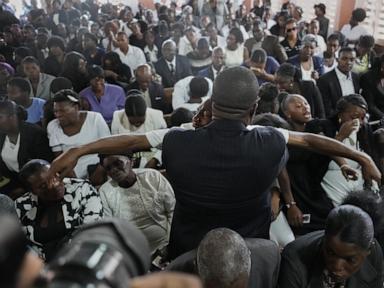
Grief doesn't even begin to cover what's happening on the streets of Port-au-Prince. Hundreds of mourners recently gathered to bury just four of the victims from a brutal gang attack that ultimately claimed forty-seven lives. Think about that number. Forty-seven people wiped out in a single wave of coordinated violence, and the world barely blinks anymore. We've grown numb to the headlines coming out of Haiti. That numbness is precisely what lets the humanitarian catastrophe deepen every single day.
If you're trying to understand why a funeral for four people draws massive crowds while a massacre of forty-seven barely makes the evening scroll in Western media, you have to look at the breakdown of civic life. It's absolute chaos. Gang coalitions now control an estimated eighty percent of the capital city. They operate with near-total impunity because the state apparatus has effectively fractured. When ordinary citizens go to mourn, they aren't just burying their dead. They're staging a silent protest against a security vacuum that leaves them entirely unprotected.
The Reality Behind The Numbers
Let's cut through the sanitized reporting you see on traditional news networks. A mass casualty event in Haiti isn't a random stray bullet or a quick shootout. These attacks involve systematic home invasions, turf expansion strategies, and calculated terror campaigns designed to force entire neighborhoods to flee.
Armed groups like the Viv Ansanm coalition use extreme violence to bend communities to their will. When families refuse to pay extortion fees or when rival territories are contested, entire blocks burn. The survivors don't get relocation packages or government support. They crowd into makeshift camps inside schools and churches, sleeping on concrete floors with zero access to clean water or basic sanitation.
- Displacement: Over three hundred thousand children have been forced from their homes across the country.
- Infrastructure: Hospitals are routinely looted, forcing doctors to perform emergency surgeries without electricity or proper antiseptics.
- Food Security: Millions face acute hunger because supply trucks cannot safely navigate gang-controlled highway corridors.
The international community keeps promising help. Multinational security support missions deploy slowly, underfunded and underequipped. Meanwhile, local police forces are outgunned and outmanned. You can't patrol an alleyway with twenty officers when the opposing force has armored trucks and military-grade rifles smuggled in through porous maritime borders.
Why Traditional Intervention Fails
Throwing foreign boots on the ground without addressing the root economic drivers of this crisis is a fool's errand. Young men join gangs because there are zero formal jobs. When the local economy collapses, criminal syndicates become the only reliable employers in town. They offer cash, protection, and a twisted sense of belonging.
We keep treating this as a simple law enforcement problem. It's not. It's a total state failure. Until weapons trafficking from foreign ports is choked off at the source and community-level economic programs are funded, every international deployment is just a temporary band-aid on a gaping wound.
People ask me how everyday Haitians manage to survive. They don't just survive; they organize. Grassroots mutual aid networks spring up wherever the government fails. Neighbors pool scarce money to buy food in bulk. Local women's groups set up early warning systems to alert communities when armed groups mobilize. It's gritty, exhausting, and entirely self-reliant.
Pay attention to what's happening beyond the initial breaking news alert. When the cameras leave, the funerals keep happening. Support local grassroots organizations on the ground that provide direct aid to displaced families rather than relying solely on massive bureaucratic NGOs that often burn administrative cash before reaching the streets. The situation demands sustained focus, not fleeting outrage.