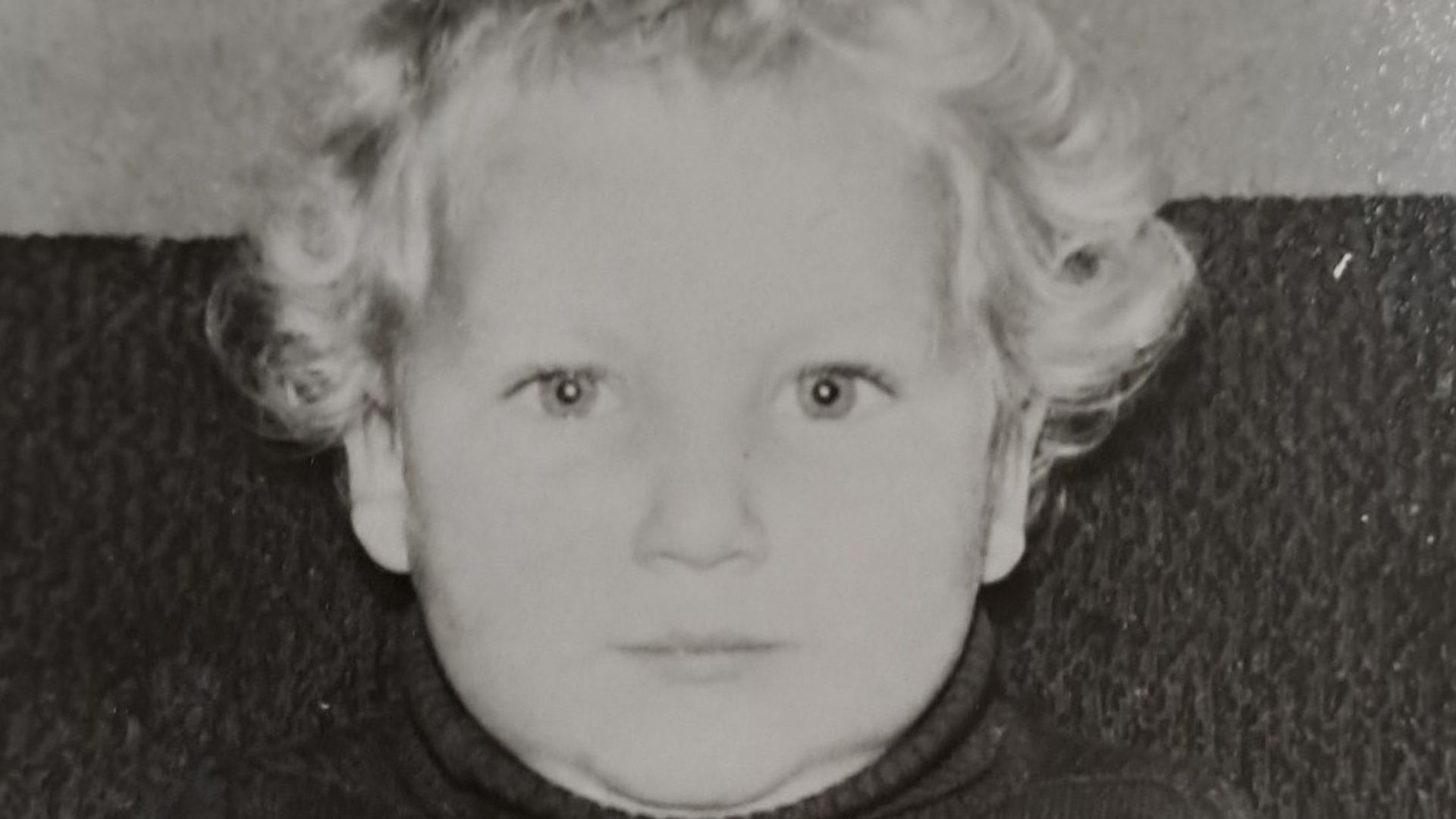
The wallpaper in the living room has changed four times. The neighbors have moved away, died, or forgotten the name of the family that once lived in the house with the blue door. Time is a relentless scavenger, stripping away the physical evidence of a life until only a single, grainy photograph remains on a mantelpiece. It is a snapshot of a toddler, frozen in the amber of 1974. He is wearing a striped shirt. He is smiling at something just out of frame.
He was two years old when the world swallowed him whole.
Now, fifty years later, the police have released a new image. It is not a photo. It is a prediction—a cold, digital estimation of what middle age looks like when it is grafted onto the bone structure of a ghost.
The Geometry of a Missing Life
Age-progression technology is a strange alchemy. Forensic artists and computer algorithms take the soft, malleable features of a child—the distance between the tear ducts, the specific curve of the jawline—and subject them to a simulated assault of decades. They add the gravitational pull of the fifties, the thinning of the hair, and the weathering of the skin.
It is a logical process rooted in biology. We know how the human skull expands. We understand how cartilage in the nose and ears continues to grow even as the rest of us begins to shrink. But there is a haunting dissonance in seeing a fifty-year-old face that has no history. There are no scars from a bicycle accident at age ten. There are no laugh lines earned from a wedding in his twenties. There is no weariness from a career or the softening of the eyes that comes with fatherhood.
It is a face created in a vacuum. It represents the "invisible stakes" of a cold case: the person who should have been here, but wasn't.
The Persistence of the Empty Chair
Consider the parents. In many of these half-century cases, the parents are now entering their eighties or nineties. Their lives have been a marathon of "what ifs." They have spent five decades scanning crowds at grocery stores, looking for a certain tilt of the head or a familiar cowlick in the hair of a stranger.
To the public, a missing person case is a mystery to be solved, a data point in a true crime podcast. To the family, it is a physical weight. It is the sound of the front door opening that still, for a split second, makes a heart race after fifty years of silence.
The release of a new image is a double-edged sword. It offers a fresh "hook" for the public’s fading memory, but it also forces the family to mourn a man they never got to meet. They aren't looking for the toddler anymore; they are looking for a contemporary. They are looking for someone who could be sitting next to them at a Sunday dinner, talking about mortgage rates or lower back pain.
Why Data Struggles to Beat Time
The technical challenge of a fifty-year gap is immense. Most age-progression work is successful when the interval is five or ten years. When you jump half a century, the variables become astronomical.
- Lifestyle Factors: Did this person smoke? Did they work outdoors in the sun? Did they experience significant weight fluctuations?
- Genetic Mapping: Without photos of the parents at age fifty, the algorithm is guessing which side of the family’s aging process he would follow.
- Environmental Impact: Stress, diet, and even the climate of the region where he grew up (if he is still alive) would fundamentally alter the topography of his face.
We use these images because we have nothing else. They are flares sent up into a very dark, very large sky. The hope is not necessarily that the man himself will see it and realize his true identity—though that has happened in rare, cinematic instances—but that someone else will see a resemblance. A wife might look at the digital rendering and see her husband's eyes. A coworker might see the shape of a friend’s mouth.
The Ghost in the Machine
There is a specific kind of silence that follows the release of these photos. It is the silence of a society trying to reconcile the digital with the deeply personal. We are using 2026 technology to solve a 1974 wound.
Critics often argue that these images are too speculative, that they create a false sense of certainty. And they are right, in a way. An age-progressed image is a statistical average of a human life. It lacks the "soul" of a real photograph because it lacks the experience that carves a face into a unique map of a person’s journey.
But the alternative is worse. The alternative is the slow, quiet erasure of a name from the collective consciousness. By generating this image, the authorities are making a statement: This person still matters. Even if he is now more a concept than a memory, the search continues because the debt of an unsolved disappearance is never fully paid.
The Search for a Mirror
Imagine, for a moment, a man living a perfectly ordinary life in a different city, perhaps even a different country. He has a different name. He has a family, a job, and a collection of memories that begin when he was four or five years old. He has always felt a slight, inexplicable gap in his history—a lack of baby photos, or stories about his birth that never quite added up.
He scrolls through a news feed on a Tuesday afternoon. He sees a face that looks like his own, but slightly "off," like a reflection in moving water.
This is the real purpose of the algorithm. It isn't just about identifying a victim; it is about providing a mirror for someone who has been lost in plain sight for fifty years. It is about the possibility that the toddler in the striped shirt didn't just vanish into the ether, but grew up, survived, and is waiting for a single image to bridge the gap between who he is and who he was supposed to be.
The ink on the original police report has faded to a dull brown. The detectives who first walked the scene are long since retired. Yet, the screen now glows with a high-definition face that never existed in reality, holding a vigil for a boy who never got to grow old.
The digital eyes of a fifty-year-old stranger stare back at us, asking the same question the world has been asking since the seventies.
Where are you?