The coffee in the West Wing is always slightly too hot. Diplomats grip their porcelain cups like shields, pretending the steam can ward off the chill of an incoming briefing. Outside, the autumn wind strips the final stubborn leaves from the trees along Pennsylvania Avenue. Inside, the air is heavy with the quiet, suffocating weight of history.
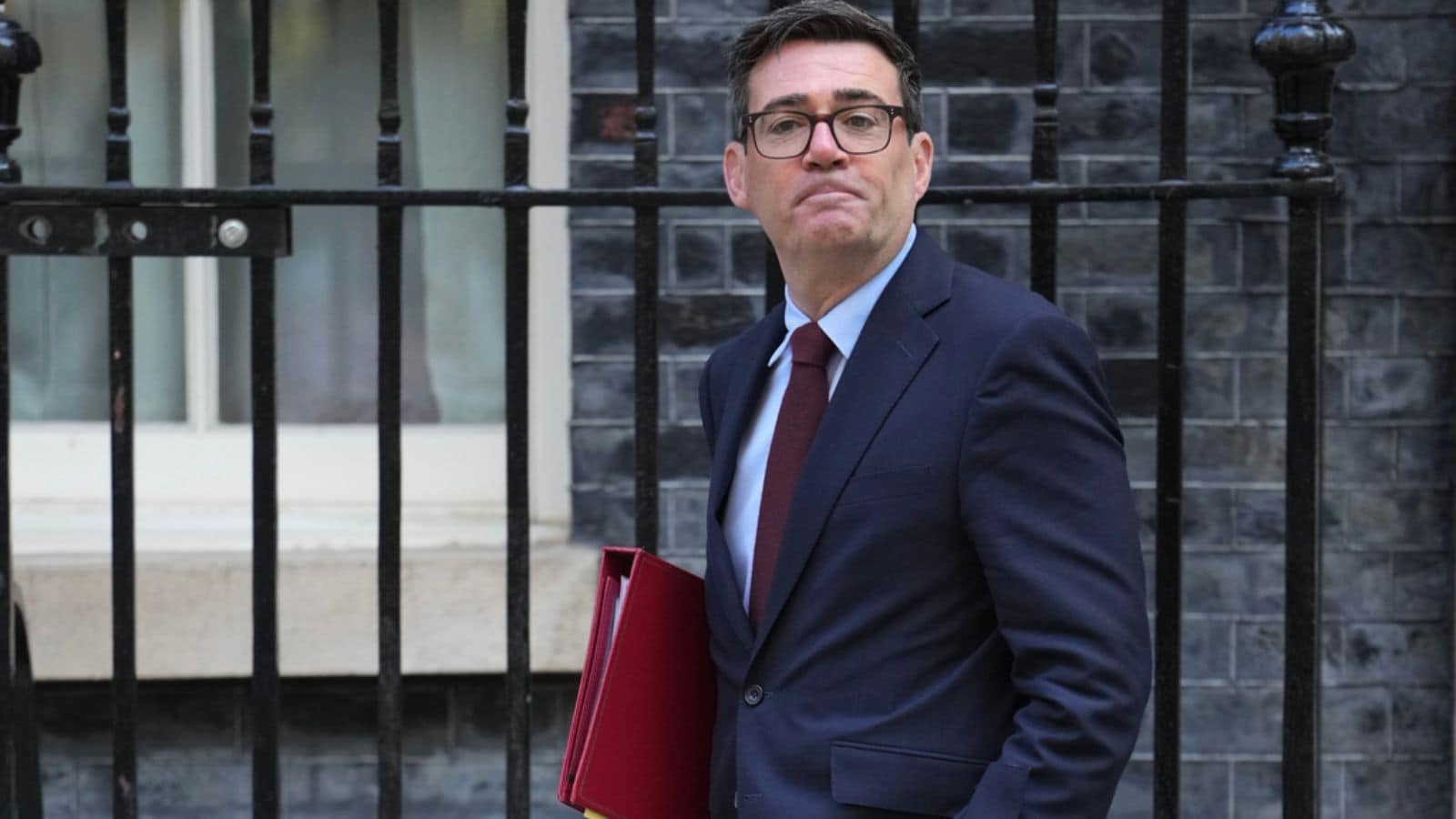
Andy Burnham is about to walk through that door.
For months, the transatlantic corridor has hummed with a different kind of frequency. Old certainties are fraying at the edges. Alliances forged in the smoke of the twentieth century are being tested by the pragmatic, transactional winds of the twenty-first. When a British political leader prepares to sit across the table from Donald Trump for the first time, it is not merely a scheduled appointment on a calendar. It is a collision of political DNA. It is a moment where the ancient art of British statecraft meets the unpredictable gravity of American populism.
Consider what is actually at stake in that room.
It is not just about handshakes for the cameras or the polite exchange of pleasantries about the special relationship. It is about the muddy trenches of the Donbas, where young men spend their nights staring at the frozen dark, listening to the whistle of artillery. It is about the fragile, burning geography of West Asia, where every diplomatic misstep threatens to ignite a wider conflagration that could reshape global oil markets and security architectures overnight.
Burnham arrives bearing the burden of a nation caught between its European geography and its historic transatlantic tether. Britain has long fancied itself the bridge between Washington and Brussels. But bridges carry traffic in both directions, and right now, the traffic is deafening.
In a quiet corner of Manchester, far from the mahogany-paneled offices of Whitehall, a retired machinist named Arthur watches the evening news. He doesn't talk about geopolitical architecture or multilateral security pacts. He talks about his heating bill. He talks about the price of bread. When he hears that British leaders are flying to Washington to discuss foreign wars and distant borders, a familiar weariness settles into his eyes.
"They're talking out there," Arthur says, gesturing at the glowing television screen, "while everything down here feels like it's holding together with spit and string."
This is the invisible tension of modern governance. The leaders who sit in gilded rooms must somehow reconcile the grand theatre of international diplomacy with the quiet, desperate anxiety of citizens who feel the ground shifting beneath their feet. Burnham knows this better than most. His political rise was forged not in the exclusive clubs of Westminster, but in the gritty, industrial heartlands of the North of England—places that understand the cost of neglect, places that voted for change because the old promises had turned to dust.
Now, that same domestic instinct for straight-talking authenticity must translate to the global stage.
Trump operates on a different frequency entirely. To the former U.S. President, international relations are not governed by abstract ideals or polite communiques; they are deals to be struck, leverage to be measured, and strength to be projected. For decades, British politicians could rely on shared platitudes about common values. Those days are gone. If Burnham wants to command attention in Washington, he cannot rely on the comfortable scripts of the past. He has to speak a language that cuts through the noise.
The agenda is formidable. First, Ukraine.
The conversation will not dwell on abstract theories of sovereignty. It will get down to brass tacks: how long can Western taxpayers sustain the flow of billions in military aid? What happens when political fatigue sets in on both sides of the Atlantic? How do you broker a peace without handing a victory to an aggressor that rewards the rewriting of borders by force? These are questions that keep intelligence chiefs awake at night. They are questions where a single wrong sentence can alter the balance of power across the European continent.
Then, the focus shifts southward and eastward. West Asia sits on a knife-edge.
Every shipment through the Red Sea, every diplomatic cable passing through embassies in London and Washington, carries the invisible weight of potential escalation. The region is a powder keg where a stray spark can detonate decades of carefully constructed stability. When Burnham and Trump discuss these flashpoints, they are not engaging in academic debate. They are looking at maps that dictate whether global supply chains hold or shatter, whether inflation spikes or recedes, whether ordinary families pay more at the petrol pump next Tuesday.
We have been here before, of course. History loves its echoes.
In the autumn of 1938, and again in the tense decades of the Cold War, British leaders have had to cross the ocean to take the measure of American power. They have had to swallow their pride, adjust their ambitions, and find a way to align two very different political cultures toward a common defense.
Yet this moment feels fundamentally different. The global order is no longer unipolar. The rules-based international system—that sprawling web of treaties, courts, and norms built after the Second World War—is fraying at the seams. Challengers are rising in the East, testing the limits of Western resolve. Populism is reshaping domestic politics from Ohio to Yorkshire.
When the door of that meeting room finally closes, the cameras will stop rolling. The reporters will scatter to draft their hurried analyses.
Inside, the dialogue will be raw. Burnham will have to convince an American leader who is deeply skeptical of foreign entanglements that Britain remains an indispensable partner—not because of sentimentality, but because shared security is the only bulwark against a chaotic world. He will have to bridge the gap between European anxieties and American America-First pragmatism.
The stakes are invisible until they are catastrophic. They live in the price of fuel, the security of shipping lanes, the deterrence of aggression, and the fragile peace that separates order from total anarchy.
As the autumn sun dips below the horizon in Washington, painting the sky in shades of bruised purple and gold, the meeting begins. The world outside keeps spinning, indifferent to the heavy burdens carried in that room. But for a few fleeting hours, the choices made behind closed doors will ripple outward, touching everything from the quiet streets of northern England to the frontline trenches of Eastern Europe.
There are no easy answers waiting on the other side of that handshake. There is only the work of holding the line.