Celebrity charity cannot out-fund biology.
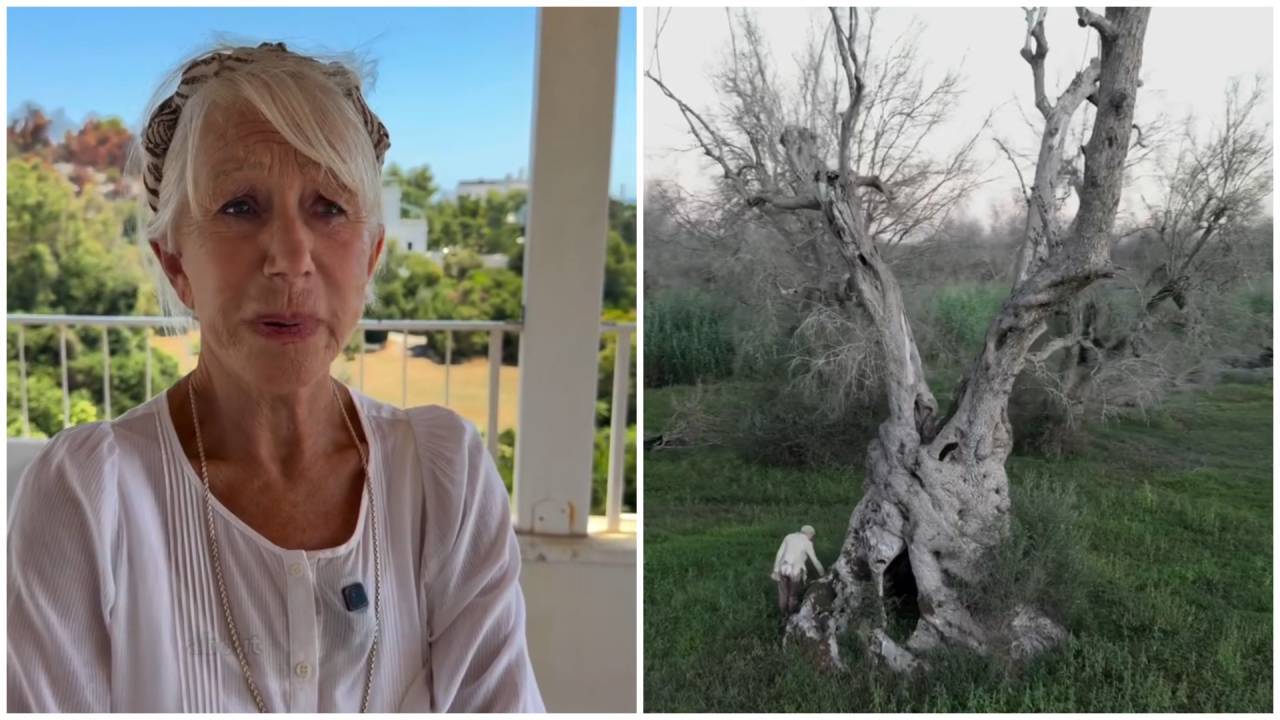
Every few months, a glossy lifestyle profile drops detailing how Dame Helen Mirren is fighting to rescue the millennial olive trees of Puglia from a microscopic assassin. The narrative is seductive. An Academy Award-winning actress retreats to her rustic Italian masseria, rolls up her sleeves, and wages a romantic war against Xylella fastidiosa, the bacterium decimating southern Italy’s agricultural soul. It reads like a screenplay. It feels noble. And it promotes a dangerous agricultural delusion that is actively making the crisis worse.
When famous voices champion the preservation of every single 1,500-year-old monument tree through folk remedies, soil-hugging, and political resistance to eradication, they are not saving Puglia. They are prolonging its agony. The harsh, unglamorous reality of plant pathology does not care about heritage, tourism brochures, or how picturesque a gnarled trunk looks at sunset. If Italy listens to the romantic consensus rather than cold epidemiological science, the entire Mediterranean olive industry faces total collapse.
The Anatomy of a Botanical Executioner
To understand why celebrity-backed preservationism fails, you have to stop viewing Xylella fastidiosa as a localized nuisance and recognize it for what it is. It is a vascular killer.
When a sap-sucking insect—primarily the meadow spittlebug (Philaenus spumarius)—feeds on an infected tree and moves to a healthy one, it injects the bacteria directly into the plant’s xylem. The xylem is the tree’s plumbing system, responsible for transporting water and soluble mineral nutrients from the roots up to the leaves. Once inside, Xylella multiplies rapidly, forming a thick biofilm that physically clogs these microscopic pipes.
The tree does not rot. It chokes. It dies of thirst while standing in wet soil.
This condition, known as Olive Quick Decline Syndrome (OQDS), produces the iconic "leaf scorch" that turns lush silver-green canopies into brittle, gray skeletons. By the time a farmer or a well-meaning homeowner notices the leaves browning at the tips, the bacterial load inside the trunk is already catastrophic. There is no chemical spray that penetrates the xylem to dissolve that biofilm without killing the host. Antibiotics are strictly prohibited in European agriculture due to the obvious nightmare of antimicrobial resistance.
Yet, the mainstream media narrative treats this biological reality like a debate over historic zoning laws.
I have watched multi-generational agricultural estates across southern Europe burn through millions of euros chasing miracle cures—copper injections, homeopathic soil amendments, essential oil sprays, and magnetic water treatments. Every single one of those estates ended up with the exact same result: dead wood and bankrupt balance sheets. When you treat a systemic vascular pathogen with holistic optimism, you simply give the spittlebugs more time to spread the infection to the next valley.
Why the "Save Every Tree" Mantra Is Epidemiological Suicide
The lazy consensus in cultural reporting frames the Puglia crisis as a battle between cold, bureaucratic scientists who want to chop down ancient heritage and passionate locals—led by figures like Mirren—who want to protect the land. This framing is backwards.
In plant epidemiology, containment relies on a brutal metric: inoculum reduction. An infected millennial tree is not just a dying patient; it is a massive, stationary biological bomb. Because of its sheer size and expansive root and branch network, a 1,500-year-old Ogliarola salentina or Cellina di Nardò tree harbors exponentially more bacteria than a young sapling. Every spring, tens of thousands of spittlebugs feed on its sap and fly north, carrying the death sentence to healthy groves in Bari, Brindisi, and beyond.
When activists, local politicians, and celebrities successfully lobby to halt the mandatory uprooting of infected monument trees, they create permanent reservoirs of disease.
The European Food Safety Authority (EFSA) and Italy’s own National Research Council (CNR) have been screaming this into the void since the outbreak was first identified near Gallipoli in 2013. In the early stages, scientists recommended an aggressive buffer zone: clear-cut all host plants within a strict radius around infected zones, enforce mandatory plowing to kill spittlebug nymphs in the spring grass, and immediately burn infected timber.
Instead, Puglia got protests, court injunctions, and conspiracy theories. Prosecutors in Lecce actually put the scientists on trial in 2015, accusing them of spreading the disease themselves to profit from pesticide sales and genetically modified crops. While the courts eventually acquitted the researchers years later, the delay was fatal. During those lost years of legal paralysis and romantic obstructionism, Xylella marched north at a rate of roughly 20 kilometers per year. Over 21 million trees are now infected or dead.
The Hard Truth About Heritage Versus Survival
Let us dismantle the most common questions outsiders ask about this crisis, because almost all of them are built on a flawed premise.
Can’t we just cure the ancient trees individually if we spend enough money?
No. You cannot cure a clogged vascular system in a woody perennial of that scale. You can prune away the dead branches—a technique called slupatura—and apply aggressive fertilizers to stimulate new green shoots. For a year or two, the tree looks like it is recovering. Journalists take photos. Celebrities celebrate a miracle. Then, the bacteria colonize the new wood, the xylem blocks again, and the tree dies anyway. All you bought was a brief, expensive illusion.
Isn’t cutting down a 1,500-year-old tree a cultural crime?
Leaving it standing to infect ten thousand other trees is the real crime. Furthermore, the cultural obsession with these specific trees ignores agricultural history. Those "ancient" trees were not planted by nature; they were planted by ruthless, pragmatic Roman and medieval businessmen who ripped out native Mediterranean oak forests to establish a lucrative olive oil monoculture. Puglia’s landscape is an industrial artifact, not an untouched Eden.
Why not just ban pesticides and let nature find a balance?
Because Xylella fastidiosa is an invasive pathogen native to the Americas, likely introduced to Italy via ornamental coffee plants imported from Costa Rica. Puglia’s native olive cultivars have zero evolutionary defense mechanisms against it. Waiting for "natural balance" means waiting for 99% of the regional olive population to die off over the next century so that the remaining 1% might slowly repopulate. No modern economy can survive a hundred-year agricultural blackout.
What Actually Works (And Why Nobody Wants to Hear It)
If celebrity activism wants to actually save Puglia, it needs to stop funding preservation fantasies and start backing ruthless genetic replacement.
The only proven, scalable path forward rests on three unromantic pillars:
- Grafting Resistant Cultivars onto Ancient Rootstocks: Research led by Pierfederico La Notte and the Institute for Sustainable Plant Protection (IPSP-CNR) proved that two specific olive varieties—Leccino and FS-17 (also known as Favolosa)—possess natural genetic resistance to Xylella. They still contract the bacteria, and they still carry low levels of it, but their xylem vessels are structurally narrower, preventing the biofilm from causing lethal blockages. By top-working (grafting) Leccino or FS-17 scions onto the cut stumps of ancient trees, farmers can save the historic root system while replacing the vulnerable canopy. You lose the twisted, picturesque branches, but you keep the tree alive and productive.
- Aggressive Vector Control: You cannot stop the bacteria if you do not kill the taxi. Farmers must till the soil in early spring to destroy the herbaceous weeds where juvenile spittlebugs develop, followed by targeted insecticide applications in late spring when adults emerge and migrate to the olive canopies. Organic purists hate this. Without it, even resistant varieties get overwhelmed by massive bacterial loads.
- Rapid Replanting of High-Density Groves: The romantic image of widely spaced, centuries-old trees harvested by hand is economically dead in the infected zone. Surviving growers are ripping out dead orchards and planting high-density rows of Leccino and FS-17 that can be mechanically harvested, yielding oil within three to four years instead of thirty.
The Uncomfortable Downside of the Scientific Fix
Intellectual honesty demands admitting that the scientific solution comes with a steep price. Shifting Puglia’s olive sector to Leccino and FS-17 fundamentally alters the flavor profile of Apulian extra virgin olive oil. The traditional Ogliarola and Cellina varieties produced robust, intensely bitter, peppery oils rich in specific polyphenols that defined the region’s culinary identity for centuries. Leccino produces a milder, sweeter, more delicate oil.
Furthermore, relying heavily on just two resistant cultivars creates a new genetic bottleneck. If a different strain of Xylella mutates or arrives—such as Xylella fastidiosa subspecies multiplex, which attacks almonds, cherries, and other stone fruits—a monoculture of Leccino could face a second wave of devastation. Researchers are frantically screening hundreds of wild and minor olive genotypes to broaden the genetic shield, but breeding woody perennials takes decades.
The landscape will never look the same. The silver-gray sea of twisted giants that drew wealthy expats and Hollywood royalty to southern Italy is gone. The ghost groves—miles of bleached, skeletal trunks standing like silent tombstones—are permanent monuments to what happens when emotion overrides agronomy.
Stop Romanticizing the Wreckage
Helen Mirren’s love for Puglia is genuine. Her willingness to use her platform to draw global eyes to an ecological catastrophe is commendable. Attention, however, is not a strategy. When media outlets frame her efforts as a valiant crusade to save ancient trees from a mysterious plague, they validate the exact mindset that allowed Xylella to escape containment in the first place.
If you want to protect Italy’s olive oil heritage, stop buying into the fairy tale that ancient trees can be saved by sheer willpower, soil amendments, and celebrity tear-jerkers. Support the growers who are taking chainsaws to their own family history to graft resistant wood. Back the researchers who spent a decade beingvilified by politicians while trying to build a firewall across the peninsula.
Bring in the chainsaws, burn the infected wood, graft the resistant cultivars, and till the spring grass.