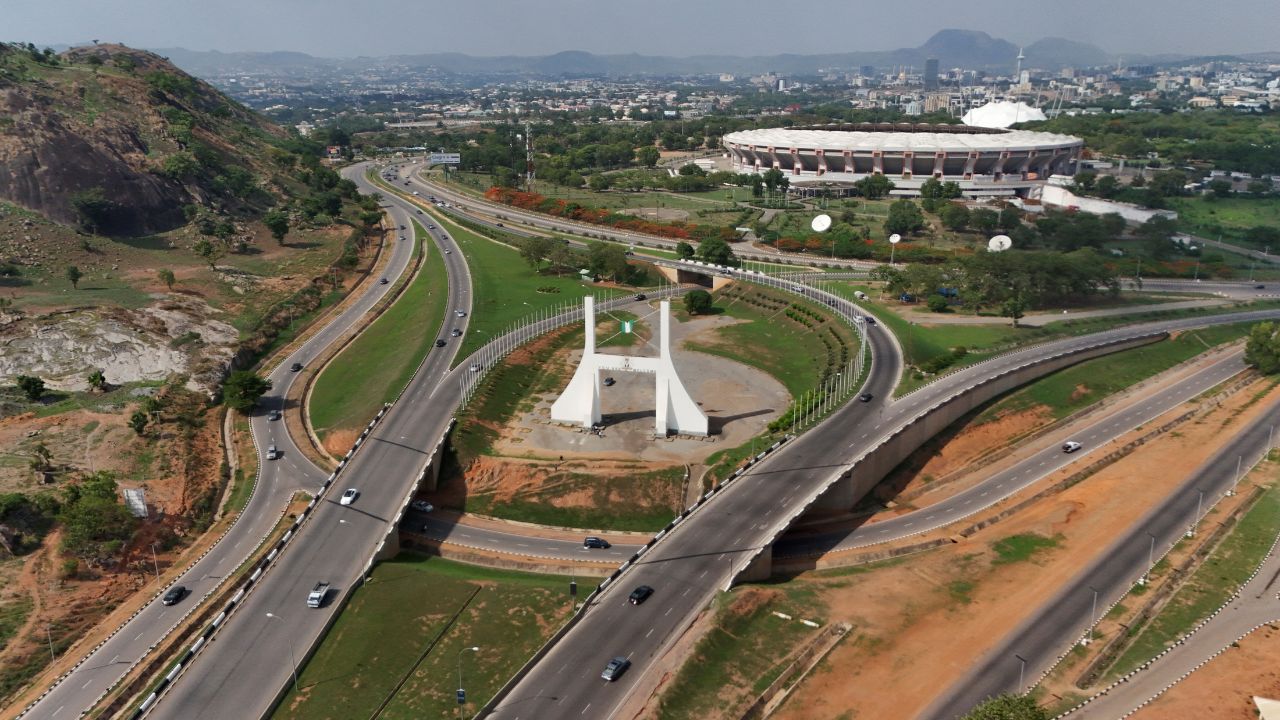
The United States Department of State recently authorized the departure of non-emergency personnel and their families from Nigeria’s capital, citing an "elevated risk of terror attacks." While the official notice points toward generic security concerns, the reality on the ground in Abuja suggests a much more complex breakdown of the quiet understanding between international intelligence agencies and local security forces. This isn't just a routine safety measure. It is a loud, public vote of no confidence in the Nigerian government’s ability to secure its own administrative heart.
For years, Abuja was considered a bubble. While the northeast burned under the insurgency of Boko Haram and the northwest fell into the hands of organized banditry, the capital remained a manicured sanctuary. That illusion has evaporated. The authorization for "ordered departure" is the highest level of alarm short of closing an embassy entirely. It signals that the risk has shifted from "incidental" to "targeted." When the State Department moves from issuing travel advisories to paying for flights for its staff, the data they are seeing behind closed doors is no longer speculative. It is actionable.
The Architecture of a Security Failure
The current crisis did not appear from thin air. It is the result of a slow, systemic rot in the security perimeter that once made Abuja feel invincible. We are seeing the consequences of a porous border and a distracted military.
The most glaring indicator of this shift was the brazen attack on the Kuje Medium Security Custodial Centre. In mid-2022, hundreds of inmates, including high-profile terrorists, walked out of a facility located just kilometers from the seat of power. If the Nigerian state cannot protect a fortified prison within the Federal Capital Territory, the diplomatic community is right to ask: how can they protect a residential villa in Maitama or a grocery store in Wuse?
Intelligence sharing between the West and Nigeria has become a one-way street. Sources within the diplomatic circles suggest that while the U.S. and its allies provide consistent data on movement patterns and radicalization, the Nigerian response is often bogged down by bureaucratic inertia or, worse, political optics. The Nigerian government’s immediate reaction to the U.S. departure order was one of public frustration, with officials claiming the situation was under control. But "under control" is a relative term when your own intelligence officers are warning of sleeper cells embedded in the city’s sprawling suburbs.
The Rise of the Urban Insurgent
Modern terrorism in West Africa has evolved. It is no longer just about flags flying over captured villages in Borno State. The new threat is the urban insurgent—a ghost who blends into the informal settlements that ring the capital. These areas, often neglected by municipal planning and policing, provide the perfect staging ground for reconnaissance.
- Intelligence Gaps: The Nigerian police force is chronically underfunded and overstretched, with a significant portion of its personnel diverted to provide private security for the elite.
- The Kuje Factor: The escapees from the Kuje prison break represent a massive infusion of tactical expertise back into the wild. These are individuals who know the terrain and the vulnerabilities of the capital.
- Economic Desperation: The record-high inflation and currency devaluation in Nigeria have created a recruitment pool for criminal gangs who are increasingly willing to partner with ideological extremists for a paycheck.
The Economic Shadow of the Empty Embassy
When diplomats leave, the money follows. The economic impact of an embassy drawdown is immediate and punishing. Abuja's service economy—from high-end hotels to logistical contractors—relies heavily on the presence of an international mission.
The message sent to foreign investors is devastating. If the world’s superpower decides its diplomats are no longer safe in the capital, why would a multinational corporation risk its executive team in a Lagos boardroom or an oil rig in the Delta? This departure isn't just a security move; it is a massive disinvestment. The Nigerian government’s preoccupation with maintaining a facade of stability has actually accelerated the flight of capital. They are fighting a PR war while losing the actual battle for regional confidence.
The U.S. decision also triggers a "follower effect." Once Washington makes a move of this magnitude, the United Kingdom, Canada, and the European Union usually follow suit. We are witnessing the hollowing out of the city’s international quarter. This creates a vacuum. In the world of geopolitics, a vacuum is never empty for long. As Western influence pulls back due to security fears, other global players with a higher tolerance for risk and a different set of priorities are waiting in the wings.
Mismanagement of the Narrative
The Nigerian presidency often treats security alerts as personal insults rather than technical data points. This is a fatal flaw in their strategy. By dismissing the U.S. warning as "unnecessarily alarmist," the government misses the opportunity to coordinate a genuine, unified response.
The disconnect is stark. On one hand, you have the Department of State issuing urgent bulletins; on the other, you have Nigerian officials telling citizens to go about their business and ignore the "scaremongering." This creates a dangerous environment where the public is unsure who to believe. In a security crisis, clarity is the only currency that matters. When that currency is devalued, panic becomes the default setting.
The "security fears" cited are not just about bombs or gunmen. They are about the lack of a coherent counter-terrorism strategy. Nigeria’s approach has been reactive for a decade. They wait for a disaster, then deploy the army to the scene. That model does not work in an urban environment like Abuja. You cannot use a sledgehammer to catch a shadow.
The Broken Chain of Command
A veteran analyst knows that security is only as strong as its weakest link. In Nigeria, those links are numerous. The coordination between the Department of State Services (DSS), the police, and the military is often hampered by inter-agency rivalry. Each branch guards its intelligence like a private treasure, leading to a situation where the right hand doesn't know the left is about to be cut off.
The U.S. Embassy has its own sophisticated security apparatus, but they cannot operate in a silo. They rely on the host country for the "outer ring"—the roads, the checkpoints, and the intelligence on local movements. When that outer ring is perceived to be compromised by corruption or incompetence, the only logical move is to shrink the inner ring. That is what we are seeing now. The U.S. is pulling its people back behind the walls, and for many, that means getting them out of the country entirely.
What a Real Security Strategy Looks Like
If the Nigerian government wants to reverse this trend and bring the international community back to the table, they must stop the defensive rhetoric and start the technical work.
First, there must be a radical overhaul of the Abuja security grid. This means more than just more checkpoints. It means digital surveillance, better pay for frontline officers to reduce the temptation of bribes, and a genuine integration of intelligence feeds. You cannot secure a city in 2026 using 1990s tactics.
Second, the government needs to address the "Kuje ghost" problem. There has been little public accountability for how that prison break happened. Without a transparent investigation and a clear plan to recapture those individuals, the threat remains active and potent. The world is watching to see if Nigeria can hold itself accountable. So far, the silence is deafening.
Third, there must be a shift in diplomatic engagement. Instead of bickering over the validity of travel advisories, the Nigerian security leadership should be in high-level talks with their counterparts to bridge the intelligence gap. A joint task force that actually shares real-time data would do more for confidence than a thousand press releases.
The authorization for departure is a symptom of a much deeper disease. It is the physical manifestation of a trust deficit. For the average Nigerian, this is a terrifying development. They don't have the option of a State Department-funded flight out of the country. They are left in a city where the world’s most powerful nation has decided the risk is too high to stay.
The reality of the situation is that Abuja is at a crossroads. It can either remain a capital in name only—a fortress for the elite surrounded by an increasingly hostile and chaotic landscape—or it can take the hard steps to rebuild its security architecture from the ground up. The clock is ticking, and the planes are already on the tarmac.
Security is not a static state of being; it is a constant, expensive, and often thankless process of mitigation. Nigeria has treated it like a political talking point for too long. When the U.S. Embassy begins the exodus of its staff, the talking points have failed. The only thing left is the hard truth of a capital under siege by its own systemic failures.
The drawdown should be viewed as a final warning. If the heart of the nation is not secured, the rest of the body will surely follow. This is not just a temporary retreat; it is a signal that the status quo is no longer survivable. The Nigerian government must decide if they are willing to do the work required to earn back the trust they have so casually squandered.