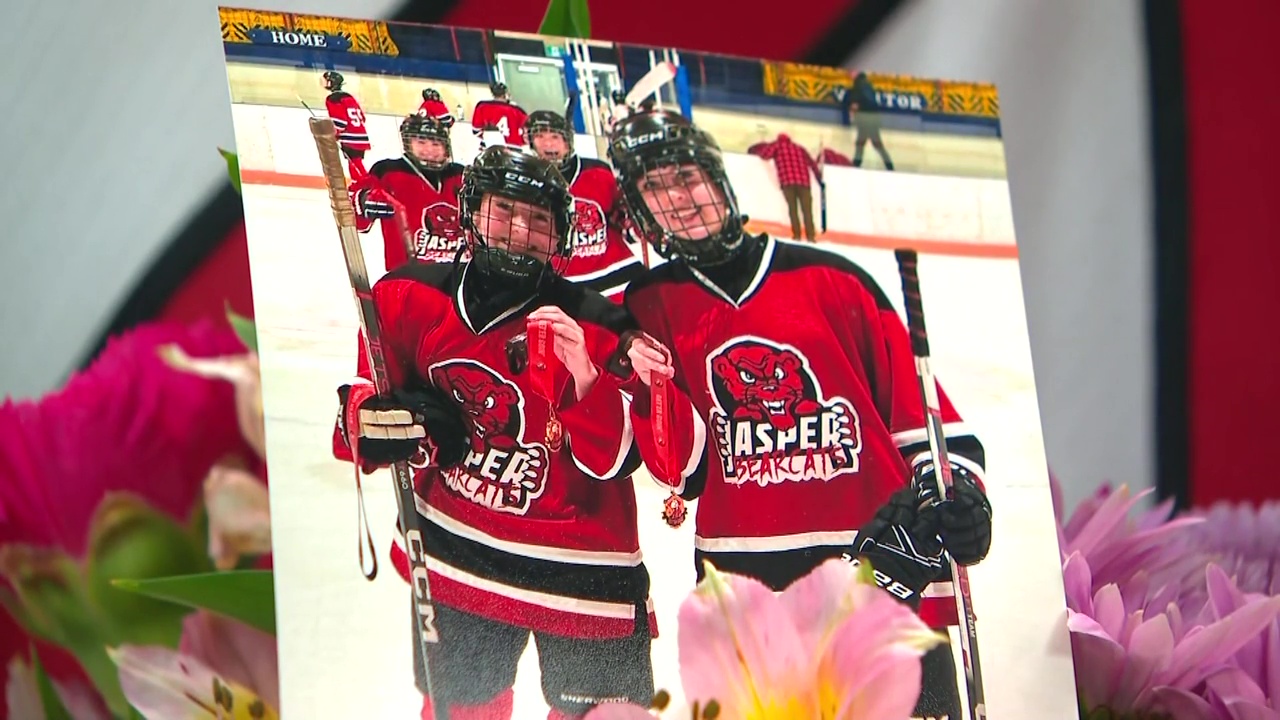
The tragedy in Jasper is not just a story of lost youth; it is a brutal examination of how a tight-knit community anchors its entire identity to the frozen sheets of a local rink. When two "bright shining lights" from the local hockey team are extinguished, the impact radiates far beyond the immediate families. It tears at the social fabric of a mountain town that uses sports as its primary language for resilience and connection. The deaths of these young athletes have left a void that no commemorative jersey or moment of silence can truly fill, exposing the fragile nature of rural legacies.
Jasper is a town defined by its boundaries. Surrounded by the towering peaks of the Canadian Rockies, the residents live in a fishbowl where every success is shared and every failure is magnified. In this environment, the local hockey team acts as more than just a sports program. It is a rite of passage. It is the heartbeat of the winter months. When the community loses members of this brotherhood, it loses a piece of its future.
The Cultural Weight of the Rural Rink
To understand why this specific loss feels so catastrophic, one must look at the mechanics of a hockey town. In major urban centers, a tragedy involving youth athletes is a headline that fades within a week. In a place like Jasper, the rink is the town square. It is where business deals are struck, where parents bond in the freezing stands, and where children learn the hard lessons of teamwork and grit.
The two young men who died were not just players. They were symbols of the town's continuity. Their involvement in the Jasper Bearcats or the local minor hockey system meant they were known by almost everyone, from the local grocer to the park wardens. This level of interconnectedness creates a unique form of collective trauma. The grief is decentralized; it doesn't stay behind closed doors but permeates the schools, the locker rooms, and the local pubs.
The mourning process in these settings often takes on a ritualistic quality. We see the sticks on the porch, the candlelight vigils, and the GoFundMe pages. While these gestures provide immediate comfort, they also highlight a desperate need to find meaning in the senseless. Investigative scrutiny of these events often reveals that the "why" matters less to the community than the "how we survive this." Yet, the "why" remains a haunting shadow. Whether the cause was a highway accident—a constant threat in the mountains—or another unforeseen circumstance, the result is a permanent shift in the town's psyche.
The Myth of the Resilient Small Town
There is a common narrative that rural communities are naturally more resilient than cities. This is a fallacy. Small towns are often less equipped to handle deep psychological trauma because the reminders are everywhere. You cannot walk down Connaught Drive without seeing a face that reminds you of the loss. You cannot enter the arena without seeing the empty space on the bench.
The pressure to "remain Jasper Strong" can actually hinder true healing. It forces a public performance of strength when many are privately crumbling. In the wake of this hockey tragedy, the town has rallied, but the long-term mental health implications for the surviving teammates are profound. These teenagers are navigating the transition to adulthood while carrying the weight of survivor’s guilt and the expectations of a town that looks to them to carry on the legacy of their fallen friends.
The Economic and Social Infrastructure of Grief
The loss of young people in a mountain town also has a pragmatic, albeit cold, dimension. These are the future workers, the future parents, and the future leaders of a seasonal economy that relies on local stability. When "shining lights" are lost, the human capital of the town takes a hit.
- Volunteerism: Youth sports rely on a dwindling pool of dedicated parents and alumni.
- Mentorship: Older players set the tone for the "mites" and "peewees" coming up behind them.
- Community Morale: The local team's performance often dictates the winter mood of the town.
When a tragedy of this scale hits, the volunteer energy often spikes in a burst of "grief-activism" before plummeting into burnout. The challenge for Jasper is maintaining the support systems for the families long after the news cameras have packed up and moved on to the next provincial crisis.
Beyond the Commemorative Jersey
The industry of mourning has become predictable. There will be scholarships established. There will be retired numbers hanging from the rafters of the Jasper Arena. These are necessary, but they are also static. They don't address the underlying vulnerability of young people in isolated regions.
If we look at the data of rural youth mortality, we see patterns that often involve long-distance travel on treacherous roads, limited access to late-night recreational alternatives, and a culture that prizes physical toughness over emotional vulnerability. While the specific details of this case may vary, the context remains the same: being a young man in a hockey town involves navigating a specific set of risks that are rarely discussed until it is too late.
The "bright shining lights" description used by the media is a comfort mechanism. It frames the victims as ethereal and perfect, which in a way, strips them of their humanity. They were real kids with flaws, ambitions, and unfinished business. By turning them into icons, we sometimes forget to support the messy, complicated grief of those who knew them best.
The Long Shadow of the 2024 Fire and Cumulative Trauma
It is impossible to discuss Jasper's current state of mourning without acknowledging the cumulative trauma the town has faced. Following the devastating wildfires of 2024, the community was already on edge. The landscape itself is scarred, and now the social landscape is further eroded by the loss of these two young men.
This is a town that has been in a state of constant recovery. The psychological "load" on a resident of Jasper is significantly higher than that of someone in a stable suburban environment. Every siren heard in the middle of the night triggers a specific kind of anxiety. The loss of the hockey players isn't an isolated incident in the minds of the locals; it's another blow to a town that feels like it’s under siege by misfortune.
The hockey team served as a beacon of "normalcy" after the fires. It was supposed to be the thing that remained unchanged. When the tragedy struck the team, it felt like a betrayal of that normalcy. It signaled that even the safest harbors in town—the locker room and the ice—were not immune to the harsh realities of the world.
Reconstructing the Narrative of Loss
We need to move away from the "tragic accident" trope and start looking at the systemic pressures on rural youth. We ask these kids to be the ambassadors of our towns, to play through pain, and to embody the "rugged" mountain spirit. We rarely ask if they have the tools to cope with the pressure of that visibility.
The surviving members of the Jasper hockey community are now tasked with a burden they never signed up for. They are the living memorials. Every time they step on the ice, they are expected to play for more than just a win; they are playing for the memory of the "shining lights." This is an immense weight for a seventeen-year-old to carry.
Real investigative work into these tragedies shows that the "healing" promised by community leaders is often a slow, jagged process that leaves many behind. The families of the deceased are now members of a club no one wants to join, and their journey will continue long after the "Jasper Strong" stickers have faded from the bumpers of the local trucks.
The real story here isn't just the loss of two athletes. It is the story of a town's struggle to maintain its identity when its most precious resource—its youth—is taken away. It is about the limitations of sports as a coping mechanism and the desperate need for a deeper, more sustainable way to support rural communities in crisis.
The rink will stay cold, the lights will eventually dim, and the town of Jasper will have to find a way to exist in the silence that follows. The strength of a community is not measured by how it rallies in the first week, but by how it remembers in the tenth year, when the names on the jerseys are just names to the new kids on the ice.
Demand more than just a moment of silence from the institutions that oversee youth sports in these regions.