The ink on a ceasefire agreement is never truly dry. In the Middle East, it is often just a thin layer of frost over a boiling lake. While the world breathes a collective, cautious sigh of relief when the sirens stop, the people living in the shadow of the Kiryat Shmona ridges or the concrete corridors of Tehran know better. They know that a ceasefire isn't peace. It is simply the quiet interval where the generals check their watches and the politicians sharpen their tongues.
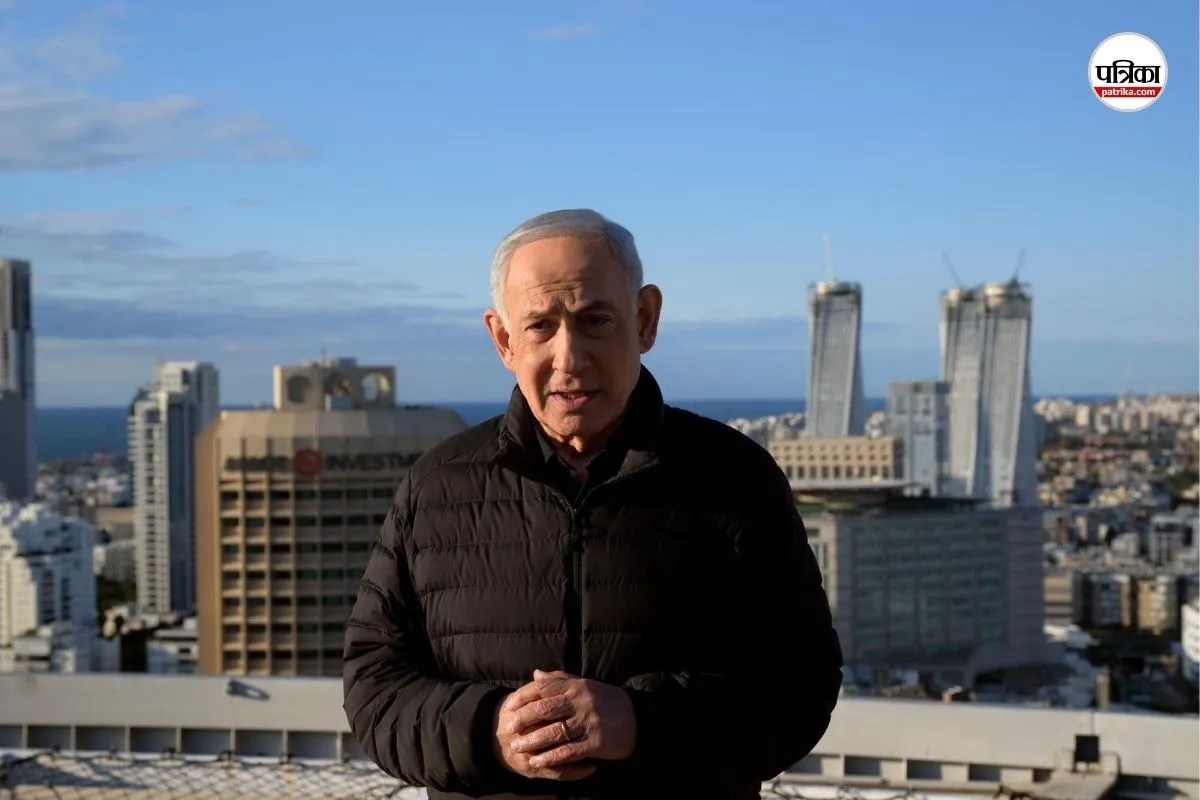
Benjamin Netanyahu stood before the cameras recently, not with the weary relief of a peacemaker, but with the staccato intensity of a man who hasn't stepped away from the ledge. His message was stripped of diplomatic fluff. He spoke of fingers on triggers. He spoke of readiness. He spoke of Iran as if the two nations were locked in a dark room, each waiting for the other to blink.
To understand the weight of these words, you have to look past the podium and into the living rooms of families who have spent the last few months sleeping in bomb shelters. For them, a ceasefire is a terrifying kind of silence. It is the silence that precedes a thunderclap. When a leader says his finger is on the trigger, he isn't just threatening an adversary. He is telling his own people to keep their bags packed.
The Geography of Anxiety
Imagine a father in Haifa. Let’s call him Elias. For Elias, the news of a ceasefire means he might finally take his children to the park without scanning the sky for the white streaks of an Iron Dome interception. But then he hears the rhetoric. He hears that the military is not "standing down" but "standing by." The tension in his shoulders, which had begun to melt, snaps back into place.
This is the psychological tax of perpetual conflict.
The geopolitical reality is a jagged one. Israel’s security apparatus views the ceasefire not as an end to the mission, but as a tactical pivot. The threat from the north—Hezbollah—is inextricably linked to the nerve center in Tehran. In the eyes of the Israeli leadership, the proxy is just the limb; Iran is the head. By maintaining a public stance of extreme aggression even during a pause in kinetic warfare, Netanyahu is attempting to establish a "deterrence of the mind."
He is betting that if the threat of a secondary, even more devastating strike remains vivid enough, the ceasefire might actually hold. It is a high-stakes gamble using the currency of fear.
The Tehran Perspective
On the other side of this invisible line, the narrative is mirrored. In the bustling markets of Tehran, the average person isn't looking for a regional war. They are looking at the price of bread and the stability of their future. Yet, they are living in a state where the rhetoric of "resistance" is the primary export.
When Netanyahu issues a direct threat to Iran during a period of supposed cooling, it provides the hardliners in the Iranian government with exactly the fuel they need. It validates their internal narrative that the "Zionist entity" will never stop until a full-scale confrontation occurs. It is a feedback loop of escalation.
Think of it as two neighbors standing on their respective porches, both holding matches, both shouting that they have a hose ready, but neither willing to put the matchbox in their pocket. The "trigger finger" is a metaphor for a hair-trigger society. One mistake, one misidentified drone, or one overzealous commander on a border post can turn a "tactical pause" into a regional wildfire.
The Mechanics of the Threat
What does it actually mean to have a finger on the trigger in 2026?
It isn't just about soldiers in trenches. It is about the digital architecture of modern war. It means cyber-units are currently probing the power grids of major cities. It means satellite reconnaissance is feeding real-time coordinates of missile silos into targeting computers. It means that "ceasefire" applies only to the things that go bang in public. The invisible war—the war of intelligence, sabotage, and positioning—never stops.
The facts of the current situation are stark:
- Israel has demonstrated its ability to strike deep within Iranian territory with surgical precision.
- Iran maintains a vast network of thousands of rockets positioned across the Levant.
- International mediators are working around the clock, yet their influence is often dwarfed by the internal political needs of the combatants.
Netanyahu’s insistence on the "right to strike again" is a message intended for three audiences simultaneously. To the Israeli public, it is a promise of strength. To the Biden administration and other Western allies, it is a warning that Israel will not be restrained by international pressure if they feel the threat is renewing. To Tehran, it is a blunt assertion that the ceasefire is a ceiling, not a floor.
The Human Cost of the "Almost" War
The most profound tragedy of this "trigger finger" diplomacy is what it does to the human spirit. Living in a state of "almost" war is arguably more draining than the conflict itself. During active combat, there is a surge of adrenaline and a clarity of purpose. In the "almost," there is only the slow-motion erosion of normalcy.
Businesses don't invest. Young couples delay having children. The constant vibration of "what if" becomes the background noise of existence.
There is a specific kind of exhaustion that comes from watching the news and trying to decipher whether a politician is being literal or performative. When a leader says "we will attack again if necessary," the word necessary is a black hole. Who defines necessity? Is it defined by a move of a missile battery, or is it defined by a dip in the Prime Minister's approval ratings?
The stakes are invisible until they aren't. They are hidden in the logistics of hospital bed counts and the fuel reserves of fighter jets. They are hidden in the diplomatic cables that aren't leaked to the press.
We often talk about war in terms of maps and arrows. We should talk about it in terms of the silence in a school hallway when the students are told they might have to go back to remote learning because the "security situation" has shifted.
The Illusion of Control
There is a seductive quality to the language of force. It suggests a level of control that rarely exists in the chaos of the Middle East. By stating that the finger is on the trigger, there is an implication that the hand is steady. But history shows us that triggers are often pulled by accident, by panic, or by a desperate need to appear "strong" in the face of perceived weakness.
The ceasefire is currently a fragile bridge. On one side is the possibility of a long-term de-escalation that could reshape the region's economy and security. On the other side is a return to the cycle of retaliation that has defined the last several decades.
Netanyahu’s rhetoric serves as a reminder that the bridge is made of glass.
As the sun sets over Jerusalem and Tehran tonight, the "trigger" remains the central image. It is an image of tension. It is an image of a world held captive by the decisions of a few men in high-security rooms. The facts are clear: the missiles are fueled, the rhetoric is sharp, and the peace is thin.
But the truth is found in the eyes of the people who are tired of looking at the sky. They don't want to hear about the trigger. They want to hear about the safety. They want to know if they can finally unpack their bags, or if the "silence" is just a breath being held before a scream.
The finger remains. The pressure is constant. And the world waits to see if the hand has the wisdom to move away from the iron, or if the pull is inevitable.