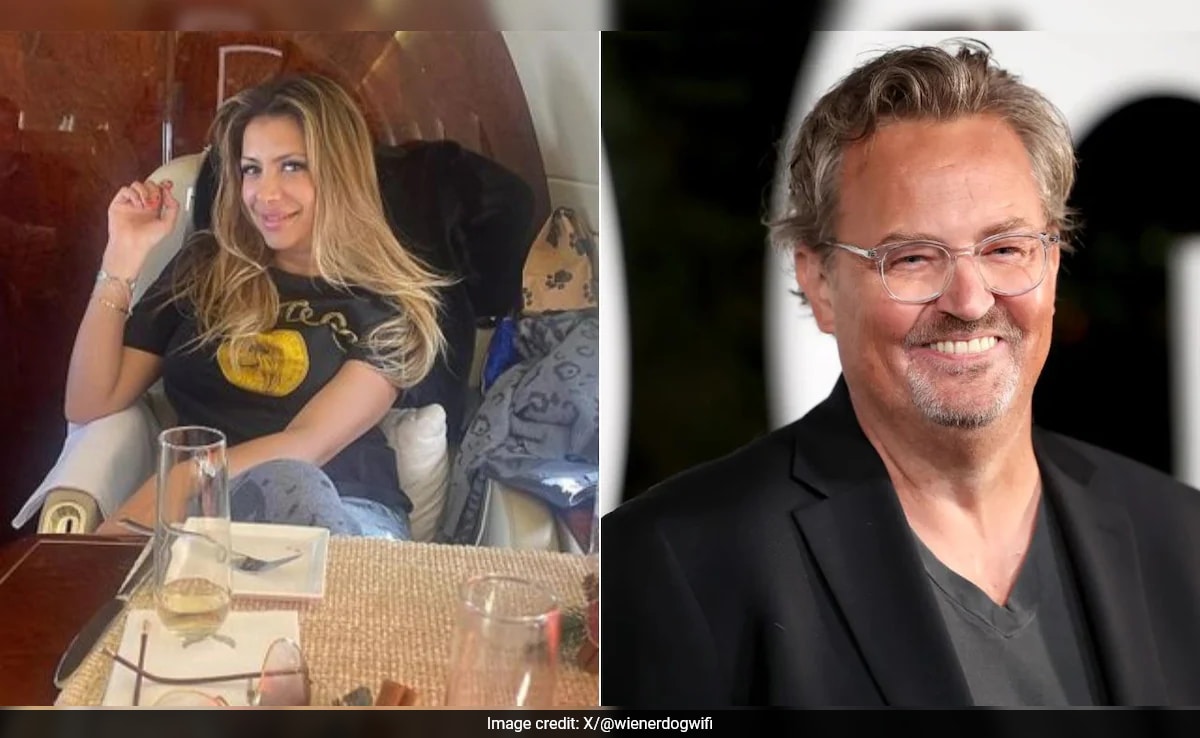
The arrest and sentencing of Jasveen Sangha, the woman the Department of Justice dubbed the Ketamine Queen, marks the end of a specific criminal enterprise, but it barely scratches the surface of the infrastructure that killed Matthew Perry. While the headlines focus on the proximity of a "celebrity drug dealer" to a beloved sitcom star, the real story is found in the professionalization of the Hollywood underworld. This wasn't a back-alley handoff. It was a sophisticated, multi-party logistics operation that utilized crooked doctors, opportunistic enablers, and a distribution network that operated with the efficiency of a high-end concierge service.
Perry’s death on October 28, 2023, was initially framed as a tragic accident involving a man who had long struggled with sobriety. However, the subsequent federal investigation revealed a predatory ecosystem. Sangha didn't just sell drugs; she provided a specialized service to a clientele that demanded discretion above all else. Her operation in North Hollywood functioned as a "one-stop shop" for high-grade ketamine, catering to an elite class that viewed traditional street dealers as too risky and medical professionals as too slow.
The federal indictment paints a chilling picture of how Sangha and her co-conspirators, including Dr. Salvador Plasencia and Perry’s live-in assistant Kenneth Iwamasa, exploited Perry’s relapse. Between September and October 2023, these individuals distributed approximately 20 vials of ketamine to Perry. The final doses, administered by an assistant with no medical training, were the direct cause of the acute effects that led to Perry’s drowning in his hot tub.
The Mechanics of the Boutique Drug Trade
To understand how a woman in a North Hollywood storefront becomes the primary supplier for a millionaire actor, you have to look at the breakdown of the medical gatekeeping system. The traditional view of drug dealing involves a hierarchy of cartels and street-level pushers. In the "Ketamine Queen" model, the hierarchy is flatter and much more dangerous because it wears a lab coat.
Dr. Salvador Plasencia, known as "Dr. P," acted as the bridge. He wasn't just a doctor making a mistake; he was an active participant in the price-gouging of a vulnerable addict. Internal messages recovered by investigators showed Plasencia mocking Perry’s desperation, at one point texting, "I wonder how much this moron will pay." This internal dialogue reveals the true nature of the relationship. To the supplier, the celebrity isn't a patient or even a person—they are a high-yield asset to be liquidated.
Sangha’s role was to maintain the inventory that the medical system couldn't—or wouldn't—provide at the scale Perry demanded. While Perry was receiving legitimate ketamine infusion therapy for depression, his addiction outpaced the clinical schedule. When the doctors at his clinic refused to increase his dosage, the "Ketamine Queen" stepped in to fill the gap. She provided the "unmarked" product, the stuff that didn't come with a pharmacy label or a tracking number.
The Assistant as the Weakest Link
In the ecosystem of fame, the personal assistant is often the most vital and most compromised individual. Kenneth Iwamasa, who pleaded guilty to conspiracy to distribute ketamine, was the one who actually injected Perry. This is a critical detail that highlights the complete collapse of safety protocols.
When a celebrity hires an assistant, they are hiring a shield. But when that shield is tasked with procuring and administering controlled substances, they become a conduit for the dealer. Iwamasa had no medical background, yet he was administering multiple injections a day during the final weeks of Perry's life. On the day Perry died, Iwamasa reportedly administered at least three separate doses of ketamine. The final request from Perry was reportedly, "Shoot me up with a big one."
The power dynamic here is warped. An employee whose livelihood depends on keeping a celebrity happy is in no position to say "no" to an addict in the throes of a binge. Sangha and Plasencia knew this. They used Iwamasa as a buffer, ensuring that they rarely had to interact with the "asset" directly, thereby maintaining a layer of plausible deniability that only crumbled under the weight of a federal grand jury.
Ketamine and the Myth of the Safe High
One of the reasons this specific tragedy unfolded is the rebranding of ketamine in recent years. Long known as a "horse tranquilizer" or a "club drug" (Special K), ketamine has undergone a massive PR campaign as a breakthrough treatment for treatment-resistant depression and PTSD.
While the clinical benefits are real, the public perception has shifted toward viewing ketamine as a "safe" or "light" drug compared to opioids or cocaine. This is a lethal misunderstanding. When administered in a clinical setting with heart monitors and trained anesthesiologists, the risks are managed. When self-administered in a bathtub after a month-long binge, ketamine causes total dissociation and respiratory distress.
The Chemistry of Dissociation
Ketamine functions as a dissociative anesthetic. It interrupts the signals between the conscious mind and the body. At high doses, the user enters a state known as a "K-hole," where they are effectively paralyzed and detached from reality.
- Respiratory Depression: While less common than with opioids, high doses can slow breathing to dangerous levels.
- Cardiac Strain: It spikes blood pressure and heart rate, a recipe for disaster for someone with underlying health issues.
- Loss of Motor Control: This is what ultimately killed Perry. He wasn't just high; he was physically incapable of keeping his head above water once the drug took hold.
Sangha’s product was particularly dangerous because of its unknown purity. Federal agents found 79 vials of ketamine and roughly 3 pounds of orange pills containing methamphetamine during a raid on her home. She wasn't running a pharmacy; she was running a warehouse of chemical Russian Roulette.
Why the Prosecution of Sangha Matters
For decades, the "dealers to the stars" were often ignored by law enforcement unless a body turned up. Even then, the blame was usually placed on the deceased. The prosecution of Jasveen Sangha and the associated doctors represents a pivot in how the DOJ handles high-profile overdose deaths.
By using the same statutes used to take down organized crime families, prosecutors are sending a message to the "concierge" dealers of Los Angeles. The "Ketamine Queen" wasn't just a merchant of misery; she was a kingpin in a niche market. Her sentencing isn't just about justice for Matthew Perry; it's about dismantling the belief that wealth and fame provide a layer of protection for the people who profit from addiction.
The investigation uncovered that Sangha had been linked to at least one other overdose death in 2019. A man named Cody McLaury died after purchasing ketamine from her. When his family messaged her to tell her that her drugs had killed him, she didn't stop. She did a Google search for "can ketamine be listed as a cause of death?" and then continued her business. This detail is vital because it establishes intent and knowledge. She knew her product was killing people, and she calculated that the profit outweighed the risk.
The Paper Trail of a Modern Dealer
Unlike the dealers of the 1980s, Sangha left a digital footprint that was impossible to erase. Using encrypted apps like Signal doesn't help when your co-conspirators turn state's evidence and hand over their unlocked phones. The feds followed the money and the messages. They saw the coordination between the doctor, the assistant, and the supplier.
They saw how the "Queen" managed her brand. She lived a life of luxury, frequently posting on social media about her travels and high-end lifestyle, all funded by the systematic exploitation of people like Perry. This visibility was her undoing. The contrast between her glamorous public persona and the "stash house" reality of her North Hollywood apartment made her an easy target for a jury.
The Professional Enablers
The case brings up a dirty secret of the entertainment industry: the "fixer" culture. There is an entire economy built around ensuring that a celebrity's private vices do not interfere with their public obligations. Usually, this involves publicists and security teams. In Perry’s case, it involved a network of people who were paid to care for him but instead facilitated his demise.
When Dr. Plasencia saw Perry’s spiraling addiction, his medical instinct should have been to intervene or refer him to a detox center. Instead, he saw a business opportunity. He met Perry in a parking lot to sell him vials. He showed the assistant how to perform the injections. This is a level of professional malpractice that borders on the homicidal.
The industry likes to talk about "mental health awareness" and "supporting those in recovery," but the Perry case proves that for some, those are just marketing slogans. As long as there is a market for high-priced, illicit medical supplies, there will be someone willing to play the part of the Queen.
The Regulatory Gap
There is a glaring lack of oversight in how ketamine is tracked from the manufacturer to the practitioner. Unlike opioids, which are subject to rigorous "track and trace" programs, ketamine has historically flown under the radar. This allowed Dr. Plasencia and his associate, Dr. Mark Chavez (who also pleaded guilty), to divert the drug without raising immediate red flags.
Chavez operated a ketamine clinic and admitted to obtaining the drug through fraudulent prescriptions and by lying to wholesale distributors. This is where the system broke. If the distributors aren't checking the volume of orders against the legitimate patient load of a clinic, the "Ketamine Queen" will always have a steady supply.
Correcting this requires more than just arresting one dealer. It requires a fundamental shift in how the DEA categorizes and monitors dissociative anesthetics that have high abuse potential.
The Toll of the "Golden Handshake"
Matthew Perry spent upwards of $9 million trying to get sober over the course of his life. He attended thousands of AA meetings and went to rehab dozens of times. He was a man who desperately wanted to be clean and used his platform to help others find the same path.
The tragedy is that his wealth, which should have bought him the best protection in the world, actually bought him the most efficient path to his own destruction. It allowed him to bypass the safeguards that would stop an average person. A person with $50 in their pocket can't convince a doctor to meet them in a dark parking lot with a box of vials. A person with millions can.
Jasveen Sangha’s empire was built on the idea that the rules don't apply in the hills of Hollywood. She operated with an arrogance that suggested she was untouchable, protected by the silence of her famous clients. But dead men don't keep secrets, and the trail they leave behind is often written in blood and bank statements.
The "Ketamine Queen" is going to prison, but the vacancies she leaves behind are already being filled. In a city where the demand for a "painless" life is infinite, there will always be a supplier ready to crown themselves. The only way to stop the next Jasveen Sangha is to dismantle the culture that views the assistant, the doctor, and the dealer as a single, seamless service provider for the elite.
Until the "professional enabler" is viewed with the same disdain as the street dealer, the Hollywood supply chain will remain unbroken. Perry’s legacy should not just be his work on screen, but the exposure of this lethal network that operates in the shadows of the spotlight. Demand for these substances isn't going away; it's evolving. The next Queen won't be selling ketamine in North Hollywood; she’ll be selling the next "safe" miracle drug, backed by another doctor looking for a payday.
Watch the helpers. They are often the ones holding the needle.



