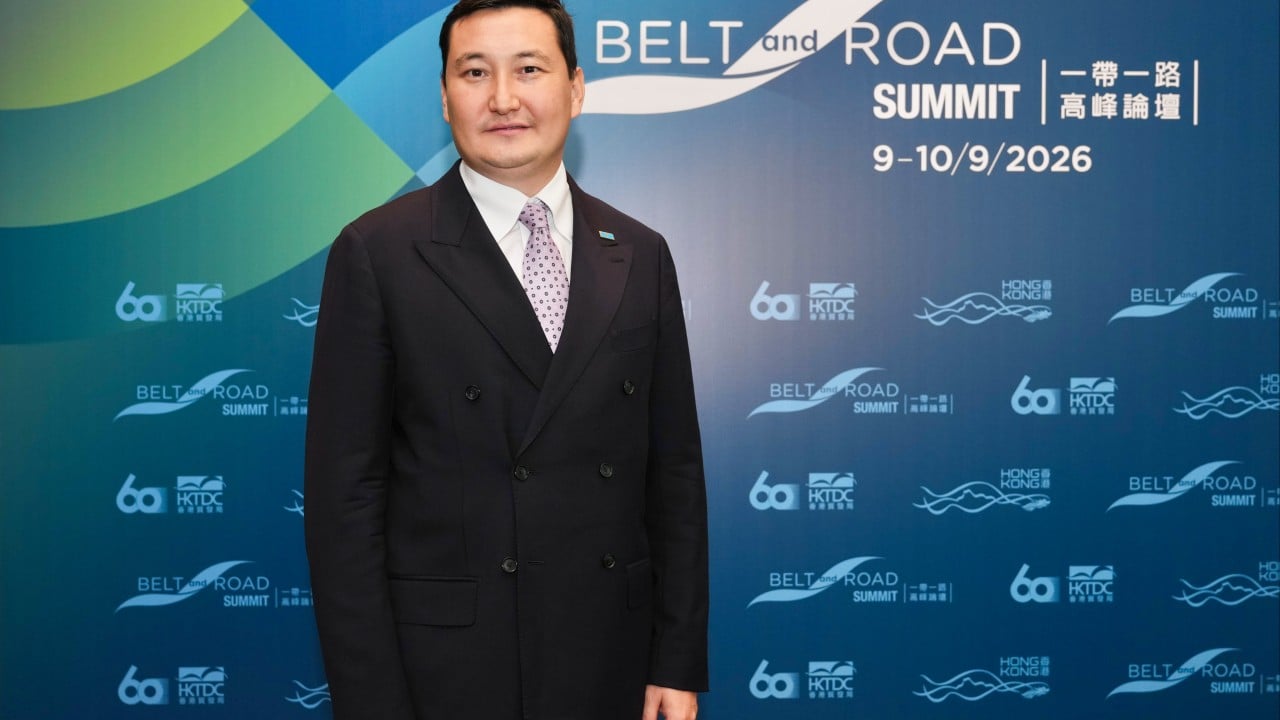
Everybody loves a good memorandum of understanding. It costs zero dollars, requires zero capital commitment, and lets bureaucrats pose for handshakes that look great on LinkedIn. When Hong Kong and Kazakhstan inked their recent deal on transport labs and low-altitude economy cooperation, the trade press practically wept with joy. They called it a bridge between East Asia and Central Asia. They talked about unlocking transit corridors and fostering innovation.
It is bureaucratic theater.
If you think a coastal financial hub with population density off the charts and a landlocked Central Asian republic with vast steppes and sparse infrastructure are going to share useful playbooks on urban drone delivery or low-altitude airspace management, I have a bridge to sell you. Across the Caspian Sea.
I have spent the last fifteen years watching governments sign bilateral agreements that end up in filing cabinets while real supply chains route around them based on simple economic gravity. The lazy consensus says that signing papers equals progress. The reality is that regulatory friction, incompatible airspace control, and starkly different topography make this specific partnership an exercise in political self-soothing. Let us dismantle why this agreement misses the mark, why the low altitude economy hype is running ahead of physics, and what is actually happening behind the curtain of Eurasian logistics.
The Geography Delusion
Central Asia is vast, rugged, and defined by extreme continental weather. Hong Kong is a vertical city built on granite islands with one of the most congested airspaces on earth. Putting them in the same room to talk about low altitude economies—industry code for drones, electric vertical takeoff and landing aircraft, and urban air mobility—is like asking a deep-sea submarine manufacturer to consult on desert dune buggies.
The physical operating environments share zero variables.
In Almaty or Astana, the challenge is managing sub-zero winter temperatures that kill lithium batteries in minutes, long distances between sparse population nodes, and complex interstate border crossings across the Eurasian Land Bridge. In Hong Kong, the challenge is threading drones between residential skyscrapers packed with millions of people, navigating intense maritime humidity, and dealing with a civil aviation department that moves at the speed of a glacier.
When bureaucrats talk about joint transport labs, they assume that policy is universally portable. It is not. You cannot copy-paste a regulatory framework designed for the steppe into a concrete canyon, nor can you apply a high-density urban drone corridor template to a country the size of Western Europe with a population of twenty million.
The Low Altitude Smoke Screen
Let us talk about the buzzword of the decade. Everyone wants a piece of the low altitude economy. Venture capitalists throw money at aerial vehicle startups, and municipal governments panic that they will miss out on the flying car revolution.
Here is the truth nobody in these trade delegations wants to say out loud: commercial drone delivery and passenger eVTOL networks outside of controlled, highly subsidized pilot zones remain an expensive hobby.
The economics are brutal. Battery energy density limits payload and range. Noise pollution makes widespread urban deployment politically toxic. Air traffic management systems capable of handling thousands of autonomous low altitude vectors simultaneously do not exist at scale yet. Every major player is still burning through cash trying to solve basic battery chemistry and FAA or equivalent type-certification hurdles.
So why are Hong Kong and Kazakhstan signing agreements about it? Because it sounds futuristic. It gives trade ministers something innovative to put in their annual reports. Meanwhile, the actual economic engine connecting China, Central Asia, and Europe runs on diesel trucks, freight trains crossing the Dostyk border, and container ships. Pity the poor logistics manager who has to explain to his board that instead of fixing customs delays at the border crossings, the company is investing in a bilateral transport lab memo about flying taxis.
What Real Eurasian Connectivity Looks Like
If you want to understand how goods actually move between East Asia and Europe through Central Asia, ignore the memorandums of understanding and look at the Middle Corridor. Look at the Trans-Caspian International Transport Route.
That is where real money is moving. That is where infrastructure bottlenecks actually matter. Kazakhstan is sitting on a goldmine of geography, serving as the critical pivot point for rail freight bypassing Russia. Their primary logistics challenge is not figuring out how to deliver coffee via drone in downtown Astana. It is expanding port capacity on the Caspian Sea, upgrading single-track rail bottlenecks, and digitizing customs documents so that cargo does not sit at borders for weeks while officials push paper.
Hong Kong, on the other hand, is a masterclass in maritime and high-value air cargo transshipment. Its strength lies in deep-water port efficiency, custom clearance speed for luxury goods and electronics, and massive financial backing.
Where is the overlap? There isn't any. Kazakhstan needs heavy engineering, civil construction, port logistics, and rail infrastructure. Hong Kong provides capital markets and re-export trade services. A low-altitude transport lab does nothing to solve the actual friction points of Eurasian trade.
The Danger Of Polite Fictions
Why does any of this matter? Because diplomatic window dressing consumes oxygen.
When government agencies spend months setting up working groups, exchange delegations, and joint research committees for initiatives with zero commercial viability, they distract resources from projects that could actually move the needle. Trade agreements should solve specific, measurable friction: tariff reductions, standardized customs declarations, infrastructure financing, or mutual recognition of safety standards.
When they devolve into vague aspirations about future tech ecosystems, they become PR exercises for politicians who need a win before the next election cycle.
If Kazakhstan and Hong Kong genuinely wanted to revolutionize transport, they would stop talking about futuristic air taxis and start building standardized digital tracking systems for cross-border rail containers. They would harmonize customs documentation so that a shipment leaving Shenzhen can clear Kazakhstan without getting stuck in a bureaucratic black hole. But that is unglamorous work. It does not look good in a press release.
The Uncomfortable Bottom Line
Stop celebrating every piece of diplomatic parchment that crosses the newswire. Most international agreements are mutual exercises in wishful thinking, signed by officials who will rotate out of their posts long before anyone checks whether the transport lab produced a single working prototype.
Real logistics is dirty, mechanical, and driven by diesel, steel, and ruthless cost-per-ton-mile calculations. Drones will have their day, and low-altitude airspace will eventually be commercialized, but it will happen because engineering and unit economics forced the issue—not because two disparate jurisdictions signed a memorandum of understanding in a conference room.
Ignore the press releases. Watch the freight rates.