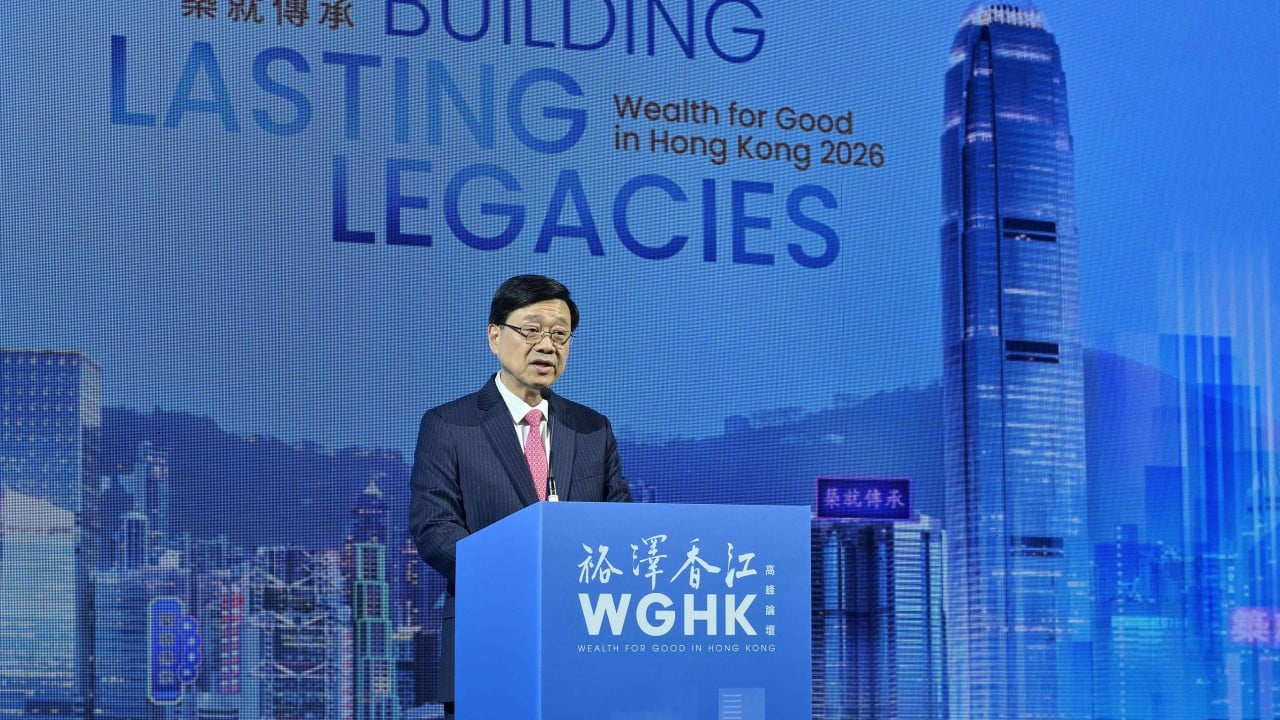
Hong Kong is no longer just asking for investment; it is fighting for its status as the primary gateway for the world’s most private pools of wealth. The recent Wealth for Good summit, which drew high-profile figures like Pop Mart founder Wang Ning and a global assembly of family office principals, serves as a high-stakes demonstration of the city’s survival strategy. By shifting the focus from mere tax incentives to a broader "wealth-with-purpose" narrative, the administration is attempting to anchor family offices in a city that has faced years of geopolitical and economic skepticism. This isn't about one-off investments. It is about whether the city can convince the ultra-wealthy that its regulatory environment remains the most efficient bridge between mainland China’s industrial engine and the global financial system.
The presence of billionaires like Wang Ning underscores a significant shift in the profile of the "new money" entering the city. Pop Mart, a company built on "blind box" collectibles, represents a departure from the traditional real estate and shipping dynasties that have long dominated the local economy. These new entrants are younger, their wealth is often tech-derived, and they are increasingly mobile. For them, Hong Kong’s appeal is less about historical loyalty and more about a cold calculation of capital efficiency.
The Calculated Return of Global Family Offices
For the better part of three years, the narrative surrounding Hong Kong was one of exodus. Capital was reportedly fleeing to Singapore, and the city’s strict pandemic-era controls left a vacuum that many thought would never be filled. However, the raw data suggests a more complex reality. Family offices are not monolithic. While some retail-level wealth moved south, the institutional-grade family offices—those managing assets in the hundreds of millions or billions—never truly abandoned the city's infrastructure.
The primary reason is the liquidity of the Hong Kong Stock Exchange and its unique "Connect" programs. No other jurisdiction offers the same level of direct access to mainland Chinese markets while maintaining a common law legal framework. When a family office from the Middle East or Europe looks at a map, they see Hong Kong as a specialized port of entry. They aren't looking for a lifestyle destination; they are looking for a clearinghouse.
The government’s recent efforts to court these entities involve more than just fancy dinners at the Palace Museum. They have introduced a revamped Capital Investment Entrant Scheme and a suite of tax concessions specifically designed to lower the friction of setting up a physical presence. But the real competition isn't over tax rates. Dubai and Singapore offer competitive, if not better, tax holidays. The real fight is over relevance.
Why the Pop Mart Model Matters
Wang Ning’s participation in the summit is a signal to other mainland entrepreneurs. It demonstrates that Hong Kong remains the preferred exit ramp for Chinese unicorns. When a mainland company goes global, its founder needs a neutral, sophisticated hub to manage that newfound personal wealth.
Pop Mart’s success is built on discretionary spending and a deep understanding of consumer psychology. This kind of wealth is "active." Unlike "passive" wealth stored in gold or government bonds, active wealth seeks out venture capital opportunities, private equity deals, and direct investments in burgeoning industries. Hong Kong is betting that by hosting these founders, they can turn the city into a hub for impact investing and high-growth tech funding.
Beyond the Glitter of the Guest List
Critiques of these summits often focus on the spectacle, but the real work happens in the private breakout rooms. The skepticism remains: can Hong Kong maintain its autonomy in the eyes of Western regulators? This is the elephant in the room that no official press release will address directly.
Family offices are risk-averse by nature. Their primary goal is the preservation of capital across generations. If they perceive a long-term threat to the rule of law or the free flow of capital, they will move. The city’s task is to prove that its "One Country, Two Systems" framework is a feature, not a bug. They argue that it provides a protective shell around international capital while giving it a front-row seat to the world’s second-largest economy.
The Singapore Comparison
It is impossible to discuss Hong Kong’s wealth strategy without mentioning its neighbor to the south. Singapore has done a masterful job of marketing itself as the "Switzerland of Asia." It is perceived as safe, predictable, and green.
However, Hong Kong possesses something Singapore lacks: scale. The sheer volume of assets under management in Hong Kong, combined with its proximity to the Greater Bay Area, gives it a depth of market that is difficult to replicate. For a family office looking to deploy $500 million into a specific tech vertical, Hong Kong’s ecosystem of analysts, lawyers, and bankers provides a level of execution speed that remains unmatched in the region.
The Infrastructure of Influence
To understand how Hong Kong is winning back favor, one must look at the technicalities of its Limited Partnership Fund (LPF) regime. Introduced a few years ago, this framework allows private equity and venture capital funds to set up with ease, mirroring the structures found in the Cayman Islands or Luxembourg.
By aligning its legal structures with global standards, Hong Kong has removed the "weirdness factor" that used to plague its fund management sector. A family office based in Milan or New York can now look at a Hong Kong-domiciled fund and understand exactly how the liability and governance work.
Key components of the current strategy include:
- Art and Philanthropy: Using the city’s booming art market (centered around M+ and Art Basel) as a hook for the "soft" side of wealth management.
- Green Finance: Positioning the city as the regional hub for ESG-compliant bonds, a major draw for European family offices.
- Talent Acquisition: Streamlining visas for high-income earners to ensure the city has the "boots on the ground" to manage complex portfolios.
This is a multi-front war. The city is fighting for the minds of the principals and the hands of the managers. If the managers find it too difficult to live in or navigate the city, the principals will eventually take their money elsewhere.
The Risks of the "Purpose" Narrative
The government has leaned heavily into the idea of "Wealth for Good." While this appeals to the younger generation of wealth inheritors who want their investments to reflect their values, it carries a risk. If the focus on philanthropy and "social impact" comes at the expense of core financial performance or regulatory clarity, the professional wealth managers—the ones who actually move the money—will become cynical.
The ultra-wealthy are happy to fund a museum wing or a green tech startup, but only if their core assets are protected by a robust and transparent legal system. The "good" in "Wealth for Good" must be secondary to the "wealth" part of the equation.
The Emerging Middle Eastern Connection
One of the most significant, yet understated, developments in the recent summit was the increased presence of Gulf State interests. As Saudi Arabia and the UAE seek to diversify their economies away from oil, they are looking East. Hong Kong is positioning itself as the primary conduit for Sino-Arab capital flows.
This isn't just about getting Saudi princes to buy property in Mid-Levels. It’s about creating a corridor where Middle Eastern sovereign wealth funds and family offices can co-invest with Chinese state-backed entities and private giants like Pop Mart. This "East-East" axis is a deliberate move to reduce reliance on traditional Western capital markets, which have become increasingly complicated by sanctions and trade tensions.
The logic is simple. If the West becomes too restrictive, Hong Kong will become the capital of the "Global South’s" elite. This pivot requires a massive shift in cultural and financial literacy within the city’s banking sector, but the groundwork is being laid through high-level diplomatic exchanges and new financial products tailored to Islamic finance standards.
What the Data Actually Shows
While the headlines focus on billionaires, the health of the industry is better measured by the growth of specialized service providers. Over the last eighteen months, there has been a noticeable uptick in the number of multi-family office (MFO) licenses granted by the Securities and Futures Commission (SFC).
These MFOs act as the middle layer. They handle the messy reality of global compliance, tax reporting, and succession planning. Their growth suggests that the "infrastructure of wealth" is thickening. You don't build out a thirty-person compliance team in a city you plan on leaving in two years.
The Talent Gap
The biggest hurdle isn't the law; it’s the people. There is currently a fierce war for talent in Hong Kong’s private banking sector. Years of "brain drain" have left a gap in the mid-to-senior management levels. The city is currently importing talent from mainland China and overseas to fill these roles, but the cost of living and the competitive nature of the market make this an expensive proposition.
For a family office, the "all-in" cost of operating in Hong Kong is rising. To justify this, the city must provide a measurable alpha—a return on investment or a level of access that cannot be found in Dubai, Singapore, or London.
The Hard Reality for New Entrants
Setting up a family office in Hong Kong is no longer a simple matter of filing a few papers. The Anti-Money Laundering (AML) and Know Your Customer (KYC) requirements have become significantly more stringent. This is a double-edged sword. While it makes the city more reputable on the global stage, it increases the "barrier to entry" for many.
The government’s message to the world’s wealthy is clear: we want your capital, but it must be clean, and it must be committed. They are moving away from being a "tax haven" and toward being a "value-add" hub. This is a much harder sell, but it’s the only one that ensures long-term viability.
The true success of the Wealth for Good summit won't be measured by the number of selfies taken with a Pop Mart figurine. It will be measured by the number of family offices that are still operating in the city five years from now, having successfully navigated the transition from founder-led wealth to institutionalized legacy management.
Audit your current Asian exposure and determine if you are looking for a vault or a springboard. If it's the latter, the current incentives make a compelling case for a physical footprint in the city before the next cycle of global tax harmonisation begins.