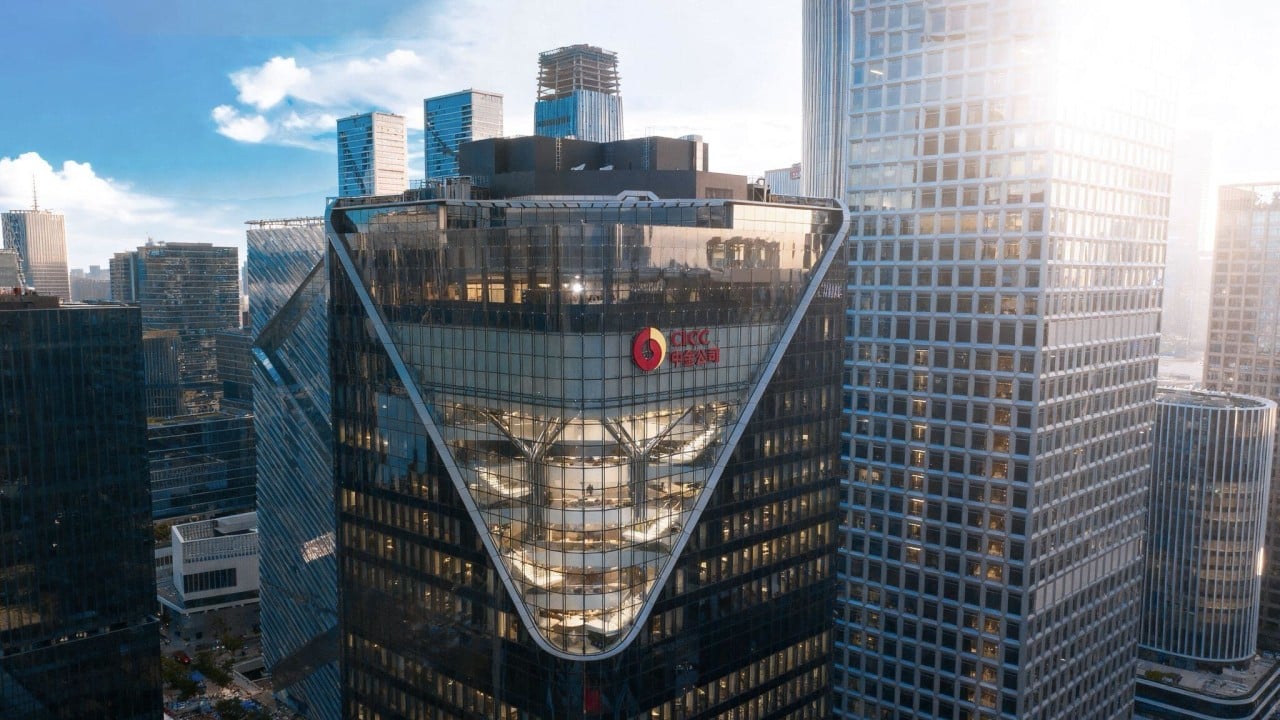
The traditional narrative surrounding Hong Kong's evolution into a global innovation Hub is comfortable, well-funded, and entirely wrong. The standard corporate thesis, pushed by investment banks and institutional cheerleaders, dictates a predictable formula. They argue that by combining mainland China’s manufacturing supply chains with Hong Kong’s capital markets, international legal framework, and state-backed venture funds, an international innovation and technology centre will spontaneously materialize.
It will not.
This thesis mistakes financial plumbing for structural innovation. For a decade, institutional capital has poured into shiny science parks and government-backed incubators under the assumption that liquidity equals innovation. I have watched firms misallocate tens of millions of dollars chasing this top-down fantasy. The reality is brutal: you cannot subsidize a tech ecosystem into existence when the underlying economic incentives actively punish entrepreneurial risk.
The Capital Fallacy: Why Liquidity is Killing Deep Tech
The conventional view assumes that a lack of capital is the primary bottleneck for tech maturation in the region. This premise misinterprets the nature of venture capital. Hong Kong does not suffer from a shortage of money; it suffers from an abundance of risk-averse money.
The city’s capital markets are hardwired for real estate, banking, and traditional logistics. These industries rely on predictable cash flows, collateral, and tangible assets. True technological innovation—specifically deep tech, biotechnology, and advanced materials—demands long-term, patient capital that accepts high failure rates.
When institutional giants claim to support tech expansion by injecting traditional liquidity, they usually funnel money into late-stage, low-risk software applications or logistics platforms that serve existing financial infrastructure. This is not innovation; it is optimization. It does not create the next semiconductor breakthrough or AI foundation model. It merely builds a faster payment gateway for a real estate conglomerate.
By artificiality inflating the valuation of safe, iterative tech plays, this institutional capital crowds out the radical, high-risk research projects that actually form the bedrock of a genuine tech hub.
The False Promise of the Greater Bay Area Integration
The corporate consensus points to the Guangdong-Hong Kong-Macao Greater Bay Area (GBA) as the ultimate shortcut to tech dominance. The logic seems neat on paper: Hong Kong handles the financing and legal protection, while Shenzhen and Dongguan handle the rapid prototyping and mass manufacturing.
This model ignores a fundamental friction in economic geography: the operational mismatch between a high-cost financial center and an aggressive, low-margin manufacturing hub.
+-------------------------------------------------------------+
|               THE INCOMPATIBLE ECOSYSTEM RIFT               |
+-------------------------------------------------------------+
|  HONG KONG:                                                 |
|  High Overheads -> Risk Aversion -> Short-Term ROI Focus    |
|                                                             |
|  SHENZHEN / DONGGUAN:                                       |
|  Low Margins -> Hyper-Competition -> Rapid Execution        |
+-------------------------------------------------------------+
True innovation hubs like Silicon Valley, Israel, or even the Boston-Cambridge corridor did not succeed because they linked two disparate economies via a high-speed rail line. They succeeded because their research institutions, talent pools, and capital were physically colocated, creating an intense, localized pressure cooker of ideas.
Trying to bridge the gap between Hong Kong’s high cost of living and the GBA’s manufacturing floor creates an execution tax. Startups waste critical operational velocity navigating cross-border regulations, currency controls, and distinct legal jurisdictions. While a founder in Shenzhen can walk across the street to modify a hardware prototype three times a day, a team split across the border spends days syncing workflows. In tech, speed is the only moat that matters. The GBA integration, in its current bureaucratic iteration, frequently slows startups down rather than speeding them up.
The Talent Trap: Academia is Not an Entrepreneurial Pipeline
Proponents of the status quo love to cite university rankings. Hong Kong boasts multiple institutions in the global top 100, producing world-class scientific papers and engineering graduates. The lazy conclusion is that this academic excellence naturally translates into commercial tech dominance.
It does not. The academic system in the city is structured around a publish-or-perish metric that rewards incremental theoretical research over commercial application.
Furthermore, the domestic economic environment creates a severe brain drain away from entrepreneurship. When a top-tier computer science graduate faces a choice between entering a volatile, cash-strapped local startup or taking a stable, highly compensated role at a global investment bank or real estate firm, the rational choice is almost always the corporate career. The city’s exorbitant housing market exacerbates this trend. You cannot expect a vibrant community of garage-dwelling disrupters when the rent for that garage costs more than the startup's seed funding.
The few spin-offs that do emerge from universities often get trapped in a loop of grant-seeking. They adapt their business models to satisfy the bureaucratic KPIs of government funding bodies rather than the harsh, validating feedback of the open market. They become experts at writing grant proposals, not building products that customers want to buy.
Dismantling the Bureaucratic Playbook
The standard response to these structural deficiencies is always the same: build another industrial park, launch another co-investment fund, or host another high-profile tech conference. This playbook fails to realize that ecosystems are organic, not bureaucratic.
Look at the historical data. The world's most resilient tech clusters emerged despite government planning, not because of it. Silicon Valley grew out of military research contracts and a cultural rejection of East Coast corporate rigidity. Tel Aviv's tech density sprouted from specialized military intelligence units and sheer economic necessity.
When a state entity or an investment bank attempts to design a tech center, they inevitably prioritize optics over utility. They build pristine glass towers that local startups cannot afford without subsidies. They judge success by the number of registered tenants rather than the global market share of the products developed within those walls. This creates a performative innovation culture where companies survive on public relations victories and government handouts rather than market traction.
The Alternative Blueprint: Radical Specialization
If Hong Kong wants to establish a legitimate, self-sustaining position in the global tech hierarchy, it must abandon the ambition of becoming a broad-spectrum innovation center. It cannot compete with Silicon Valley for software, nor can it compete with Shenzhen for hardware.
Instead, it must double down on its structural asymmetries. The city should specialize exclusively in areas where its legal and financial architecture provides an unfair, unreplicable advantage.
1. Regulatory Sandbox for Decentralized Financial Infrastructure
Instead of trying to lure generic consumer tech companies, the jurisdiction should offer absolute legal clarity and aggressive tax incentives for global cryptographic protocols and decentralized finance (DeFi) architecture. This exploits the city’s core strength—financial law—without requiring the physical space that manufacturing or hardware development demands.
2. High-Value Intellectual Property Arbitrage
Hong Kong should position itself as the primary legal fortress for international IP protection within Asia. The goal should not be to manufacture the goods locally, but to hold, defend, and license the underlying patents under a trusted, common-law framework.
3. Deep Tech Immigration Reform
The fastest way to acquire a talent pool is to import it. The city should offer immediate, unconditional residency and zero income tax for the first five years to any founder who has raised verified external venture capital or holds advanced patents in critical fields like synthetic biology or quantum computing.
This approach is risky, politically difficult, and bound to face resistance from established economic elites who prefer the predictability of real estate speculation. It requires accepting that many heavily subsidized initiatives are fundamentally unviable.
The current path of throwing billions in institutional capital at a generic tech dream will only produce expensive real estate projects disguised as innovation hubs. Stop trying to build a duplicate Silicon Valley. Start exploiting the specific, unfair advantages of a global financial fortress, or accept that the tech center narrative is nothing more than marketing copy.


